

Keeping spray booths in top shape challenges even the most experienced facility managers. Every overlooked detail can impact paint quality and worker safety, making careful maintenance an absolute priority for automotive shops from Detroit to Tokyo. By following expert protocols such as isolating energy sources and conducting thorough safety assessments, you build a foundation for quality finishes and reliable operation. Discover how each step in a well-planned spray booth care routine protects your team and maximizes production results.
Table of Contents
- Step 1: Prepare Spray Booth For Safe Maintenance
- Step 2: Inspect Filters, Fans, And Dust Barriers
- Step 3: Clean All Surfaces And Reapply Protective Films
- Step 4: Replace Worn Filtration And Protection Systems
- Step 5: Verify Dust Levels And Test Air Quality
Quick Summary
| Key Point | Explanation |
|---|---|
| 1. Thorough Safety Preparation is Essential | Complete energy source isolation and workspace limitations reduce risk of injury and equipment damage during maintenance tasks. |
| 2. Regular Component Inspection Improves Performance | Systematic checks of filters, fans, and dust barriers ensure sufficient airflow and maintain paint quality, preventing contamination. |
| 3. Consistent Surface Cleaning Prolongs Equipment Life | Cleaning booth surfaces and applying protective films help avoid contamination and wear, guaranteeing optimal painting conditions. |
| 4. Timely Filtration and Protection Replacement is Critical | Regularly replacing worn components ensures compliance with safety standards and continues to deliver high-quality results. |
| 5. Dust Levels and Air Quality Testing are Vital | Monitoring dust and air quality verifies compliance with health regulations, enhancing worker safety and product quality in the spray booth. |
Step 1: Prepare spray booth for safe maintenance
Preparing your automotive spray booth for maintenance requires methodical planning and strict safety protocols. This crucial first step ensures worker protection and prevents potential equipment damage during cleaning or repair activities.
Effective preparation begins with a comprehensive safety assessment. Proper maintenance risk evaluation involves multiple critical steps:
- Isolate all energy sources completely
- Verify electrical disconnection
- Limit workspace access to trained personnel
- Designate clear work zones
- Inspect personal protective equipment (PPE)
Before beginning any maintenance work, you must implement rigorous safety procedures. This means thoroughly checking electrical, hydraulic, and pneumatic systems to prevent unexpected start-ups or potential electrical hazards. A systematic approach reduces injury risks and ensures a controlled maintenance environment.
Safety starts with preparation: A well-planned maintenance strategy prevents 90% of potential workplace incidents.
Key safety preparations include protecting electrical components, removing combustible materials, and establishing clear safety perimeters. Safe spray booth construction demands noncombustible materials and minimal additional openings to minimize potential fire risks.
Pro tip: Always document your maintenance preparation process and keep a comprehensive safety checklist readily available for quick reference and consistent protocols.
Step 2: Inspect filters, fans, and dust barriers
Maintaining optimal performance in your automotive spray booth requires thorough and systematic inspection of critical components like filters, fans, and dust barriers. This step focuses on ensuring these essential elements are functioning correctly to maintain air quality and paint finish standards.
Airflow control inspection involves multiple critical checks:
- Examine filter integrity for tears or excessive particulate buildup
- Check fan blades for damage or unusual wear patterns
- Verify electrical connections and grounding for fans
- Inspect dust barrier surfaces for contamination
- Assess overall ventilation system performance
When inspecting filters, look for signs of blockage or deterioration that could compromise your spray booth’s efficiency. Blocked filters reduce airflow and increase the risk of contaminated paint finishes. Pay special attention to the condition of baffle plates, which play a crucial role in directing airflow and capturing overspray particles.
A well-maintained filtration system is the first line of defense against poor paint quality and potential equipment damage.
Fan maintenance requires careful evaluation of electrical systems and mechanical performance. Listen for unusual vibrations or noise that might indicate bearing wear or misalignment. Electrical grounding must be verified to prevent potential fire hazards and ensure safe operation.
Pro tip: Create a standardized inspection checklist with precise measurement criteria and photographic documentation to track component degradation over time.
Step 3: Clean all surfaces and reapply protective films
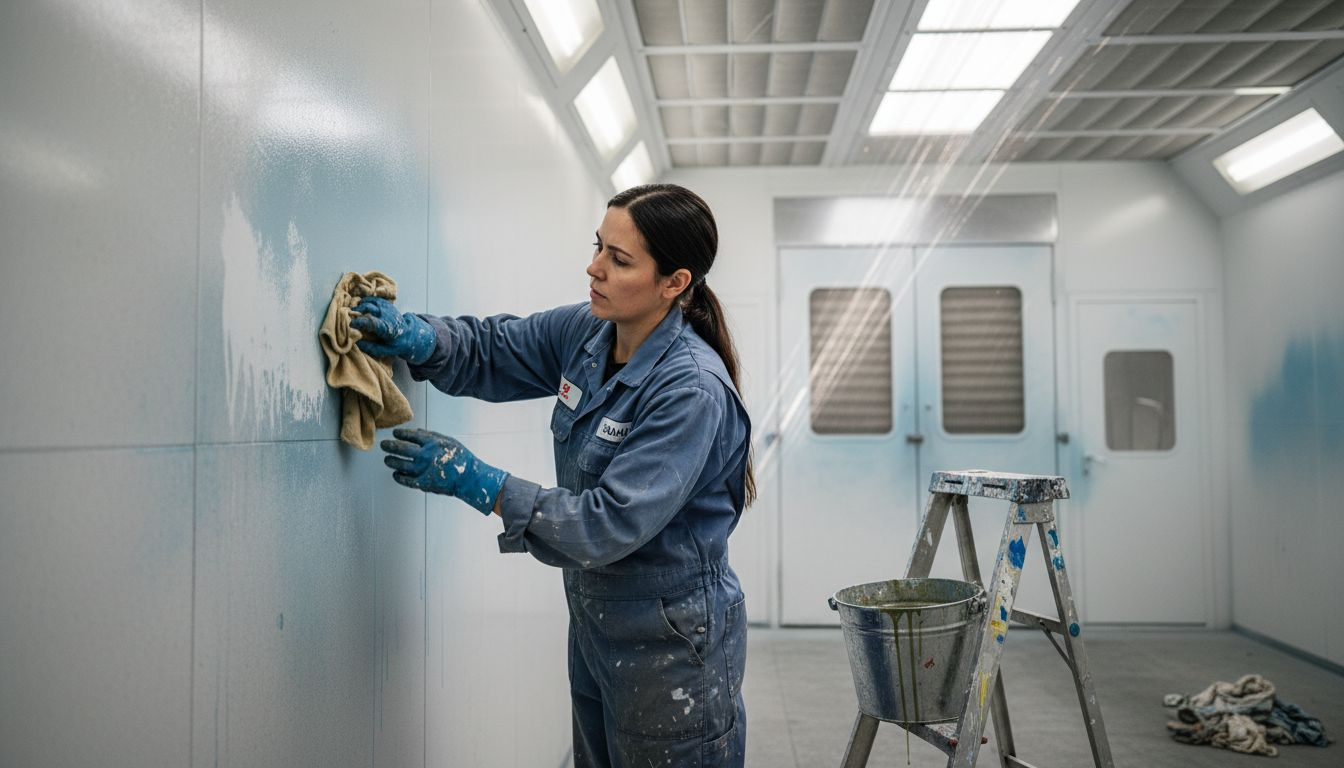
Cleaning and protecting your spray booth surfaces is a critical maintenance step that ensures optimal painting conditions and long-term equipment performance. This process involves thorough surface preparation and strategic application of protective barriers to prevent contamination and wear.
Surface cleaning protocols require meticulous attention to detail and the right approach:
- Remove all loose debris and overspray residue
- Use approved cleaning agents specific to booth surfaces
- Wear appropriate personal protective equipment (PPE)
- Ensure thorough but gentle cleaning to prevent surface damage
- Inspect surfaces for any signs of corrosion or wear
Pay special attention to high-touch areas and surfaces that frequently encounter paint materials. Different booth surfaces may require unique cleaning techniques. Metal surfaces, for instance, need gentle but effective cleaning to prevent scratching or degrading the underlying material.
Proper surface preparation is the foundation of a successful protective film application and long-term booth maintenance.
When reapplying protective films, carefully evaluate the surface condition. Protective coatings should create a seamless barrier against moisture, chemicals, and potential abrasive damage. Look for films that offer durability and easy future maintenance.
Pro tip: Photograph your booth surfaces before and after cleaning to create a visual maintenance log and track potential degradation over time.
Step 4: Replace worn filtration and protection systems
Replacing worn filtration and protection systems is a critical maintenance procedure that ensures your automotive spray booth remains safe, efficient, and capable of delivering high-quality paint finishes. This step involves systematically identifying and updating components that have degraded over time.
Spray booth safety maintenance requires careful evaluation of existing systems:
- Inspect filter media for particulate buildup and structural integrity
- Check for signs of mechanical wear in protection barriers
- Verify compliance with current safety standards
- Assess overall system performance and efficiency
- Document replacement intervals and component conditions
Focus on critical filtration components that directly impact air quality and painting performance. Filters that have reached their operational limits can compromise paint finish quality and potentially create workplace safety hazards. Different types of filters may require specific replacement strategies based on their design and usage intensity.
Proactive system replacement is more cost-effective than managing extensive damage from neglected maintenance.
Pay special attention to nonflammable safety partitions and electrical system protections. These components degrade over time and can become potential safety risks if not replaced at appropriate intervals. Modern replacement systems often offer improved efficiency and better environmental performance.
Pro tip: Create a digital maintenance log with photographic evidence of each component replacement to track system performance and justify future upgrade investments.
Step 5: Verify dust levels and test air quality
Verifying dust levels and testing air quality are critical final steps in automotive spray booth maintenance that directly impact paint finish quality and worker safety. This comprehensive assessment ensures your booth meets stringent environmental and occupational health standards.
Air quality monitoring techniques involve precise measurement and strategic evaluation:
- Use calibrated dust concentration sensors
- Sample multiple locations within the spray booth
- Measure respirable dust particle sizes
- Record exposure levels systematically
- Compare results against regulatory standards
Dust monitoring requires specialized equipment and methodical approach. Different sampling techniques are necessary depending on particle characteristics and exhaust gas properties. Optical and triboelectric sensors provide accurate measurements that help you understand your booth’s performance and potential contamination risks.
Comprehensive air quality testing is not just a maintenance step - it’s an investment in workplace safety and product quality.
Pay special attention to respirable dust concentrations, which can penetrate deep into workers’ lungs. Your monitoring should focus on particles small enough to bypass natural respiratory defenses. Modern sensor technologies allow for real-time tracking and immediate intervention if dust levels exceed recommended thresholds.
Pro tip: Invest in digital monitoring systems that automatically log and timestamp dust concentration data, creating a comprehensive maintenance history for future reference and compliance reporting.
Use this reference to match spray booth components with typical maintenance frequencies:
| Component | Inspection Interval | Replacement Interval |
|---|---|---|
| Primary Filters | Monthly | 3-6 months |
| Fan Assemblies | Quarterly | Annually |
| Dust Barriers | Semi-annually | As required (visible wear) |
| Safety Partitions | Semi-annually | Every 2-3 years |
| Protective Films | After each use | Each cleaning cycle |
Here’s a quick comparison of critical spray booth maintenance steps and their workplace impact:
| Maintenance Step | Primary Goal | Key Impact |
|---|---|---|
| Preparation & Safety Assessment | Prevent equipment damage | Reduce injury risk |
| Filter, Fan, Dust Barrier Check | Maintain airflow, air quality | Improve paint results |
| Surface Cleaning & Film Application | Protect surfaces, prevent contamination | Extend booth lifespan |
| Filtration & Protection Replacement | Ensure efficiency, meet standards | Enhance workplace safety |
| Dust & Air Quality Verification | Meet health regulations | Safeguard worker health |
Elevate Your Spray Booth Maintenance with Advanced Dust Protection Solutions
Automotive spray booth maintenance challenges like filter clogging, surface contamination, and inefficient dust barriers directly impact paint quality and worker safety. The detailed maintenance steps you just explored emphasize the need for durable, effective protective films that reduce debris buildup and simplify cleaning. Protecting your booth with high-quality dust control materials not only extends component life but also ensures consistent superior results.
Dust Free Film specializes in premium multi-layer protective films engineered for spray booths, offering heat-resistant, static-free surfaces that withstand harsh industrial environments. Our patented application system enables quick, bubble-free installation that matches the rigorous demands described in your maintenance guide. From safeguarding walls and floors to facilitating clean air circulation and reducing overspray contamination our materials support key goals such as optimized airflow and contamination prevention.
Ready to protect your investment and enhance booth efficiency? Discover how our innovative solutions can transform your maintenance routine starting today.
Explore the benefits of our dust protection technology at Dust Free Film. Take control of paint finish quality and workplace safety by upgrading your spray booth with our trusted products. Visit us now to learn more and request a custom quote for your facility.
Frequently Asked Questions
What steps should I take to prepare my automotive spray booth for maintenance?
To prepare your automotive spray booth for maintenance, begin with a thorough safety assessment. Isolate all energy sources, verify electrical disconnections, and remove any combustible materials. Create clear work zones and ensure only trained personnel can access the area.
How often should I inspect filters and fans in my spray booth?
You should inspect the filters and fans in your spray booth monthly to ensure they are functioning optimally. Check for blockages, wear, and ensure the fan blades are in good condition to maintain air quality and prevent contamination during painting.
What is the best method to clean surfaces in my spray booth?
The best method to clean surfaces in your spray booth is to remove loose debris and overspray residue using approved cleaning agents. Ensure you take care to clean gently and avoid damaging any surfaces, especially those frequently in contact with paint materials.
When should I replace worn filtration and protection systems?
Replace worn filtration and protection systems proactively to maintain efficiency and safety. Inspect these components regularly and replace filters every 3 to 6 months, or whenever you notice significant wear that could compromise air quality.
How can I verify dust levels and air quality in my spray booth?
To verify dust levels and air quality, use calibrated dust concentration sensors to sample air in multiple locations within the spray booth. Regularly measure and record respirable dust particle sizes and compare these results against established regulatory standards to ensure compliance.
Why is it important to maintain my automotive spray booth?
Maintaining your automotive spray booth is crucial to ensure high paint finish quality and worker safety. Regular maintenance prevents equipment damage and prolongs the lifespan of your booth, ultimately resulting in better operational efficiency and product quality.