

Every facility manager knows the frustration of dust and microscopic particles spoiling a showroom-quality paint job. In busy automotive refinishing shops across Europe, even small contamination can lead to rework, wasted materials, and customer dissatisfaction. Removable protective films offer a modern solution by shielding paint booths from debris and maintaining a clean environment for superior results. Discover how advanced protective films help you achieve flawless finishes and run your operations more efficiently.
Table of Contents
- What Are Removable Protective Films?
- Types Of Protective Films For Spray Booths
- How Removable Films Improve Paint Quality
- Installation Process And Key Features
- Cost Comparison: Films Vs. Traditional Methods
Key Takeaways
| Point | Details |
|---|---|
| Removable Protective Films | These films protect surfaces in industrial settings from contamination, enhancing paint quality and reducing rework. |
| Types of Films | Various protective films serve specific functions, including temporary, non-adhesive, and heat-resistant options, tailored for different environments. |
| Installation Importance | Proper installation ensures maximum protective capability, requiring attention to detail in surface preparation and environmental conditions. |
| Cost-Effectiveness | Although initial costs for films may be higher, their long-term benefits include reduced maintenance and improved operational efficiency, leading to overall savings. |
What Are Removable Protective Films?
Removable protective films are specialized multi-layered adhesive coverings designed to shield surfaces in industrial environments like spray booths from dust, debris, and potential contamination. Initially developed for military applications such as protecting sensitive equipment surfaces, these films have evolved into critical protective solutions across multiple industries.
These innovative protective films typically feature sophisticated engineering characteristics that make them ideal for precision environments. Key characteristics include:
- Electrostatic dissipative properties
- High heat resistance
- Bubble-free application capabilities
- Removable without residue
- Transparent or translucent material composition
The primary purpose of removable protective films is to create a temporary barrier that prevents microscopic particles from compromising painting or finishing processes. Automotive refinishing professionals rely on these films to maintain pristine working conditions, ensuring superior paint finish quality and reducing potential rework.
Manufacturing techniques for these protective films have become increasingly advanced, allowing for custom configurations that meet specific industrial requirements. Professional-grade films are engineered to withstand high-traffic environments while providing consistent dust protection across multiple application scenarios.
Pro tip: Always inspect protective film surfaces before application to ensure no pre-existing contaminants might compromise the dust-free environment.
Types of Protective Films for Spray Booths
Spray booth protective films encompass several specialized categories designed to address unique industrial painting and coating requirements. Thermal spray protection standards outline multiple film types that help manufacturers maintain pristine working environments and minimize potential contamination during spray processes.
The primary types of protective films for spray booths include:
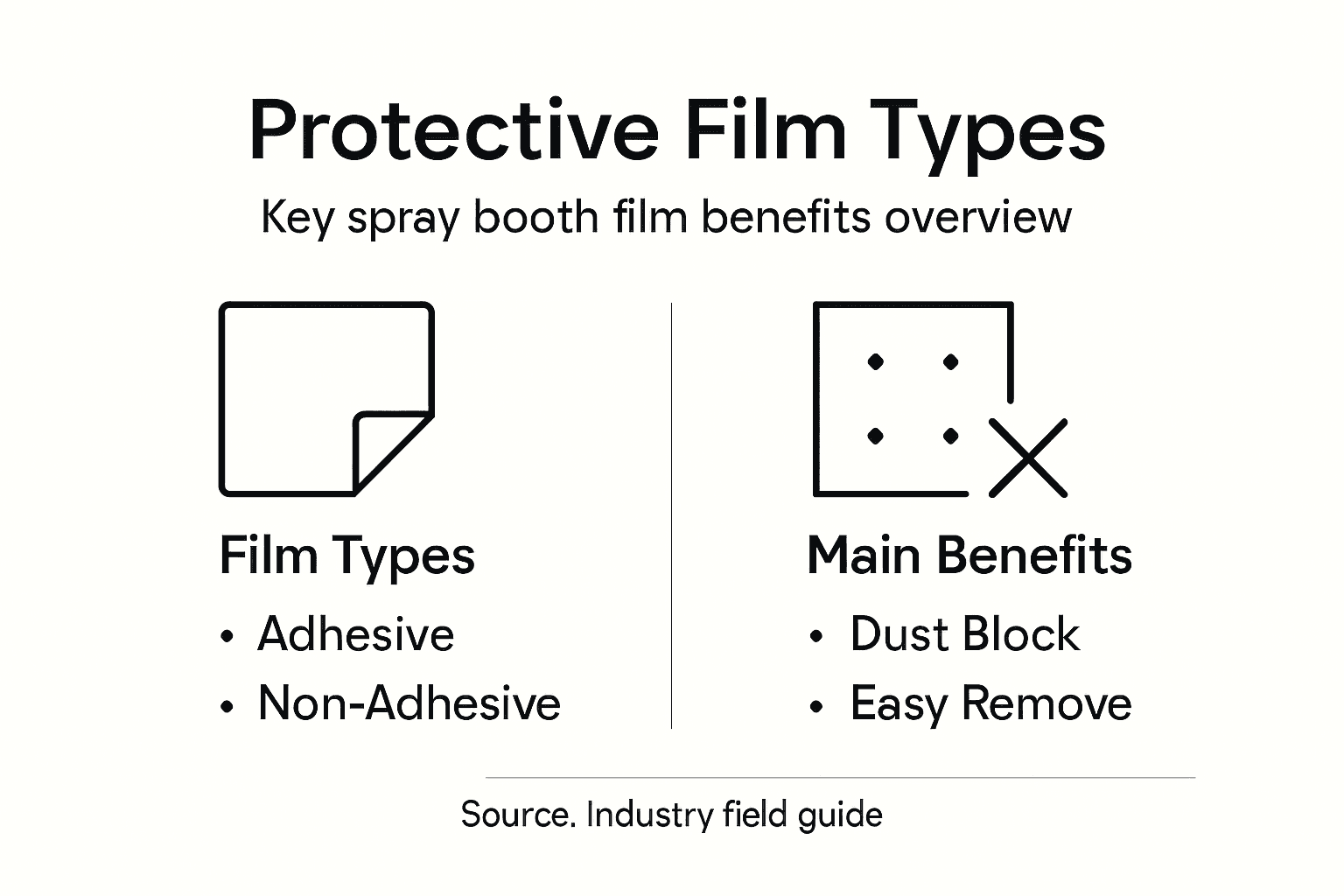
- Temporary Adhesive Films: Single-use coverings that adhere directly to booth surfaces
- Non-Adhesive Barrier Films: Loose-fitting protective layers that can be quickly installed and removed
- Electrostatic Dissipative Films: Advanced materials that prevent static charge buildup
- Heat-Resistant Protective Films: Specialized coverings designed to withstand high-temperature spray operations
- Multi-Layer Protective Films: Complex constructions offering enhanced dust and debris protection
OSHA regulatory guidelines distinguish between two fundamental spray booth protection approaches: dry filter systems and waterwash containment methods. Dry filter systems utilize baffle plates and powder collection mechanisms, while waterwash systems employ water-based technologies to minimize airborne particulate dispersion.
Each protective film type serves a specific function, with professional-grade options engineered to meet rigorous industrial performance standards. Automotive refinishing and industrial coating professionals select films based on environmental conditions, spray material characteristics, and specific operational requirements.
Here’s a comparison of the primary types of spray booth protective films and their optimal applications:
| Film Type | Best Use Case | Industry Benefit |
|---|---|---|
| Temporary Adhesive | Quick changes, single-use | Reduces maintenance downtime |
| Non-Adhesive Barrier | Frequent installations/removal | Flexible labor management |
| Electrostatic Dissipative | Electronic component protection | Controls static-related defects |
| Heat-Resistant | High-temperature coatings | Prevents heat-related failures |
| Multi-Layer | Critical dust/debris prevention | Achieves superior finish quality |
Pro tip: Always match your protective film selection to your specific spray booth environment and coating process to maximize performance and contamination prevention.
How Removable Films Improve Paint Quality
Removable protective films play a crucial role in elevating paint quality by creating an exceptional barrier against contamination and environmental challenges. Thin-film coating technologies demonstrate significant improvements in surface protection, reducing defects and enhancing overall paint performance in industrial environments.
The key mechanisms by which removable films improve paint quality include:
- Dust Particle Prevention: Blocking microscopic contaminants that cause surface imperfections
- Static Charge Reduction: Minimizing electrostatic interference during painting processes
- Surface Smoothness Maintenance: Creating a clean, uniform application environment
- Thermal Stability: Protecting paint surfaces from temperature-related variations
- Contamination Isolation: Separating painting areas from external environmental factors
Paint protection mechanisms reveal that these films provide a self-healing protective layer, significantly reducing the likelihood of paint damage. Professional automotive refinishing facilities rely on these advanced protective technologies to ensure consistently superior finish quality, minimizing rework and material waste.
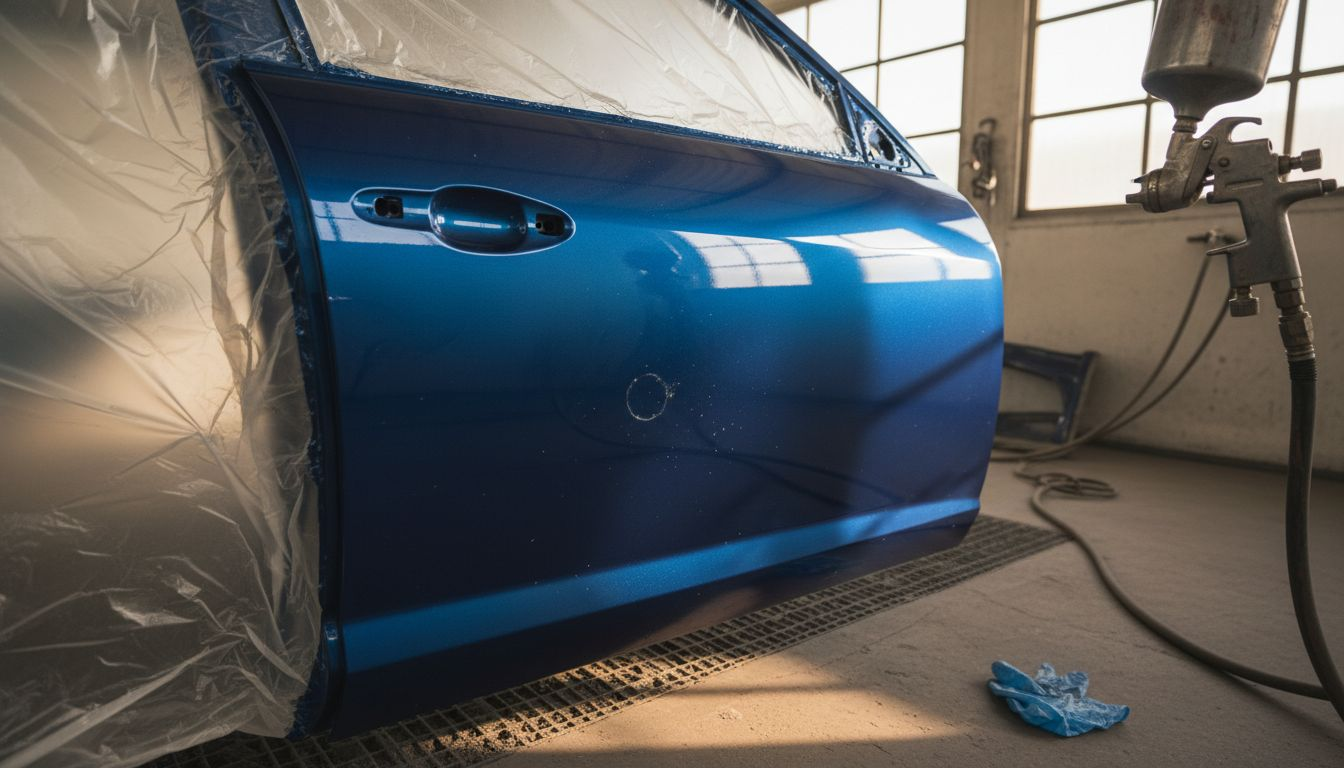
By creating an optimal painting environment, removable films address multiple critical factors that impact paint quality. They effectively manage airborne particles, control environmental conditions, and provide a consistent substrate for paint application, ultimately delivering more reliable and aesthetically pleasing results.
Pro tip: Select removable films with multi-layer construction to maximize contamination prevention and ensure the highest possible paint finish quality.
Installation Process and Key Features
Installing removable protective films in spray booths requires meticulous attention to detail and adherence to specific spray booth safety standards. Professional installation involves creating a controlled environment that ensures maximum protection and optimal performance of the protective films.
Key steps in the installation process include:
- Surface Preparation: Thoroughly clean and dry booth surfaces
- Moisture Assessment: Check humidity levels to prevent film adhesion issues
- Precise Alignment: Carefully position films with minimal overlap
- Static Elimination: Use anti-static tools during application
- Smooth Application: Remove air bubbles using specialized squeegee techniques
Spray booth construction guidelines emphasize the importance of creating a smooth, continuous interior for efficient film installation. Critical features that distinguish high-quality protective films include advanced mechanical properties such as:
- Uniform thickness distribution
- High heat resistance
- Quick-release adhesive systems
- Electrostatic dissipation capabilities
- Minimal residue during removal
Professional installers must pay close attention to environmental conditions, ensuring proper ventilation and controlled airflow during the installation process. The goal is to create a pristine, dust-free environment that maximizes paint quality and protects sensitive spray booth surfaces.
Pro tip: Invest in professional training for film installation technicians to ensure consistent, high-quality application and maximize protective film performance.
Cost Comparison: Films vs. Traditional Methods
Comparing removable protective films against traditional coating methods reveals significant financial implications for automotive and industrial refinishing operations. Life cycle cost analyses demonstrate that while initial investment might appear higher, long-term savings can be substantial.
Key cost considerations include:
- Initial Material Costs
- Protective films: Higher upfront investment
- Traditional methods: Lower initial expenses
- Labor Expenses
- Films: Faster installation, reduced prep time
- Traditional methods: More labor-intensive
- Maintenance Expenditures
- Films: Minimal maintenance requirements
- Traditional methods: Frequent touch-ups and repairs
- Downtime Impact
- Films: Quicker application, less operational interruption
- Traditional methods: Extended production halts
Protective coating economics emphasize that true cost-effectiveness extends beyond initial price points. Professional facilities can expect significant long-term benefits, including reduced material waste, fewer rework incidents, and enhanced surface durability.
Financial advantages become most apparent when calculating comprehensive expenses. Removable films typically offer a more predictable cost structure, with lower unexpected maintenance expenses and improved overall operational efficiency.
Here is a summary of cost advantages and operational impacts when choosing removable films over traditional methods:
| Aspect | Removable Films | Traditional Coating Methods | Impact on Operations |
|---|---|---|---|
| Initial Cost | Higher upfront investment | Lower purchase price | Films save costs long-term |
| Labor Requirement | Fast, less skill-intensive | Extended, skilled labor needed | Reduces training and downtime |
| Maintenance | Minimal upkeep, easy replacement | Regular repairs, touch-ups | Improves production consistency |
| Downtime | Quicker turnover, less disruption | Lengthy setup, delays possible | Protects business continuity |
Pro tip: Conduct a detailed cost-benefit analysis specific to your facility’s unique operational requirements before making a final protective film investment decision.
Elevate Your Spray Booth Protection with Dust Free Film
Maintaining a dust-free environment in your spray booth is crucial for achieving flawless paint finishes and reducing costly rework. The article highlights the challenges of contamination from dust, static charges, and heat exposure—problems that can directly undermine paint quality and operational efficiency. Dust Free Film specializes in addressing these pain points with premium multi-layer, electrostatic dissipative protective films engineered for quick, bubble-free installation and reliable, residue-free removal.
Our heat-resistant, static-free films deliver a proven barrier against dust and environmental contaminants. Designed for high-traffic industrial settings, they help you preserve surface smoothness and paint integrity while minimizing downtime and labor demands. Discover how our patented application systems and European-standard manufacturing set a new benchmark for spray booth safety and dust control.
Boost your coating operations today by exploring our tailored solutions at Dust Free Film. Don’t let contamination compromise your finish quality—visit our site to learn more about our innovative protective films that exactly match the demands outlined in the article. Take the first step toward better paint results and streamlined spray booth maintenance now.
Frequently Asked Questions
What are removable protective films, and how do they work?
Removable protective films are adhesive coverings designed to shield surfaces in industrial environments like spray booths from dust and contamination. They create a temporary barrier that helps maintain a clean working area, ultimately improving paint finish quality.
What types of protective films are available for spray booths?
There are several types of protective films for spray booths, including temporary adhesive films, non-adhesive barrier films, electrostatic dissipative films, heat-resistant protective films, and multi-layer protective films. Each type serves a specific function tailored to unique industrial requirements.
How do removable protective films improve paint quality during application?
Removable protective films enhance paint quality by blocking dust particles, reducing static charges, maintaining surface smoothness, ensuring thermal stability, and isolating painting areas from external contaminants. These factors contribute to a superior finish and minimize the likelihood of defects.
What is the installation process for removable protective films in spray booths?
The installation process involves preparing the surface, assessing moisture levels, precisely aligning the film, eliminating static, and applying the film smoothly to avoid air bubbles. Following safety standards is essential to maximize the performance of the protective films.