

Paint jobs suffer when dust, overspray, and grime build up on spray booth walls, leaving facility managers and operators frustrated by quality issues that could have been prevented. Clean booth environments are crucial, whether you run a fast-paced auto body shop in the United States or manage high-volume painting lines in Germany. Discover how a protective barrier like booth wall film helps keep contaminants off your walls and out of your paint, preserving both quality and productivity.
Table of Contents
- Defining Booth Wall Film and Its Purpose
- Comparing Multi-Layer and Single-Layer Options
- Key Features and How Booth Wall Film Works
- Application in Automotive and Industrial Settings
- Common Pitfalls When Choosing Booth Wall Film
Key Takeaways
| Point | Details |
|---|---|
| Booth Wall Film Importance | Applying booth wall film protects spray booth surfaces from contamination, directly enhancing paint quality and reducing costly rework. |
| Single vs Multi-Layer Film | Multi-layer films offer superior protection and durability, making them more cost-effective in high-volume operations compared to single-layer options. |
| Application Efficiency | The self-adhesive design allows for quick installation and replacement, minimizing downtime and maintenance labor, thus improving overall productivity. |
| Cost Considerations | Prioritizing quality over initial cost is crucial; investing in reliable films reduces long-term expenses associated with frequent replacements and labor. |
Defining Booth Wall Film and Its Purpose
Booth wall film is a protective barrier applied to spray booth walls to shield them from overspray, dust, and contaminants that accumulate during painting operations. In automotive refinishing and industrial painting, maintaining a clean booth environment directly impacts paint quality, so this film serves a critical function in your daily operations.
At its core, booth wall film creates a durable protective barrier that traps overspray and dirt before they settle on freshly painted surfaces. When paint particles and dust land on your booth walls instead of your work, you eliminate costly rework and quality defects. The film peels away cleanly when saturated, taking the contamination with it.
How Booth Wall Film Works
The film functions as a sacrificial layer, absorbing the punishment that would otherwise damage your booth’s permanent surfaces. Think of it as temporary armor for your spray booth.
Key protective functions include:
- Trapping overspray particles before they float onto wet paint surfaces
- Containing dust migration by creating a sealed wall barrier
- Preventing adhesive failures that occur when contaminants interfere with paint adhesion
- Simplifying maintenance through quick removal and replacement
- Extending booth life by protecting underlying walls from chemical damage
Why Purpose Matters for Your Booth
The purpose of booth wall film goes beyond simple cleanliness. Maintaining a dust-free painting environment directly correlates with superior paint finishes and fewer defects that require rework.
When your booth stays cleaner:
- Paint adheres more reliably to substrate surfaces
- Fewer dust nibs appear in clear coats
- Labor time spent cleaning decreases significantly
- Chemical usage drops due to reduced deep cleaning
- Operator productivity increases because booth downtime diminishes
Clean walls mean clean paint. The film works because it removes the variable that ruins quality—contamination during application.
In high-volume shops running multiple spray jobs daily, booth wall film becomes indispensable. Each time you peel and replace the film, you’re resetting your booth to a pristine condition without scrubbing or chemical treatments.
Pro tip: Plan your film replacement schedule around your spray volume, not just when visibly dirty—replacing proactively prevents contamination surprises mid-job.
Comparing Multi-Layer and Single-Layer Options
When selecting booth wall film, you face a fundamental choice between single-layer and multi-layer configurations. Each option serves different operational needs, budgets, and protection requirements in your spray booth.
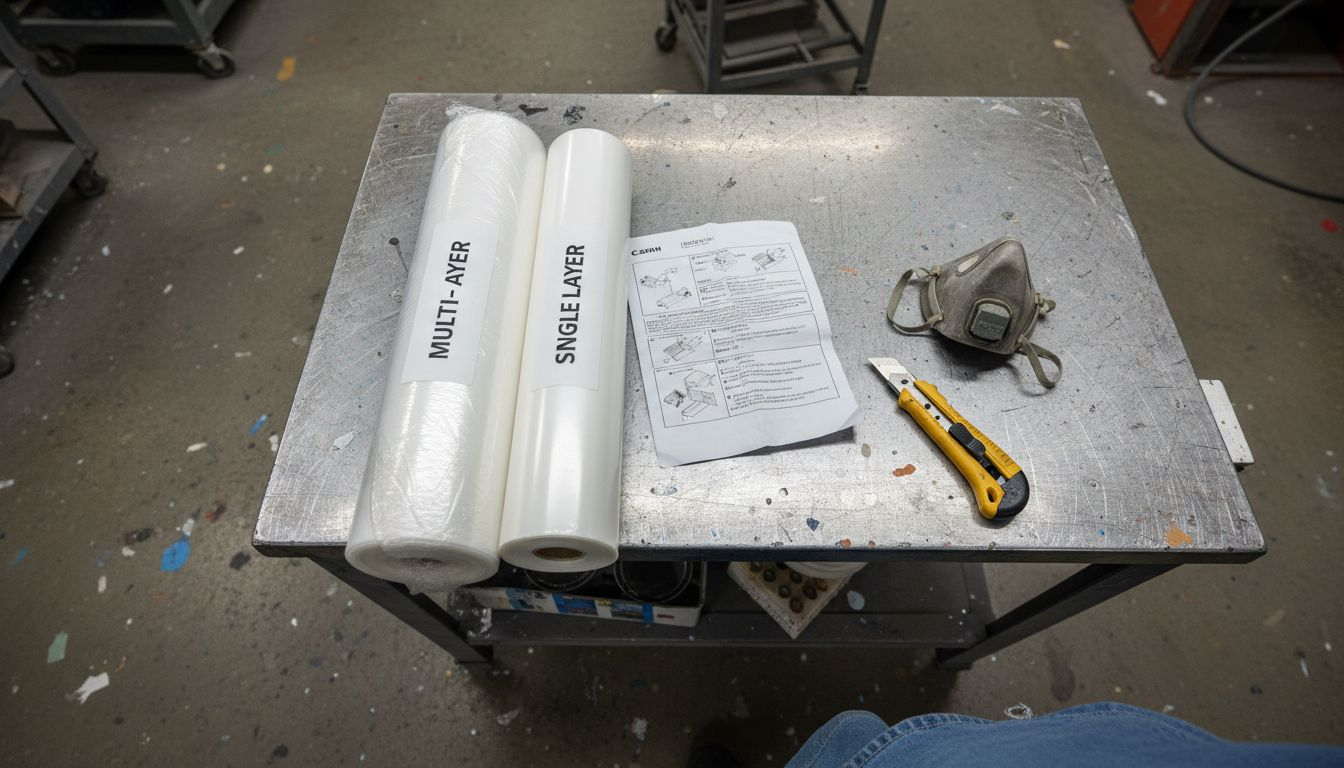
Single-layer films offer straightforward protection with a basic polymer structure. They work well for shops with lighter spray volumes or simpler coating applications where basic dust containment suffices. The trade-off is clear: lower cost upfront, easier recycling, simpler installation.
Multi-layer films stack multiple polymer materials to create superior barriers against contamination. These films combine different material properties to achieve what single layers cannot match alone. In high-performance environments, the enhanced protection justifies the additional investment.
Protection Performance Comparison
The differences between these options become obvious when you examine their protective capabilities. Multi-layer films provide superior barrier properties that single-layer alternatives simply cannot replicate.
Comparison of key performance factors:
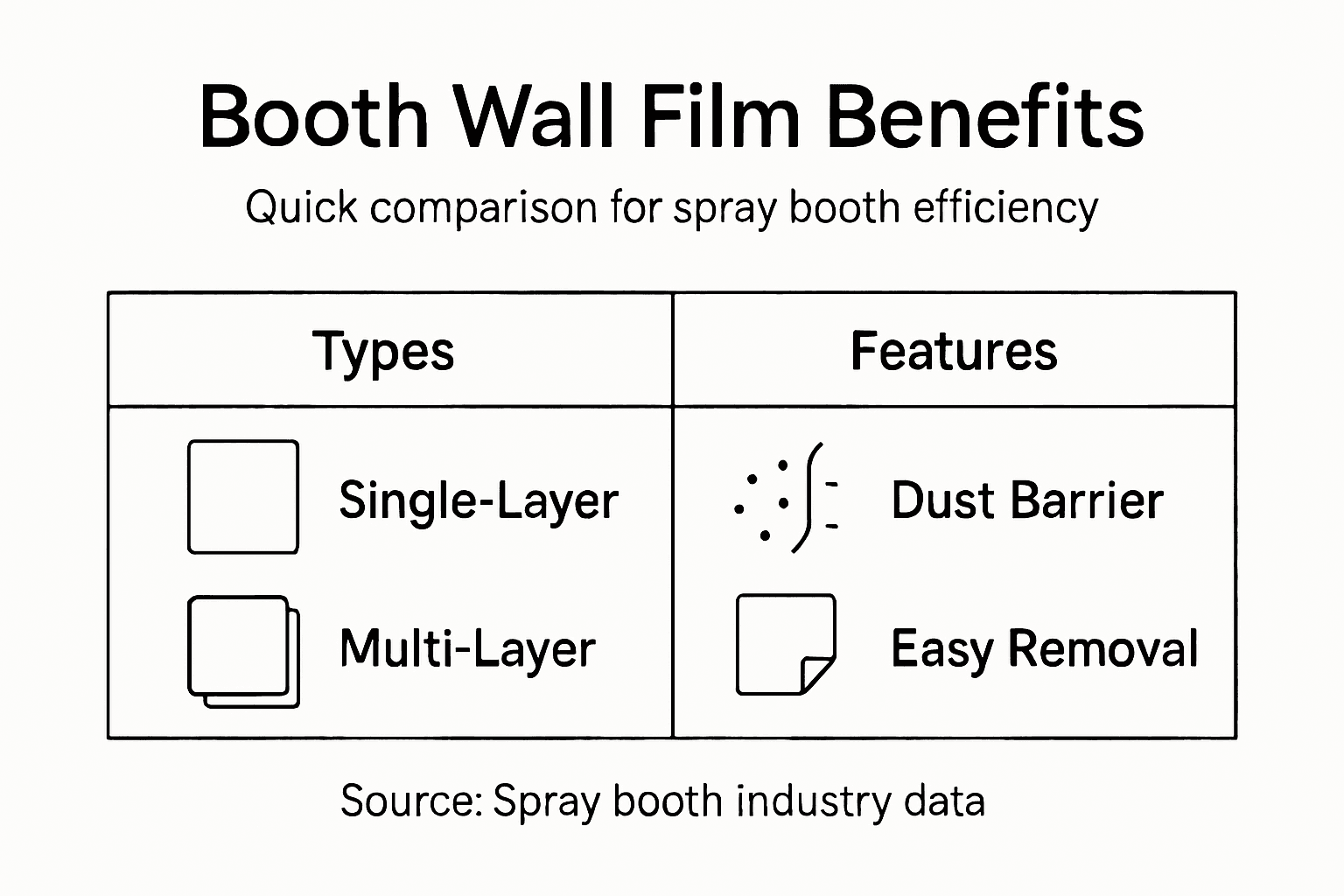
- Dust and overspray capture: Single-layer films trap basic contaminants; multi-layer films provide enhanced containment with better sealing properties
- Durability: Single-layer films degrade faster under chemical exposure; multi-layer films resist longer
- Moisture barrier: Single-layer offers minimal moisture protection; multi-layer films excel at blocking moisture penetration
- Mechanical strength: Single-layer films tear more easily; multi-layer films handle rough handling without puncturing
- Booth downtime: Single-layer requires more frequent replacement; multi-layer extends service life significantly
Cost-Benefit Reality for Your Shop
Budget matters, but cheap protection often costs more later. Single-layer films cost less initially but demand frequent replacement. Multi-layer films cost more upfront but reduce labor and replacement frequency.
Calculate your total cost per spray day, not just material cost. If you run high-volume operations, multi-layer becomes economical quickly. For occasional light work, single-layer makes sense financially.
Here’s a quick comparison of single-layer versus multi-layer booth wall film benefits and considerations:
| Aspect | Single-Layer Film | Multi-Layer Film |
|---|---|---|
| Upfront Investment | Low purchase cost | Higher initial price |
| Replacement Frequency | Requires frequent changes | Lasts longer per application |
| Labor Demand | More time spent on swapping | Less time spent overall |
| Best For | Low-volume or occasional shops | High-traffic or industrial booths |
| Typical Longevity | Weeks in heavy use | Months in most settings |
| Waste & Recycling | Easier disposal | More material per spent layer |
| Contaminant Protection | Basic overspray and dust | Blocks moisture, chemicals, impacts |
The cheapest film isn’t the most economical one. Total cost includes material, labor, and downtime—not just what you pay at purchase.
Automotive refinishing shops with daily spray operations typically find multi-layer protective films deliver better returns on investment. Industrial painting facilities with multiple booths running simultaneously almost always benefit from multi-layer solutions.
Pro tip: Calculate your film replacement frequency and labor cost per replacement, then compare that against the price difference between single and multi-layer options to determine true cost savings.
Key Features and How Booth Wall Film Works
Booth wall film combines several essential features that work together to create an effective dust control system. Understanding how these features function helps you select the right film for your booth’s specific demands.
The foundation of booth wall film effectiveness lies in its self-adhesive application system. This design allows quick, bubble-free installation without special tools or messy adhesives. Operators can apply film directly to walls, windows, and fixtures in minutes, minimizing booth downtime.
Once applied, the film creates a sacrificial barrier that absorbs the punishment your booth endures. Overspray particles, dust, and contaminants embed themselves into the film rather than settling on permanent surfaces. When saturation occurs, you simply peel away the compromised film and apply fresh protection.
Key Performance Features
Booth wall films feature several critical capabilities that distinguish them from generic protective coatings:
- Puncture and tear resistance prevents accidental damage during normal booth operations
- UV inhibitor protection maintains clarity and prevents yellowing or discoloration over time
- Solvent and paint overspray resistance ensures the film withstands chemical exposure without degrading
- Heat resistance allows the film to perform in heated spray booth environments
- Peelable design enables clean removal without leaving adhesive residue
How the Film Actually Works in Practice
Booth wall film functions as a peelable protective coating that forms a durable barrier across your booth’s interior surfaces. Self-adhesive spray booth films stick directly to walls and maintain excellent clarity, allowing workers to see booth conditions clearly without distortion.
The sequence works like this:
- Apply film to clean booth surfaces using the self-adhesive backing
- Paint overspray and dust accumulate on the film surface instead of permanent walls
- Lighting maintains clarity because the film stays transparent throughout its service life
- When saturation reaches unacceptable levels, peel away the entire contaminated layer
- Repeat the process with fresh film
Clean booth walls mean consistent paint quality. The film removes contamination variables by sacrificing itself instead of exposing permanent surfaces.
The film’s quick-drying properties mean you can resume painting operations almost immediately after application. Unlike traditional cleaning methods requiring chemicals, drying time, and labor, film replacement happens in minutes.
Removable protective films significantly reduce maintenance labor and operational downtime compared to scrubbing and chemical cleaning approaches.
Pro tip: Check your film’s clarity weekly—when you notice reduced light transmission or visible overspray buildup affecting visibility, schedule replacement immediately to prevent contamination from reaching underlying booth surfaces.
Application in Automotive and Industrial Settings
Booth wall film serves fundamentally different purposes depending on whether you operate an automotive refinishing center or an industrial painting facility. Both environments benefit from dust control, but their specific challenges and operational rhythms differ significantly.
Automotive refinishing demands rapid turnaround on individual vehicles. Your facility handles diverse jobs with varying paint types, clear coats, and color-matching requirements. Contamination from previous jobs can compromise current work, making environmental control critical for consistency.
Industrial painting operations typically process higher volumes with standardized coatings. Large manufacturing facilities paint components assembly-line style, where booth cleanliness directly affects throughput and product quality. A contaminated booth can halt production for multiple items simultaneously.
Automotive Refinishing Applications
Automotive shops face specific operational pressures. Booth wall films reduce maintenance time by eliminating the need for frequent deep cleaning between jobs. When transitioning from metallic red to pearl white to solid black, you cannot afford contamination carryover.
Key benefits for auto body shops:
- Quick job transitions: Peel away overspray from the previous vehicle, install fresh film, begin new job
- Workflow continuity: Minimize downtime between spray operations
- Color consistency: Prevent dust migration that causes paint matching failures
- Insurance protection: Reduce adhesion failures and warranty disputes from contaminated finishes
- Labor efficiency: Eliminate hours spent scrubbing booth walls between high-stakes jobs
Industrial Painting Facility Demands
Industrial settings operate at different scales. High-speed production requires multiple parallel booths running simultaneously. When one booth goes offline for cleaning, you lose significant output capacity.
Film replacement happens quickly without interrupting surrounding operations. While one booth undergoes film change, adjacent booths continue production. This parallel operation capability matters enormously in high-volume manufacturing environments.
Industrial advantages include:
- Sustained production throughput without booth downtime
- Predictable coating quality across large batch quantities
- Reduced chemical consumption from eliminated deep cleaning
- Protection of expensive booth lighting and fixtures from corrosive overspray
- Simplified compliance documentation for quality control systems
Both automotive and industrial operations depend on the same principle: clean booths produce consistent results. Film makes that consistency achievable without disrupting production.
Protective films boost overall efficiency in both environments by eliminating the contamination variable from your process.
Pro tip: Schedule your film replacement during shift changes or between job batches, not during peak production windows, to maximize booth availability while maintaining cleanliness standards.
Common Pitfalls When Choosing Booth Wall Film
Selecting booth wall film involves more than grabbing the cheapest option off the shelf. Many facility managers make critical mistakes that compromise dust control, increase maintenance labor, and reduce operational efficiency down the line.
The most dangerous mistake is prioritizing initial cost over performance. A $200 budget film that fails after three weeks costs far more than a $350 premium film lasting three months. You pay for replacement labor, application time, and booth downtime—not just material.
Another common error involves ignoring film compatibility with your booth environment. Your spray booth operates at specific temperatures, humidity levels, and chemical exposures. Selecting film without verifying these specifications leads to premature failure and wasted investment.
Critical Selection Mistakes
When choosing booth wall film, overlooking environmental stress resistance creates expensive problems. Heat from booth operation, solvent exposure, and UV light degradation all shorten film lifespan if the product cannot withstand your conditions.
Common pitfalls include:
- Neglecting thickness specifications: Thin film tears easily; excessive thickness wastes material and money
- Ignoring adhesive tackiness: Poor adhesive causes wrinkles, bubbles, and early peeling
- Skipping temperature compatibility: Film fails when exposed to booth heat it cannot handle
- Missing ease-of-application requirements: Complex installation creates labor costs that eliminate savings
- Overlooking removal properties: Film that leaves adhesive residue requires chemical cleanup
Installation and Compatibility Oversights
Many buyers fail to verify ease of installation and removal before purchasing. Some films require special tools, primer, or careful technique. Others leave sticky residue that requires chemical stripping or labor-intensive scrubbing.
Your facility needs film that applies cleanly in minutes and peels away without residue. If application takes hours or removal demands chemical treatment, you lose the efficiency gains that justify the investment.
Bad film selection costs money in ways you don’t immediately see—wasted labor, booth downtime, and reduced productivity add up faster than material savings.
Temperature compatibility matters enormously. Film designed for room-temperature storage may fail when exposed to heated booth conditions. Dust-free spray booth performance depends on film that maintains integrity throughout your actual operating conditions, not theoretical ideal conditions.
Verify your booth’s operating temperature, humidity range, and typical solvent exposures before selection. Match these specifications to the film’s performance ratings, not assumptions.
The following table summarizes key booth wall film selection criteria and their practical impact:
| Selection Factor | Why It Matters | Real-World Consequence |
|---|---|---|
| Thickness | Balances protection with cost | Too thin tears, too thick wastes |
| Adhesive Strength | Prevents bubbles or peeling | Ensures firm, residue-free hold |
| Temperature Ratings | Withstands booth heat or cold | Avoids melting or cracking |
| Chemical Resistance | Handles solvents, paints, cleaners | Preserves booth during operations |
| Ease of Removal | Enables fast, clean changeovers | Reduces downtime and extra labor |
Pro tip: Request a sample and test it on your actual booth for one full week before committing to bulk purchase—real-world performance under your specific conditions beats manufacturer promises every time.
Elevate Your Spray Booth Dust Control with Proven Protection Solutions
The article highlights critical challenges in maintaining a dust-free, high-quality painting environment by using booth wall film as a sacrificial barrier. If you are facing frequent rework, paint defects, and costly downtime caused by overspray and contamination, you understand how vital a durable and easy-to-apply protective film is to your operation. Key pain points such as frequent film replacement, chemical exposure, adhesive failures, and heat resistance demand a reliable solution that matches your booth’s unique needs.
At Dust Free Film, we specialize in premium multi-layer protective films that address exactly these concerns with innovative features like heat resistance, static-free performance, and patented bubble-free application. Our products help automotive refinishing shops and industrial paint facilities minimize maintenance labor, reduce contamination risks, and extend booth life — turning the frustrating cycle of frequent cleaning into a streamlined, cost-effective workflow.
Discover how our proven booth wall protection can make dust control effortless in your spray booth.
Stop letting contamination control slow your production. Visit Dust Free Film now to explore durable, easy-to-install booth wall films designed for maximum efficiency. Learn more about our innovative multi-layer protective films and how simple installation with our patented system can transform your dust management strategy. Take the first step toward flawless finishes and increased productivity today by getting your free consultation at Dust Free Film.
Frequently Asked Questions
What is booth wall film?
Booth wall film is a protective barrier applied to spray booth walls that shields them from overspray, dust, and contaminants during painting operations, ensuring clean work surfaces and better paint quality.
How does booth wall film work?
Booth wall film acts as a sacrificial layer that traps overspray and dust particles, preventing them from settling on your painted surfaces. When the film becomes saturated, it can be easily peeled away, taking the contaminants with it.
What are the differences between single-layer and multi-layer booth wall films?
Single-layer films offer basic protection and are ideal for lower-volume operations, while multi-layer films provide enhanced containment, durability, and chemical resistance, making them better suited for high-performance environments with frequent spray jobs.
How can I maximize the life of my booth wall film?
To maximize the lifespan of your booth wall film, plan replacement based on your spray volume rather than just visible dirt. Regularly check for saturation and replace the film before it reaches unacceptable levels of contamination.
Recommended
- Booth Floor Protection: Preventing Dust for Quality Finishes
- How to Optimize Spray Booth Efficiency for Dust-Free Results
- Paint Booth Cleaning Guide for Superior Dust Control
- Spray Booth Maintenance Workflow for Dust-Free Results
- Professional Air Duct Cleaning: 2025’s Ultimate Clean
- Industrial Strength Solutions: Pro Waterproofing’s Expert Insights
- Efficient Gutter Cleaning Workflow for Property Managers