

Every operations manager knows the cost of a single dust particle in automotive refinishing—a flaw in the finish, a returned job, or hours spent on rework. Dust contamination impacts everything from paint quality to regulatory compliance, affecting productivity and customer satisfaction. Focusing on dust management means you gain control over surface defects, reduce health risks, and cut unnecessary costs. This article explains how effective dust management in your facility safeguards your finish quality and drives real savings.
Table of Contents
- Defining Dust Management In Paint Operations
- How Dust Impacts Paint Quality And Finish
- Modern Dust Protection Methods In Spray Booths
- Cost Savings And Efficiency Through Dust Control
- Avoiding Common Mistakes In Dust Management
Key Takeaways
| Point | Details |
|---|---|
| Importance of Dust Management | Dust management is essential for maintaining paint quality and operational efficiency, preventing costly defects and rework. |
| Three Core Elements | Effective dust control focuses on source control, airflow management, and surface protection to create a clean working environment. |
| Health and Compliance | Proper dust management protects worker health and ensures compliance with regulatory standards, reducing exposure to harmful materials. |
| Cost Efficiency | Investing in dust control saves money by reducing rework, material waste, and prolonging equipment life, leading to improved operational efficiency. |
Defining Dust Management in Paint Operations
Dust management in automotive refinishing isn’t just a housekeeping task—it’s a core operational strategy that directly impacts your bottom line. When dust contaminates painted surfaces, you face rework costs, customer complaints, and delayed deliveries. Understanding what dust management actually means helps you protect quality and maintain efficiency.
What Dust Management Actually Covers
Dust management means controlling airborne particles before they land on your workpieces. Dust control practices focus on identifying where dust originates, preventing it from reaching spray zones, and cleaning contaminated areas. It’s not one solution—it’s a system.
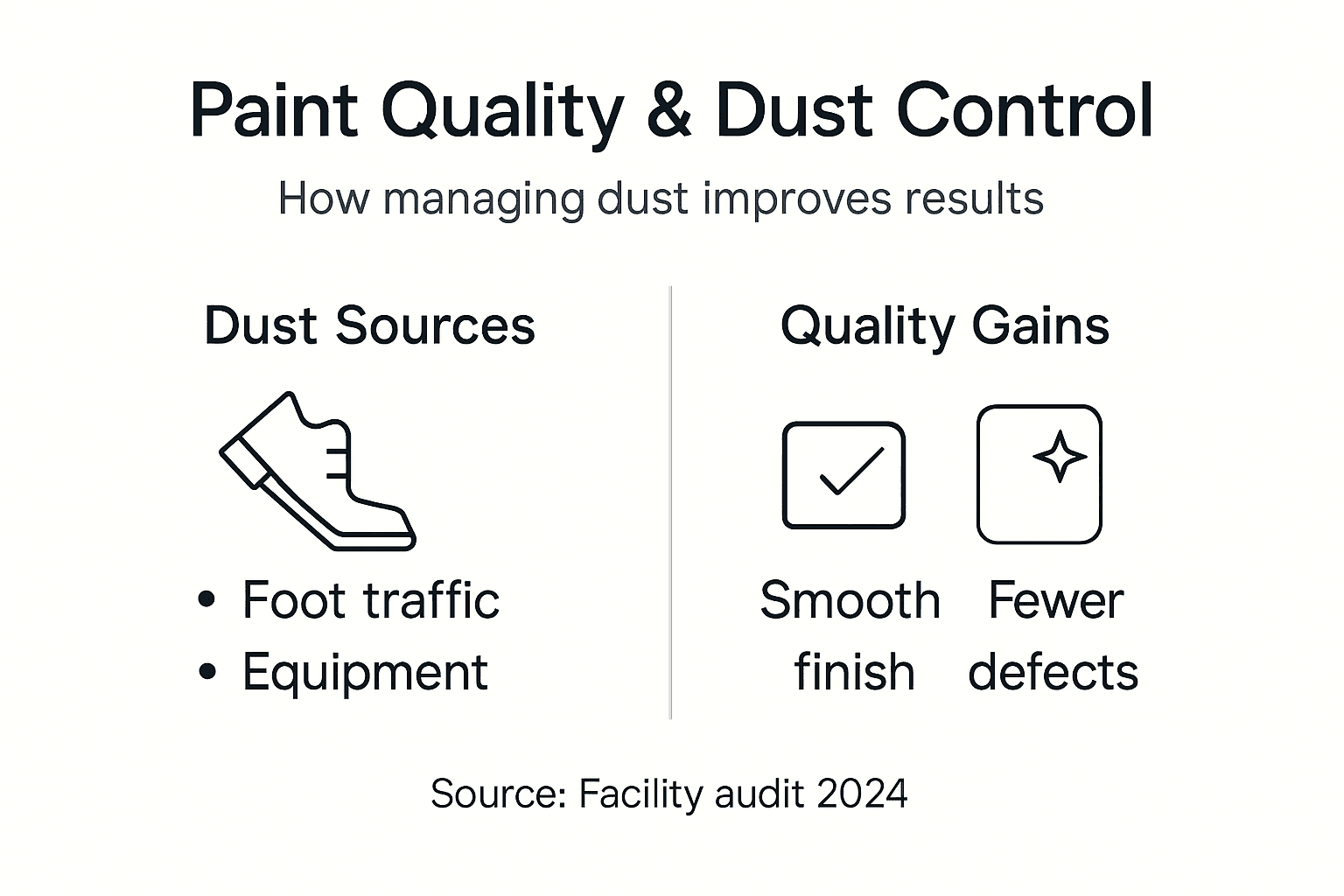
Your dust sources vary across the facility. High-traffic areas near production floors generate constant contamination. Doors, windows, and material staging zones introduce outside particles. Even equipment movement and worker activity create airborne dust that travels into your booths.
Why This Matters to Operations Managers
A single dust particle embedding in wet paint creates a defect that demands costly rework. You can’t sand it out without affecting the finish. You can’t ignore it without losing the customer. The time your crew spends fixing these defects compounds—one bad batch delays three more jobs downstream.
Managing dust means fewer stopped production lines. It means higher first-pass quality rates. It means your painters spend time painting, not troubleshooting contaminated finishes.
The Three Core Elements of Dust Management
Effective dust control requires attention across three areas:
- Source control: Minimize dust generation at entry points and high-traffic zones through barrier systems and traffic management
- Airflow management: Direct air movement away from paint areas using proper booth ventilation and containment strategies
- Surface protection: Use protective barriers on walls, floors, and equipment to catch particles before they reach painted surfaces
Health and Compliance Implications
Hazardous dust control extends beyond paint quality—it protects your team and meets regulatory requirements. Lead dust, particularly in automotive refinishing, poses serious health risks. Containing and cleaning dust regularly prevents worker exposure and environmental contamination. EPA guidance emphasizes frequent cleaning and dust containment as best practices for maintaining both paint quality and worker safety.
Your responsibility includes protecting air quality during operations and managing settled dust that accumulates over time. This isn’t optional compliance—it’s foundational to operating responsibly.
The Operational Connection
Dust management directly links to your spray booth workflow and quality outcomes. When you implement proper dust control, painters gain confidence in their environment. They know contamination won’t wreck their work. Rework cycles drop. Delivery timelines stabilize.
Effective dust management creates a predictable, controlled environment. Your team spends less time battling contamination and more time delivering consistent results.
Here’s a summary of how dust management benefits different areas of automotive refinishing operations:
| Area Impacted | Improvement from Dust Control | Business Result |
|---|---|---|
| Paint Quality | Fewer surface defects | Higher customer satisfaction |
| Workflow Efficiency | Reduced rework and delays | Improved delivery times |
| Health & Compliance | Lower hazardous exposure | Fewer regulatory violations |
| Equipment Maintenance | Less filter and fan clogging | Extended equipment lifespan |
Pro tip: Map your dust sources by observation—document where particles enter your facility during a typical production day, then prioritize barriers and traffic controls at the highest-risk areas for fastest quality improvements.
How Dust Impacts Paint Quality and Finish
Dust doesn’t just sit on your painted surfaces—it becomes part of them. When a dust particle lands on wet paint, it’s trapped forever. You can’t brush it off. You can’t ignore it. Your only option is stripping the part and starting over, which costs time and materials you can’t recover.
Visible Defects That Cost You Money
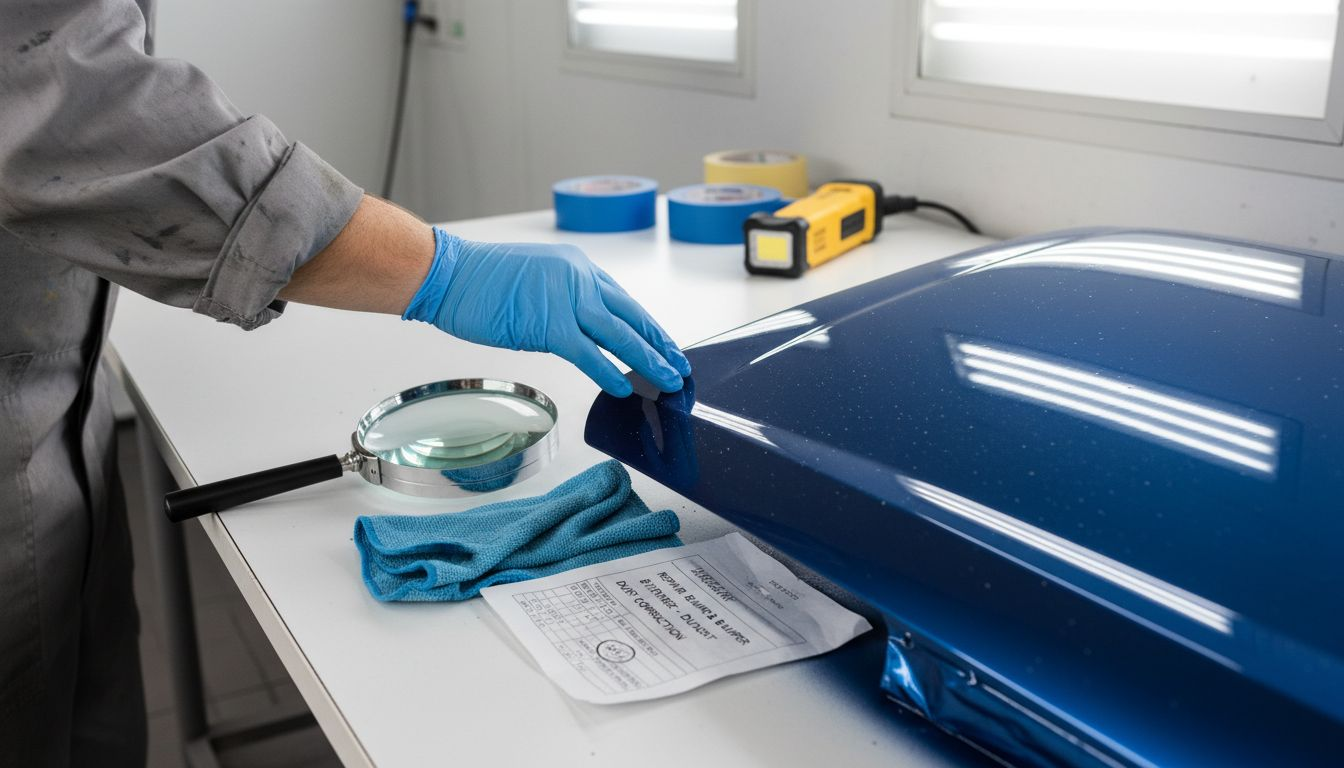
Dust creates obvious problems that customers see immediately. Paint surface defects range from rough texture to discoloration to glossiness variations. A particle the size of a grain of salt creates a noticeable bump in the finish. Multiple particles turn a premium finish into a rejected panel.
Uneven texture is the most common complaint. Painters spend hours sanding and repainting to match the rest of the vehicle. That rework time multiplies across your schedule.
Hidden Quality Issues
Some dust damage doesn’t show immediately. Contamination reduces paint adhesion, meaning coatings peel or flake under stress or temperature changes. A finish that looks perfect in the booth fails during transportation or customer use. Now you’re handling warranty claims and reputation damage.
Dust also interferes with proper paint flow and leveling. The paint doesn’t level smoothly over particles, creating valleys and peaks in the surface. This affects both appearance and durability.
The Health and Contamination Risk
Dust in automotive refinishing often contains hazardous materials. Lead-contaminated dust persists long after spraying stops, creating ongoing exposure risks for your team. Proper dust containment using wet methods and high-efficiency vacuums prevents both surface defects and health hazards.
Contamination doesn’t stay in your booth. Settled dust migrates to other production areas, spreading problems across your facility.
Types of Defects Dust Creates
- Orange peel texture: Rough surface caused by particles disrupting paint flow
- Fish eyes: Small circular depressions where dust repels paint during application
- Sags and runs: Paint pools around particles instead of leveling uniformly
- Reduced gloss: Surface roughness from embedded contaminants dulls the finish
- Adhesion loss: Particles create separation points where coatings fail to bond
Real Cost of Rework
One contaminated panel costs labor for stripping, prep work, and repainting. But the schedule impact compounds. Delayed panels back up your production queue. Your painters stand idle waiting for stripped parts. Delivery promises slip. Customers complain.
A single dust event can cascade into lost productivity worth thousands of dollars. Prevention is vastly cheaper than correction.
Dust contamination isn’t just a cosmetic issue—it directly reduces coating durability and creates health risks that persist after production ends.
Pro tip: Inspect parts immediately after painting under LED lighting at a low angle to catch dust defects before the paint fully cures, allowing you to address problems while rework is still quick and less costly.
Modern Dust Protection Methods in Spray Booths
Your spray booth isn’t just a painted box—it’s an engineered system designed to trap dust before it reaches your work. Modern booths combine ventilation, filtration, and physical barriers to create predictable, clean environments. Understanding these systems helps you maintain them properly and maximize their effectiveness.
Ventilation and Airflow Control
Controlled ventilation systems form the foundation of dust management in spray booths. Air flows in a specific pattern, capturing overspray and dust before they settle on painted surfaces. Negative pressure inside the booth ensures contaminated air moves toward collection systems, not toward your work.
Proper airflow velocity matters. Too slow, and dust settles on parts. Too fast, and turbulence creates uncontrolled movement patterns. Your booth should maintain a consistent, gentle flow that sweeps contamination away without disrupting paint application.
Two Primary Booth Technologies
Modern facilities use two different approaches, each with advantages:
- Dry filter booths: Use replaceable filter media and baffle plates to capture dust and overspray before exhaust. Filters trap particles mechanically, requiring regular replacement. These work well for high-volume operations with consistent material types.
- Water-wash systems: Use water to capture and settle overspray particles, then drain contaminated water away. These reduce particulates in exhaust streams and recover more usable material. Water-wash booths work better when you need flexibility with different paint types.
Physical Barrier Protection
Ventilation alone isn’t enough. Spray booth dust protection includes engineered enclosures that physically confine overspray and contamination. Booth walls, floors, and surfaces must prevent dust from escaping and re-entering your spray zone.
Protective films on booth surfaces serve this purpose directly. They create disposable barriers that capture dust and overspray, then get replaced when saturated. This prevents contamination from accumulating on permanent booth surfaces and reduces cross-contamination between jobs.
The following table compares dry filter and water-wash spray booth systems:
| Booth Type | Dust Removal Method | Best Used For | Maintenance Demand |
|---|---|---|---|
| Dry Filter Booth | Replaceable filters, baffles | High volume, consistent paint | Frequent filter changes |
| Water-Wash Booth | Water captures particles | Mixed paint applications | Regular water treatment |
How These Systems Work Together
Modern booths integrate multiple layers of protection:
- Enclosure confines overspray and dust within the booth space
- Ventilation moves contaminated air toward collection systems
- Filters or water systems capture particles from the air stream
- Protective surface barriers trap residual dust before it settles
- Regular cleaning removes accumulated contamination
Maintenance Is Where Protection Happens
The best equipment fails without proper upkeep. Clogged filters reduce airflow and allow dust bypass. Dirty booth surfaces become dust sources themselves. Ventilation systems lose effectiveness when intake vents are blocked.
Your maintenance schedule directly impacts dust control performance. Filter replacements, surface cleaning, and airflow verification aren’t optional tasks—they’re core to maintaining paint quality.
Effective dust protection requires treating your booth as a system, not isolated components—ventilation, filtration, and physical barriers all work together to maintain a clean environment.
Pro tip: Monitor your booth’s air velocity weekly using a handheld anemometer at multiple points—consistent readings indicate proper maintenance, while drops signal filter saturation or ventilation issues before dust contamination reaches your paint.
Cost Savings and Efficiency Through Dust Control
Dust control isn’t an expense—it’s an investment that pays back in weeks. Every hour your painters spend fixing contaminated finishes costs you labor, materials, and schedule delays. Every rejected panel costs rework labor plus lost production capacity. The math is straightforward: controlling dust upfront costs far less than managing its aftermath.
Material Waste and Rework Costs
Contamination creates immediate material losses. Paint overspray requires cleanup solvents and disposal. Contaminated panels demand complete stripping and repainting, doubling your paint consumption for that job. Dust control reduces material waste by preventing defects that trigger costly rework cycles.
Calculate your rework costs honestly. Track how many panels require re-spray due to contamination monthly. Multiply by your per-panel rework labor rate. That number is your baseline savings opportunity through better dust control.
Paint Efficiency and Transfer Rates
High transfer efficiency painting technologies incorporate dust control to reduce overspray and material loss. Better dust management means less paint waste during application. You use less paint per vehicle while achieving better coverage and adhesion.
Less paint consumption directly impacts your material costs. Over a year, reducing overspray by 15 percent saves thousands in paint purchases alone.
Equipment Life and Maintenance
Dust damages more than just your painted parts—it fouls your equipment. Accumulated particulates clog filters, reduce airflow, and force your ventilation systems to work harder. This accelerates component wear and increases maintenance frequency.
Clean environments extend equipment life significantly. Filters last longer. Fans run cooler. Compressors work more efficiently. Lower maintenance costs compound over time.
Direct and Indirect Cost Benefits
Dust control delivers savings across multiple areas:
- Labor efficiency: Painters spend less time troubleshooting contamination and more time productive spraying
- First-pass quality: Fewer defects mean fewer rework hours and faster job completion
- Material costs: Reduced paint waste and overspray lower consumption rates
- Equipment maintenance: Extended service intervals and fewer emergency repairs
- Compliance costs: Better dust management reduces regulatory exposure and health-related expenses
- Schedule reliability: Fewer delays mean better on-time delivery performance
Calculating Your ROI
Start with your monthly rework hours due to contamination. Multiply by your labor rate plus materials. That’s your monthly cost of dust problems. Most facilities discover this number is higher than expected—often 8 to 15 percent of total painting labor.
Now compare that against the cost of implementing better dust control. Protective booth films, filter replacements, and maintenance improvements typically pay for themselves within months.
Dust control transforms from a cost center into a profit center when you measure the rework costs it prevents and the efficiency gains it delivers.
Operational Efficiency Gains
Beyond direct cost savings, dust control improves your operation’s predictability. Your painters work with confidence knowing the environment won’t sabotage their work. Quality becomes consistent rather than variable. Delivery schedules become reliable.
These intangible benefits translate to customer satisfaction, repeat business, and reputation protection—value that extends beyond spreadsheet calculations.
Pro tip: Conduct a contamination audit this month—document every panel requiring rework due to dust, calculate total labor and materials spent, then use that number to justify your dust control investment, since most facilities find the ROI appears within 6 to 12 weeks.
Avoiding Common Mistakes in Dust Management
Most operations managers don’t start with poor dust management intentions. They inherit systems that worked yesterday, skip steps to save time, or assume “good enough” containment is sufficient. These shortcuts compound into serious quality problems. Understanding where facilities go wrong helps you avoid costly mistakes.
Inadequate Containment Planning
The first mistake is treating containment as an afterthought. You can’t retrofit proper dust control into a poorly designed space. Inadequate containment allows dust accumulation and dispersion that undermines even the best painting techniques.
Containment requires planning before production starts. Identify dust sources, map airflow patterns, and position barriers strategically. Half-measures like covering some surfaces while leaving others exposed create pathways for contamination to reach your work.
Infrequent or Inconsistent Cleaning
Dust doesn’t disappear—it accumulates. Facilities often clean booths only when problems become obvious. By then, contamination has already compromised multiple jobs. Effective dust management requires regular, scheduled cleaning before saturation occurs.
Your cleaning schedule should be data-driven, not guesswork. Monitor dust accumulation rates under normal production and clean before reaching critical levels. Consistency matters more than intensity—frequent light cleaning beats occasional deep scrubbing.
Neglecting Hazard Analysis and Verification
A critical error is skipping documentation of dust risks and control measures. Dust hazard analyses verify control effectiveness and identify gaps before they cause problems. Without this analysis, you’re operating blind.
Conduct formal hazard assessments. Document where dust originates, how it travels, and what controls prevent contamination. Verify your controls actually work through testing and observation. Update assessments when processes change.
Skipping Employee Involvement
Dust management fails when only management enforces procedures. Your painters see contamination issues firsthand. They know which areas create problems and which controls work best. Excluding them from dust management planning guarantees incomplete solutions.
Involve your entire team in identifying problems and developing controls. Their frontline experience reveals blind spots that managers miss.
Common Specific Mistakes
Facilities frequently make these preventable errors:
- Using inappropriate suppression methods: Water works in some situations, chemicals in others—wrong choice reduces effectiveness
- Installing filters without maintenance plans: New filters capture dust; neglected filters become dust sources
- Ignoring air velocity measurements: Assuming airflow is adequate without verification leads to dead zones where dust settles
- Failing to seal gaps: Small openings in containment defeat the entire system
- Changing materials without reassessing controls: New paint types generate different dust profiles requiring adjusted management
Monitoring Gaps
You can’t manage what you don’t measure. Many facilities lack basic dust monitoring. Without data, you don’t know whether controls work or contamination is worsening. Visual inspection alone misses problems accumulating between cleaning cycles.
Implement simple monitoring. Track dust accumulation visually on reference surfaces. Use air quality monitors periodically. Document rework rates attributed to contamination. This data drives continuous improvement.
Dust management failures happen not because facilities lack solutions, but because they skip the planning, documentation, and verification steps that make solutions effective.
Pro tip: Create a dust management checklist covering containment inspection, cleaning frequency, hazard assessment updates, and employee feedback review—then assign ownership to one person who audits compliance weekly, catching drift before it becomes an expensive problem.
Elevate Your Paint Quality with Proven Dust Protection Solutions
Dust contamination creates costly defects and disrupts your workflow by forcing rework and delays. If you want to reduce surface imperfections like orange peel texture or fish eyes and protect your finish from hidden adhesion loss, controlling dust before it settles is essential. Effective dust management depends on controlling airborne particles and protecting spray booth surfaces with reliable barriers designed for durability and quick installation.

Discover how Dust Free Film can transform your spray booth environment with premium protective films engineered to block dust contamination. Our patented multi-layer electrostatic films provide static-free, heat-resistant coverage for walls and floors, helping reduce rework costs while extending equipment life. Embrace a dust-free operation and enjoy improved paint quality, higher first-pass rates, and safer working conditions starting today. Visit Dust Free Film’s protective solutions now to learn how simple changes in your dust control strategy yield lasting results.
Frequently Asked Questions
What is dust management in paint operations?
Dust management in paint operations refers to the strategies and practices employed to control airborne particles that can contaminate painted surfaces, affecting quality and leading to costly rework.
How does dust impact paint quality and finish?
Dust can create surface defects such as orange peel texture or fish eyes, affecting the durability and appearance of the finish. Once dust is embedded in paint, it can lead to costly rework or warranty claims.
What are effective strategies for controlling dust in a spray booth?
Effective strategies include source control to minimize dust generation, proper airflow management to direct air away from painted surfaces, and surface protection using barriers that capture particles before they settle.
How can improper dust management affect production efficiency?
Improper dust management can lead to increased rework, delayed production schedules, and reduced quality, ultimately impacting customer satisfaction and the profitability of paint operations.