

Dust protection often determines the outcome of every paint job in large automotive repair shops. Facility managers across European sites report that even minor contamination can ruin up to 30 percent of spray booth finishes, causing costly rework. With American paint standards setting the benchmark for flawless results, improving dust control in high-traffic spray environments matters more than ever. This guide uncovers proven strategies for identifying contamination risks and maximizing booth cleanliness, so you can deliver top-tier finishes that meet demanding specifications.
Table of Contents
- Step 1: Evaluate Booth Conditions And Identify Dust Risks
- Step 2: Prepare Surfaces For Protective Film Application
- Step 3: Install Multi-Layer Electrostatic Protection Films
- Step 4: Use Patented Dispenser Systems For Bubble-Free Coverage
- Step 5: Inspect Film Installation And Ensure Optimal Coverage
Quick Summary
| Key Insight | Explanation |
|---|---|
| 1. Identify Dust Contamination Sources | Conduct a thorough assessment of the booth to pinpoint dust risks from external and personnel sources. |
| 2. Implement Strict Dust Control Protocols | Limit booth access and require protective gear to reduce dust introduction from personnel movement. |
| 3. Ensure Thorough Surface Preparation | Clean all surfaces meticulously to allow optimum adherence of protective films and minimize defects. |
| 4. Use Advanced Dispenser Systems | Leverage patented dispensers to apply films smoothly, ensuring bubble-free coverage and consistent protective barriers. |
| 5. Inspect Film Installation Rigorously | Regularly check installations for gaps or imperfections to maintain a dust-free environment and protect paint quality. |
Step 1: Evaluate Booth Conditions and Identify Dust Risks
Successfully protecting your spray booth requires a systematic approach to identifying potential dust contamination sources. This critical initial step helps you understand and mitigate risks that could compromise paint quality and finish.
Start by conducting a comprehensive environmental assessment of your spray booth. Dust risks originate from multiple pathways, including external atmosphere, personnel clothing, and surrounding workspace. Dust source tracking reveals critical contamination points that impact paint performance. Focus on key areas like intake filters, worker entry points, and surrounding floor surfaces.
Personnel movement represents a significant dust introduction mechanism. Implement strict protocols such as limiting booth access, requiring specialized protective gear, and using contamination control measures. Preventative strategies like sticky mats and shoe covers can dramatically reduce particulate intrusion. Assess workers clothing for potential fiber shedding and recommend lint-free coveralls to minimize external contamination.
Here’s a summary of common dust contamination risks and effective prevention strategies in spray booths:
| Contamination Source | Risk Level | Preventative Action |
|---|---|---|
| External atmosphere | High | Use tight booth seals and filters |
| Personnel movement | Significant | Require lint-free protective gear |
| Flooring and surfaces | Moderate | Apply sticky mats, regular cleaning |
| Worker clothing fibers | Moderate | Recommend lint-free coveralls |
| Equipment entry points | Variable | Seal gaps and monitor entry traffic |
Pro Tip: Invest in a portable particle counter to precisely measure dust levels and validate your contamination control strategies.
Step 2: Prepare Surfaces for Protective Film Application
Preparing spray booth surfaces for protective film application demands meticulous cleaning and precise preparation techniques. Your goal is to create an immaculate surface that ensures optimal film adherence and prevents potential contamination issues.
Begin by thoroughly cleaning all surfaces using specialized solvents and non-linting cloths. Comprehensive surface preparation prevents film defects and ensures a smooth application. Remove all traces of dust, grease, polishing compounds, and industrial residues using recommended cleaning agents. Pay special attention to walls, floors, and work surfaces that will receive protective film coverage.
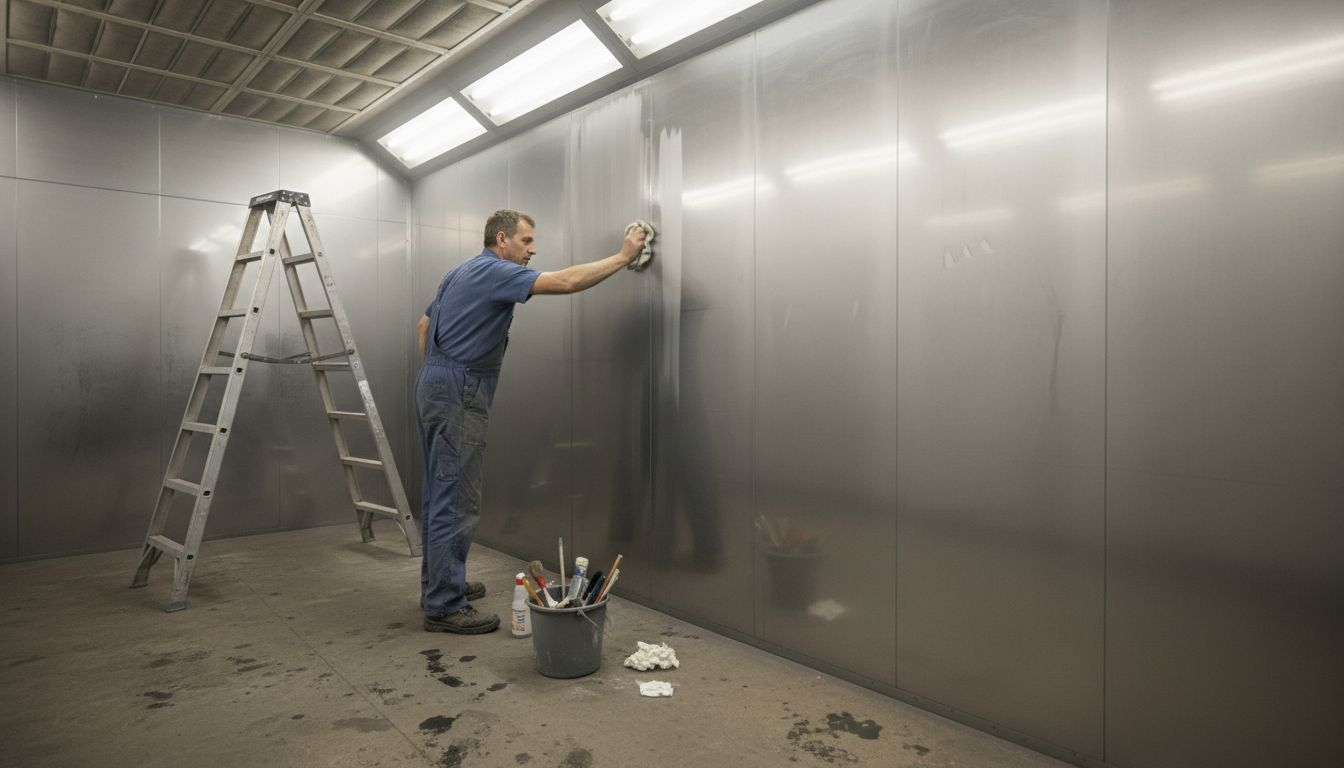
Temperature and humidity control are critical during surface preparation. Ensure the workspace maintains consistent environmental conditions to prevent moisture trapping or film bubbling. Use lint-free microfiber cloths and industry-approved cleaning solutions to eliminate contaminants. Systematic surface cleaning techniques minimize the risk of particulate interference during film application. Allow surfaces to dry completely before proceeding with film installation.
Pro Tip: Invest in high-quality disposable cleaning wipes specifically designed for industrial surface preparation to guarantee consistent and thorough cleaning results.
Step 3: Install Multi-Layer Electrostatic Protection Films
Installing multi-layer electrostatic protection films requires precision and careful technique to create an effective dust barrier in your spray booth. Your goal is to strategically deploy protective films that capture and eliminate airborne contaminants during painting operations.
Multi-layer electrostatic protection strategies work by attracting dust particles away from critical surfaces. Begin by selecting high-quality electrostatic films designed specifically for spray booth environments. Carefully unroll each film layer, ensuring smooth application without wrinkles or air bubbles. Start with the floor, then progress to wall surfaces, maintaining consistent tension and alignment throughout the installation process.
Precise film placement is crucial for maintaining proper airflow and dust capture efficiency. Electrostatic film installation techniques require careful attention to static charge balance and surface coverage. Overlap film edges slightly to create a continuous protective barrier, and use specialized application tools to ensure uniform adhesion. Pay close attention to corners, edges, and potentially problematic areas where dust might accumulate.
Pro Tip: Use a soft squeegee with controlled pressure to eliminate air pockets and ensure maximum film adhesion during installation.
The table below highlights key benefits of using multi-layer electrostatic protection films versus single-layer or no film approaches:
| Method | Dust Capture Effectiveness | Film Lifespan | Maintenance Frequency |
|---|---|---|---|
| Multi-layer electrostatic film | Excellent | Extended (months) | Low (peel away as needed) |
| Single-layer non-electrostatic | Moderate | Shorter (weeks) | Medium (frequent replacement) |
| No protective film | Poor | N/A | High (constant cleaning) |
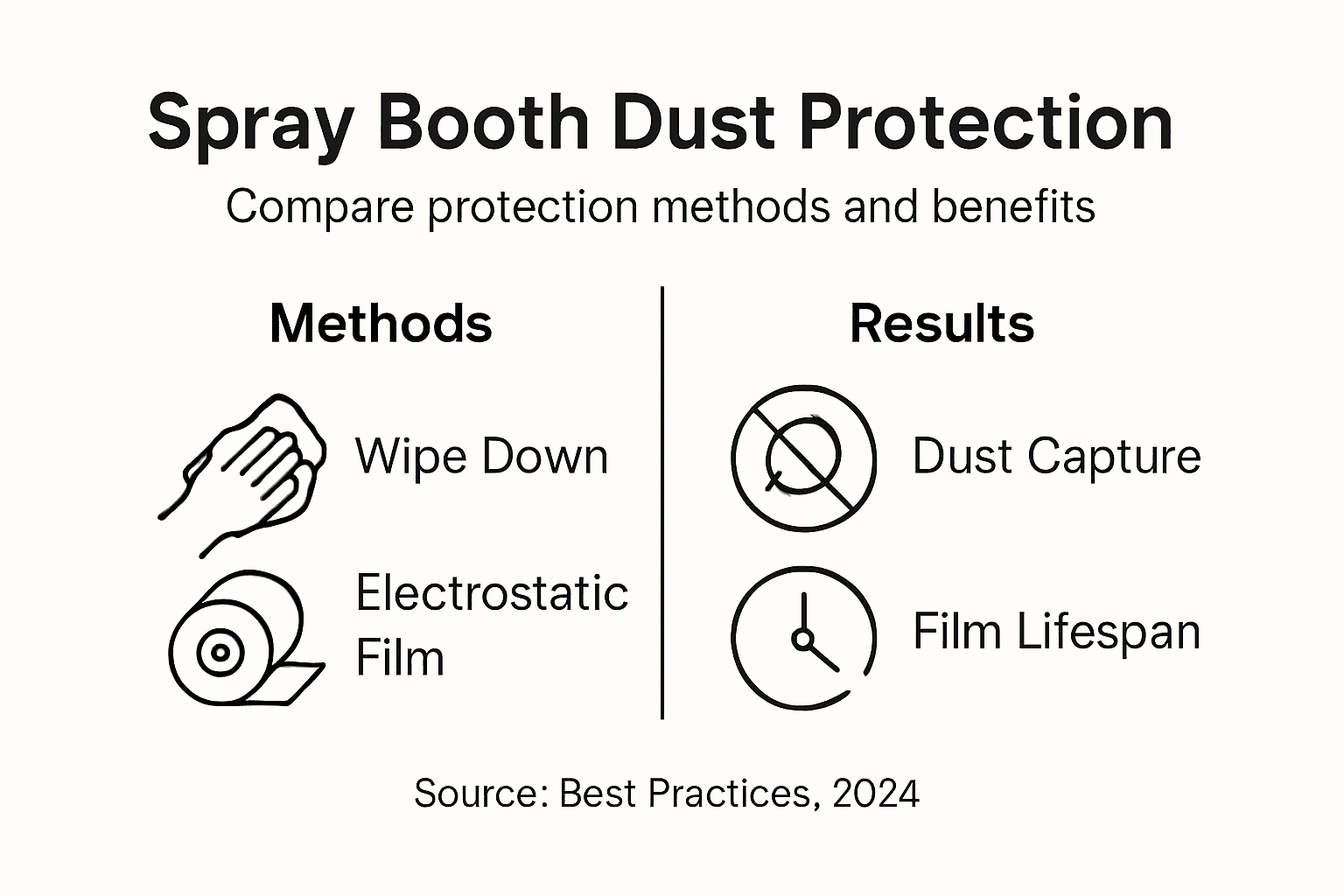
Step 4: Use Patented Dispenser Systems for Bubble-Free Coverage
Successfully applying protective films in spray booths demands precision and the right technological approach. Your mission is to leverage advanced dispensing systems that guarantee smooth, bubble-free film coverage across critical surfaces.
Patented dispenser technologies regulate film application by controlling tension and pressure during installation. Position the dispenser at a consistent angle, maintaining steady tension to prevent wrinkles or air pockets. Start at one edge of the surface and slowly unroll the film, using controlled movements that minimize potential contamination points.
Precision is key when working with electrostatic protective films. Advanced dispensing minimizes air entrapment during application, ensuring a seamless protective barrier. Focus on maintaining uniform pressure and alignment throughout the installation process. Work methodically across surfaces, overlapping edges slightly to create a continuous protective layer that blocks dust and particulate intrusion.
Pro Tip: Practice your film application technique on a small test surface to develop muscle memory and consistent hand movements before tackling the entire spray booth.
Step 5: Inspect Film Installation and Ensure Optimal Coverage
Maintaining a dust-free spray booth requires meticulous film installation inspection. Your objective is to verify complete protective coverage and identify any potential vulnerabilities that could compromise paint quality.
Film coverage inspection techniques demand careful visual and tactile examination. Begin by systematically scanning the entire surface using bright, uniform lighting that reveals subtle imperfections. Check for air bubbles, wrinkles, torn edges, or gaps that could allow dust penetration. Run your hand gently across the film surface, feeling for inconsistencies in tension and adhesion that might not be immediately visible.
Ensure comprehensive protective barriers by paying special attention to critical areas such as corners, seams, and high-traffic zones. Dust control documentation strategies help track film performance over time. Photograph or log any detected irregularities and address them immediately to prevent potential contamination. Replace sections with compromised film integrity to maintain an unbroken protective barrier throughout the spray booth environment.
Pro Tip: Use a bright flashlight at a low angle to reveal subtle film imperfections that standard lighting might miss.
Achieve Truly Dust-Free Spray Booths with Premium Protection Films
If maintaining a spotless, dust-free spray booth environment is your top priority, you understand the challenges of dust contamination from personnel movement, surface particles, and imperfect film applications. This article highlights key steps like multi-layer electrostatic film installation and patented dispenser systems designed to prevent dust infiltration and ensure superior paint finishes. At Dust Free Film, we address these challenges directly by offering durable, heat-resistant, and static-free protective films engineered for high-traffic industrial settings.
Our advanced multi-layer electrostatic booth protectors simplify the process of creating effective dust barriers and help you avoid common pitfalls such as air bubbles, gaps, or improper adhesion described in the article. Backed by patented application technology, our solutions guarantee quick, bubble-free coverage that maintains perfect airflow and captures airborne particles before they settle on your valuable surfaces.
Discover how your spray booth can benefit from trusted European-manufactured protective films with flexible customization and bulk options tailored to your needs. Visit Dust Free Film’s main site to explore our full product range and learn more about protecting your investment with multi-layer electrostatic protection.
Protect your spray booth today with innovative dust control solutions designed to improve paint quality and operational efficiency. Don’t wait for dust to compromise your results. Take the first step now by visiting Dust Free Film to find products that align perfectly with the careful surface preparation and film application methods outlined in this essential guide.
Frequently Asked Questions
How can I identify dust contamination sources in my spray booth?
To identify dust contamination sources, conduct a thorough environmental assessment of your spray booth. Focus on key areas such as intake filters, worker entry points, and surrounding work surfaces to pinpoint where dust may enter.
What steps should I take to prepare surfaces for protective film application?
Before applying protective film, thoroughly clean all surfaces using specialized solvents and lint-free cloths. Ensure surfaces are free of dust, grease, and residues to facilitate optimal adhesion and prevent contamination issues.
How do I install multi-layer electrostatic protection films effectively?
To install multi-layer electrostatic protection films, begin at the floor and work your way up, ensuring each layer is unrolled smoothly without wrinkles or air bubbles. Overlap the edges slightly to create a continuous barrier against dust.
What are the benefits of using patented dispenser systems for film application?
Using patented dispenser systems ensures bubble-free coverage and uniform film application by regulating tension and pressure. Position the dispenser consistently to minimize air pockets and maintain a smooth finish during installation.
How can I ensure my film installation is effective and properly done?
To ensure effective film installation, conduct a careful inspection after application. Check for air bubbles, wrinkles, or gaps, and address any irregularities immediately to maintain a dust-free environment in your spray booth.