

Dust contamination can turn a flawless paint job into a costly problem that disrupts production in any European automotive spray facility. Keeping airborne particles away from spray booths is not just about appearance—it impacts both worker safety and operational efficiency. This introduction spotlights industrial painting dust prevention, helping you understand which solutions will protect your facility’s paint quality and reduce rework in high-traffic environments.
Table of Contents
- Defining Industrial Painting Dust Prevention
- Types of Dust Barriers and Protection Films
- How Dust Prevention Systems Work
- Impact on Paint Quality and Efficiency
- Common Pitfalls and Cost Considerations
Key Takeaways
| Point | Details |
|---|---|
| Importance of Dust Prevention | Effective dust prevention is critical for achieving high-quality paint finishes and reduces the need for rework. |
| Types of Dust Barriers | Utilizing appropriate dust barriers and protection films can significantly minimize contamination in spray booths. |
| Ventilation System Coordination | Proper integration of ventilation and air filtration systems is essential to maintain a clean painting environment. |
| Long-Term Cost Savings | Investment in dust control technologies often pays off within months through reduced defects and savings from eliminated rework. |
Defining Industrial Painting Dust Prevention
Industrial painting dust prevention is the practice of identifying, controlling, and eliminating airborne particles that contaminate spray booth environments. For automotive facilities, this means taking deliberate steps to keep dust away from fresh paint surfaces before they cure.
Process dust originates from multiple sources in your facility. Sanding operations, material handling, floor traffic, and conveyor systems all generate particles that become airborne. In a spray booth, even tiny dust particles settle on wet paint, creating defects that require rework or complete paint stripping.
What Counts as Industrial Painting Dust?
Dust in your painting environment comes from predictable sources:
- Sanding residue from prep work on vehicle bodies and components
- Lint and fibers from workshop clothing, tools, and equipment
- Soil particles tracked in from outdoor areas and adjacent work zones
- Airborne contaminants from grinding, cutting, or assembly operations
- Condensation nuclei and atmospheric particles in unfiltered air
Each type behaves differently. Large particles settle quickly. Fine particles remain suspended longer, traveling through air currents into spray booths where you’re applying topcoats.
Why Dust Prevention Matters for Paint Quality
Dust contamination doesn’t just create minor cosmetic issues. A single particle embedded in clear coat ruins the entire panel’s appearance. When dust lands on wet paint, it either sits on the surface or sinks into the film as it cures. Either way, you’re looking at orange peel texture, rough finishes, or visible specks that fail final inspection.
Recent developments in dust detection technology use real-time monitoring to identify contamination before it affects your paint. This represents a shift from reactive cleanup to proactive prevention.
Dust prevention isn’t an add-on to your spray booth setup—it’s a core requirement for achieving OEM-level paint finishes consistently.
Beyond aesthetics, dust affects safety and operational efficiency. Industrial dust management involves detection and control technologies that reduce occupational health risks while maintaining product quality standards.
The Connection to Your Spray Booth Environment
Your spray booth is only as clean as the systems protecting it. Air handling filters catch some particles, but they don’t catch everything. Dust that enters during booth setup, material movement, or personnel traffic can settle on surfaces or hang in the air. Once paint application starts, that dust becomes part of your finish.
Effective dust prevention means controlling contamination at every stage. This includes protecting booth walls and floors, managing air flow, and maintaining consistent cleanliness protocols that your team can actually follow during high-volume production days.
Pro tip: Start documenting dust-related paint defects for two weeks—track rejection rates, rework time, and which booth areas show the most contamination. This baseline data helps you measure the impact of prevention improvements.
Types of Dust Barriers and Protection Films
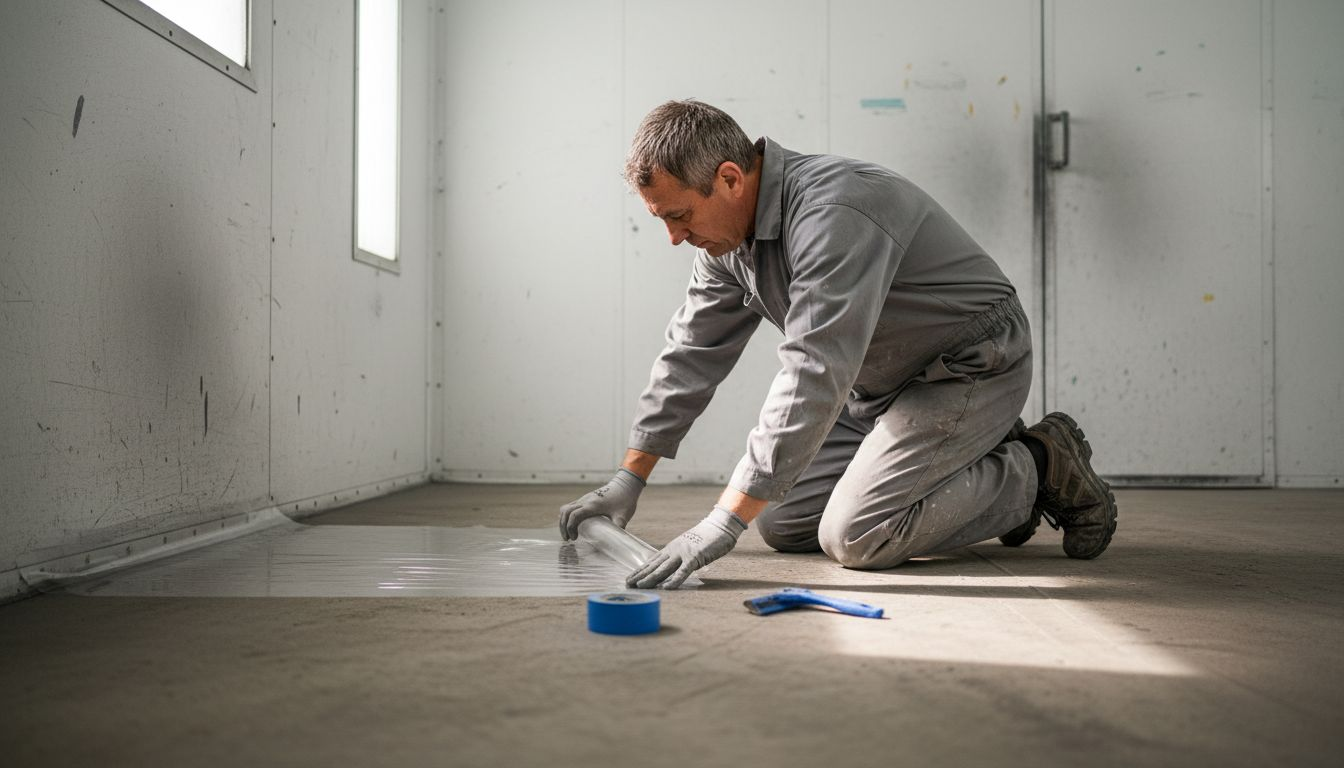
Dust barriers and protection films form the first line of defense in your spray booth. These materials physically prevent particles from reaching wet paint surfaces while maintaining the clean environment your facility depends on. Understanding the different types helps you choose the right solution for your specific painting operations.
Surface Protection Films
Surface protection films are the most common choice for booth walls and floors. They create a barrier that traps dust particles before they can become airborne or settle on freshly painted surfaces.
Multi-layer construction is what separates basic films from premium options. Each layer serves a specific purpose:
- Bottom adhesive layer grips booth surfaces securely without residue
- Middle protective layers catch and hold dust particles
- Top surface repels contamination and resists tearing during setup
These films work best when they stay in place throughout your production cycle. Movement or gaps allow dust to slip underneath, defeating their purpose entirely.
Here’s a comparison of protection film types and their key benefits:
| Film Type | Key Benefits | Ideal Use Case | Durability Level |
|---|---|---|---|
| Surface Protection Films | Traps dust, easy to apply | Walls and floors of spray booth | Moderate to high |
| Specialty UV/Chemical | Resists chemicals and high temperatures | Harsh environments, long cycles | High |
| Electrostatic Films | Actively repels dust, self-healing | High-end finishes, critical panels | High, maintains seal |
| Traditional Masking Films | Shields select areas from overspray | Trim, fixtures, hardware protection | Short term, single-use |
Specialty Films for High-Performance Booths
Protection films with UV resistance and chemical resistance maintain their integrity under harsh booth conditions. Temperature fluctuations, solvent vapors, and heat from paint curing can degrade cheaper films within days.
Your booth faces real-world challenges. Films that self-heal minor damage extend their working life significantly. When a tool or equipment bumps the film surface, the material resists tearing and maintains its seal.
The right protection film works silently in the background—you only notice it when dust starts appearing on your paint.
Electrostatic and Masking Films
Electrostatic films use charged surfaces to actively repel dust particles away from paint. Traditional masking films block access to specific areas during painting, protecting trim, hardware, and adjacent surfaces from overspray.
For automotive spray painting, electrostatic booth protection offers advantages traditional films cannot match:
- Active dust rejection rather than passive collection
- Maintains effectiveness even with minor surface damage
- Reduces visible particles in booth air during spraying
- Creates cleaner paint finishes with fewer rework cycles
Masking films handle a different role. You apply them to specific vehicle components or booth fixtures that shouldn’t receive paint coverage. Once your spray work finishes, you remove them cleanly without damaging underlying surfaces.
Application and Installation Considerations
How you install these films matters as much as the film itself. Bubble-free installation ensures complete coverage with no gaps where dust can enter. Air pockets trap moisture and create weak points where contamination slips through.
Your facility’s booth dimensions, traffic patterns, and production volume determine which film types serve you best. High-traffic areas need more durable films with better puncture resistance. Low-traffic zones can work with lighter-duty protection.
Pro tip: Order sample films and test installation on a small booth section before committing to full protection—this reveals which films work best with your booth layout and your team’s installation speed.
How Dust Prevention Systems Work
Dust prevention systems operate through layered strategies that work together to keep your spray booth clean. No single solution catches every particle—effective prevention combines physical barriers, air management, and operational protocols that your team can maintain consistently during high-volume production.
The Multi-Layer Defense Approach
Your booth protection relies on three interconnected systems working simultaneously. Protection films form the physical barrier. Air handling systems manage airflow and filtration. Operational procedures ensure your team maintains cleanliness between paint cycles.
When any layer fails, dust reaches wet paint. A gap in your floor film, a clogged intake filter, or skipped pre-spray cleanup allows contamination straight onto vehicle surfaces. That’s why understanding how each component functions matters for your facility’s success.
Physical Barriers and Air Currents
Dust prevention systems commonly use water, surfactants, and air currents to reduce airborne particles before they contaminate paint. Protection films physically block dust from reaching wet surfaces while booth ventilation systems remove suspended particles from the air.
Your booth airflow direction matters significantly. Positive pressure systems force clean air through filters and into the booth, pushing contaminated air outward. This prevents outside dust from entering during material movement or personnel traffic.
Effective dust prevention isn’t about fighting contamination—it’s about designing your booth so contamination can’t reach your paint.
How Protection Films Trap Dust
Protection films work through simple physics. When dust particles land on film surfaces, electrostatic charges or adhesive properties hold them in place. The films remain stationary throughout your production cycle, containing all trapped dust until you remove and dispose of them.
Key mechanisms in film effectiveness:
- Surface charge repels airborne particles away from critical areas
- Adhesive layers catch particles that make contact
- Multi-layer construction prevents dust migration through the film
- Static-free formulations prevent dust attraction from electrical buildup
Film placement determines protection quality. Walls and floors catch most booth contamination. Strategically placed floor sections intercept particles from high-traffic areas before they spread to paint application zones.
Ventilation and Air Filtration Integration
Your booth ventilation must work in coordination with protection films, not against them. Booth exhaust systems pull contaminated air away from paint surfaces. Intake filters remove particles before air enters the booth.
This creates continuous air circulation that prevents particle accumulation. Without proper airflow, dust settles on unprotected surfaces and becomes part of your paint finish. With correct ventilation, particles move through filters where they’re captured and removed.
Pro tip: Check your intake and exhaust filters monthly during high-production periods—clogged filters reduce airflow effectiveness, allowing dust to bypass your protection systems and settle on wet paint.
Impact on Paint Quality and Efficiency
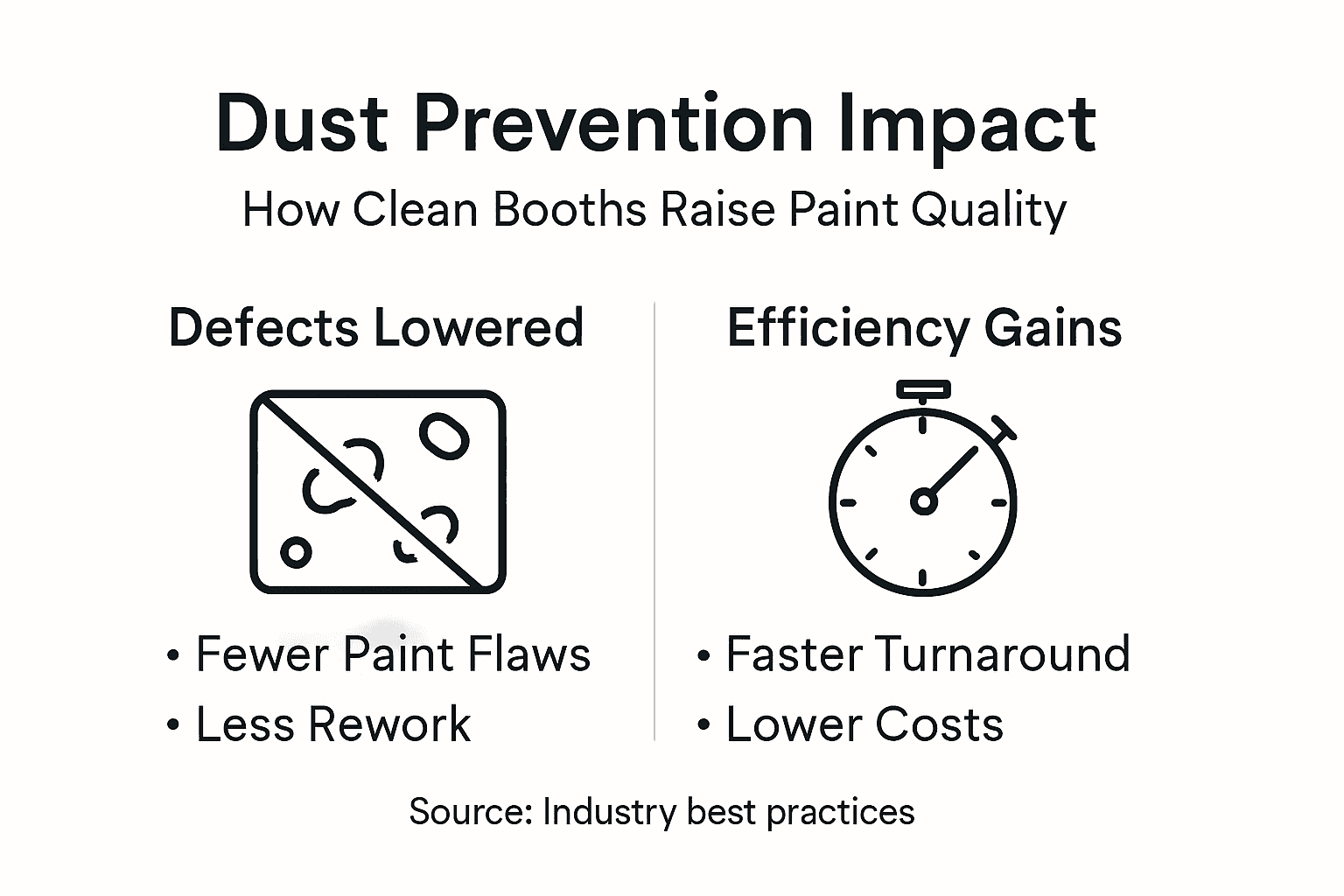
Dust contamination creates measurable impacts on your bottom line. Poor paint finishes trigger rework cycles, production delays, and customer rejections. Effective dust prevention directly improves paint quality while reducing the operational costs that eat into facility margins.
Paint Defects from Dust Contamination
Dust accumulation during painting causes defects like rough texture and orange peel, leading to costly rework and production delays. A single dust particle embedded in clear coat doesn’t just affect appearance—it affects your facility’s profitability.
Common defects include:
- Orange peel texture that requires complete panel repainting
- Rough finish that fails tactile quality standards
- Visible specks that make panels unmarketable
- Hazing on metallic finishes that requires wet sanding and refinishing
- Poor gloss retention when dust interferes with paint flow
Each defect costs time and material. A single rejected panel means stripping, prep, and repainting—often doubling labor costs for that vehicle component.
Quality Standards and Customer Expectations
Automotive OEMs expect flawless finishes. Your European facility operates under strict quality standards where cosmetic defects trigger immediate rejection. Maintaining dust-free spray environments separates shops that meet standards from those constantly reworking parts.
Dust prevention isn’t optional for automotive suppliers—it’s a contractual requirement for OEM paint specifications.
Customers track defect rates closely. When your rework percentage climbs due to dust issues, you lose contracts and face penalties. Prevention pays for itself through reduced scrap and avoided penalties.
Production Efficiency Gains
Industrial dust control protocols minimize rework and reduce defects, directly improving manufacturing efficiency. When your first-pass paint applications pass inspection, you eliminate the time burden of rework cycles.
Efficiency improvements from effective dust prevention:
- Faster paint cycle times without quality inspection delays
- Reduced material waste from rejected panels
- Lower labor costs from eliminated rework operations
- Improved team morale from consistent success rates
- Better production scheduling without rework buffers
A facility painting 50 vehicle bodies daily can lose 4-6 hours weekly to dust-related rework. Over a month, that’s 16-24 lost production hours. Multiply that across a year and dust contamination costs thousands in lost efficiency.
Worker Safety and Health Benefits
Dust prevention protects your team’s health. HEPA and activated carbon filtration systems maintain cleaner air while safeguarding worker respiratory health. Better air quality means fewer health incidents and stronger team retention.
Your facility’s reputation depends partly on worker safety metrics. When your team breathes cleaner air and experiences fewer health incidents, recruitment and retention improve significantly.
Pro tip: Calculate your current rework percentage by tracking panels that require touch-up or repainting monthly—multiply by your average labor cost per panel to see the true financial impact of dust contamination on your facility.
This summary shows how dust impacts both operations and quality:
| Impact Area | Effect of Dust Contamination | Business Outcome |
|---|---|---|
| Paint Quality | Defects like orange peel, haze | Increased panel rejection, rework |
| Production Speed | More rework cycles needed | Delayed schedules, lost hours |
| Costs | Greater material/labor waste | Lower profit margins, waste |
| Worker Health | Poor air quality, health risks | Absenteeism, higher turnover |
Common Pitfalls and Cost Considerations
Dust prevention systems require upfront investment, but skipping them costs far more. Facility managers often underestimate the financial impact of poor dust control, viewing it as a maintenance expense rather than a revenue-protecting necessity. Understanding common pitfalls helps you avoid expensive mistakes.
Inadequate Ventilation and Surface Preparation
Common pitfalls in industrial painting include poor surface preparation and inadequate ventilation that result in dust contamination and paint adhesion issues. These oversights trigger costly rework cycles that compound over time.
Frequent mistakes your facility should avoid:
- Skipping pre-spray booth cleanup between production cycles
- Installing protection films with gaps or overlaps
- Neglecting air filter replacements until efficiency drops significantly
- Allowing high-traffic areas to remain unprotected
- Assuming existing ventilation handles dust from multiple paint operations
Each mistake seems minor until dust reaches wet paint. Then you’re stripping panels, reprepping, and repainting—multiplying labor costs exponentially.
Investment Versus Long-Term Savings
Balancing investment in dust control technology against savings from reduced quality defects and fewer product rejects requires clear financial planning. Premium protection systems cost more upfront but eliminate recurring rework expenses.
Calculate your true cost of poor dust control:
- Material waste from rejected panels (paint, primer, solvents)
- Labor hours spent stripping and repainting defective parts
- Equipment downtime during rework cycles
- Potential contract penalties from OEMs for defect rates
- Worker health incidents and related compliance costs
Most facilities discover that dust prevention pays for itself within 6-12 months through eliminated rework alone.
Training and Maintenance Challenges
Dust prevention systems fail when your team doesn’t understand how to use them correctly—training is as critical as the equipment itself.
Staff training determines whether your investment works. If your team doesn’t know proper film installation, booth cleanup protocols, or when filters need replacement, contamination persists regardless of equipment quality.
Maintenance challenges include:
- Remembering to replace intake filters on schedule
- Inspecting protection films for gaps or damage
- Documenting cleanliness checks between production runs
- Monitoring air flow effectiveness during seasonal changes
Create simple checklists that your team completes daily. Make maintenance visible and straightforward—the easier it is to maintain, the more consistently it happens.
Hidden Cost of Delayed Action
Facilities that defer dust prevention investment continue losing productivity. Every month of delayed action costs thousands in preventable rework. Starting prevention immediately captures savings immediately.
Pro tip: Before investing in new protection systems, audit your current rework rates for one month—document every panel requiring touch-up or repainting with its root cause, then calculate labor and material costs to justify your prevention investment to leadership.
Upgrade Your Industrial Painting with Proven Dust Prevention Solutions
Maintaining a dust-free spray booth environment is essential to eliminate paint defects like orange peel texture and visible specks that cost you valuable time and money. If your facility struggles with airborne particles settling on wet paint or faces challenges with inconsistent booth protection, the right dust barrier film can make all the difference. Dust Free Film offers advanced, multi-layer electrostatic protection films designed specifically for demanding industrial and automotive paint applications. These films ensure reliable dust control and durability required to meet strict European OEM quality standards.

Take control of your paint quality today with Dust Free Film’s patented dispenser system and heat-resistant, static-free products. Experience faster installation, better dust capture, and improved operational efficiency to reduce costly rework cycles. Don’t let dust compromise your work or profits any longer. Visit Dust Free Film to explore innovative solutions and boost your spray booth’s performance. Learn more about how our protection films can safeguard your facility from dust contamination and help you consistently deliver flawless finishes.
Frequently Asked Questions
What is industrial painting dust prevention?
Industrial painting dust prevention involves identifying, controlling, and eliminating airborne particles that can contaminate spray booth environments, ensuring better paint quality in automotive facilities.
How does dust contamination affect paint quality?
Dust contamination can ruin the appearance of paint finishes, leading to defects like orange peel, rough textures, and visible specks that may necessitate costly rework or complete repainting of panels.
What types of films are effective for preventing dust in spray booths?
Effective films include surface protection films, electrostatic films, and specialty UV/chemical resistant films, each designed to trap dust particles and maintain a clean environment for painting operations.
How can I enhance my facility’s dust prevention protocols?
To enhance dust prevention, implement a layered approach that includes effective use of protection films, proper ventilation and air filtration systems, and consistent cleanliness protocols that your team faithfully follows during production.