

Quality concerns and compliance issues can disrupt even the most efficient spray painting operations. Facilities across the United States, Canada, and Europe face ongoing challenges with paint overspray, dust contamination, and regulatory complexities. Choosing advanced dust protection solutions like multilayer spray booth films helps safeguard equipment, uphold finish standards, and streamline compliance with safety protocols. This guide shares practical strategies for selecting and maintaining protective films that make a measurable difference in automotive and industrial environments.
Table of Contents
- Spray Booth Films Defined and Their Role
- Types of Protective Films and Their Distinctions
- ISO, CE, and Local Compliance Requirements
- Application Techniques and Maintenance Strategies
- Risks, Costs, and Avoiding Non-Compliance
Key Takeaways
| Point | Details |
|---|---|
| Spray Booth Films Are Essential | They protect surfaces, prevent overspray, and enhance paint quality in industrial environments. |
| Types of Protective Films Vary | Understanding peelable coatings, adhesive films, and electrostatic protective films is crucial for optimal application. |
| Compliance with Regulations Is Critical | Adhering to ISO, CE, and OSHA standards ensures safety and environmental responsibility in operations. |
| Proactive Maintenance Reduces Risks | Regular inspections and maintenance protocols help mitigate financial penalties and safety hazards in spray booth environments. |
Spray Booth Films Defined and Their Role
Spray booth films are specialized protective layers designed to shield surfaces within industrial painting environments. These multi-functional films play a critical role in maintaining cleanliness and ensuring superior paint finishes by preventing overspray contamination. Spray booths are controlled environments engineered to isolate and manage painting processes effectively.
The primary functions of spray booth films include:
- Protecting structural surfaces like walls and windows
- Preventing paint overspray from contaminating equipment
- Facilitating easier cleaning and maintenance
- Enhancing overall finish quality
- Reducing potential damage to expensive industrial infrastructure
These protective films are engineered with advanced materials that resist paint adhesion and provide a temporary barrier against overspray. Multilayer construction is a key feature, allowing films to trap particulates and prevent them from compromising the painting environment. Professional-grade films typically feature electrostatic properties that help capture microscopic paint particles more effectively than traditional protective materials.
Industrial painting operations rely on these films to maintain stringent quality control standards. By creating a controlled, clean environment, spray booth films help manufacturers achieve consistent, high-quality finishes across various automotive, aerospace, and manufacturing applications.
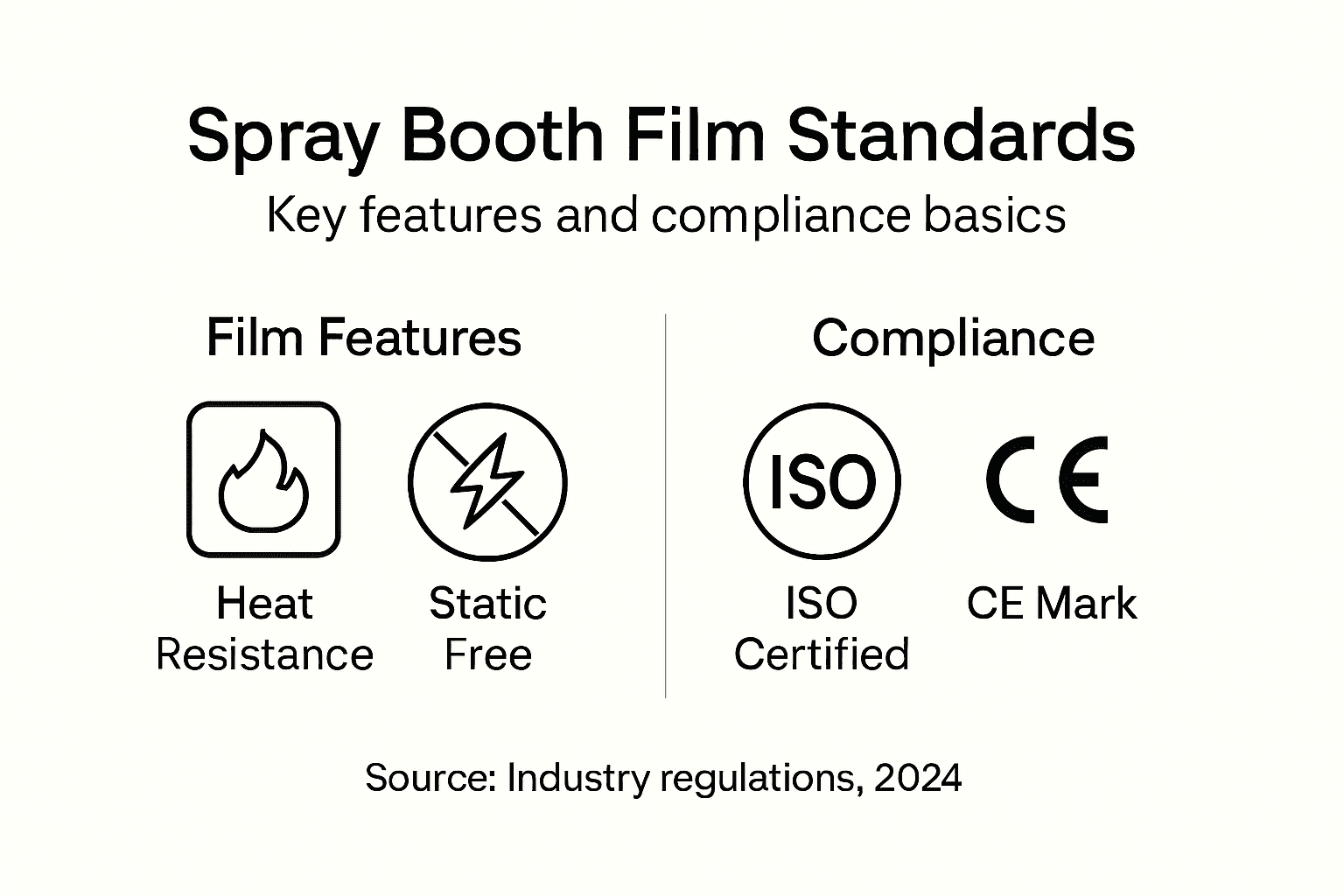
Pro tip: Always select spray booth films with heat-resistant properties and static-free characteristics to maximize protection and performance in high-intensity painting environments.
Types of Protective Films and Their Distinctions
Spray booth protective films represent a critical technology in industrial painting environments, offering diverse solutions for surface protection and contamination prevention. Protective films come in two primary varieties: peelable coatings and adhesive films, each designed to address specific manufacturing challenges and surface protection requirements.
The key types of protective films include:
- Peelable Coatings
- Temporary protective layer
- Removable without solvents
- Quick and easy application
- Adhesive Films
- More permanent protection
- Requires precise application
- Better long-term surface coverage
- Electrostatic Protective Films
- Enhanced particle capture
- Reduces microscopic contamination
- Improved paint finish quality
Multilayer construction is a critical feature distinguishing professional-grade protective films. These advanced materials incorporate specialized polymers and electrostatic properties that effectively trap paint particles and prevent surface contamination. Unlike traditional single-layer protective materials, modern films provide superior defense against overspray, dust, and potential surface degradation.
Manufacturers must carefully select protective films based on specific environmental conditions, painting processes, and surface materials. Factors like heat resistance, static properties, and adhesion strength play crucial roles in determining the most appropriate film for a given application. High-performance films can significantly reduce maintenance time, minimize cleaning requirements, and ultimately improve overall painting quality.
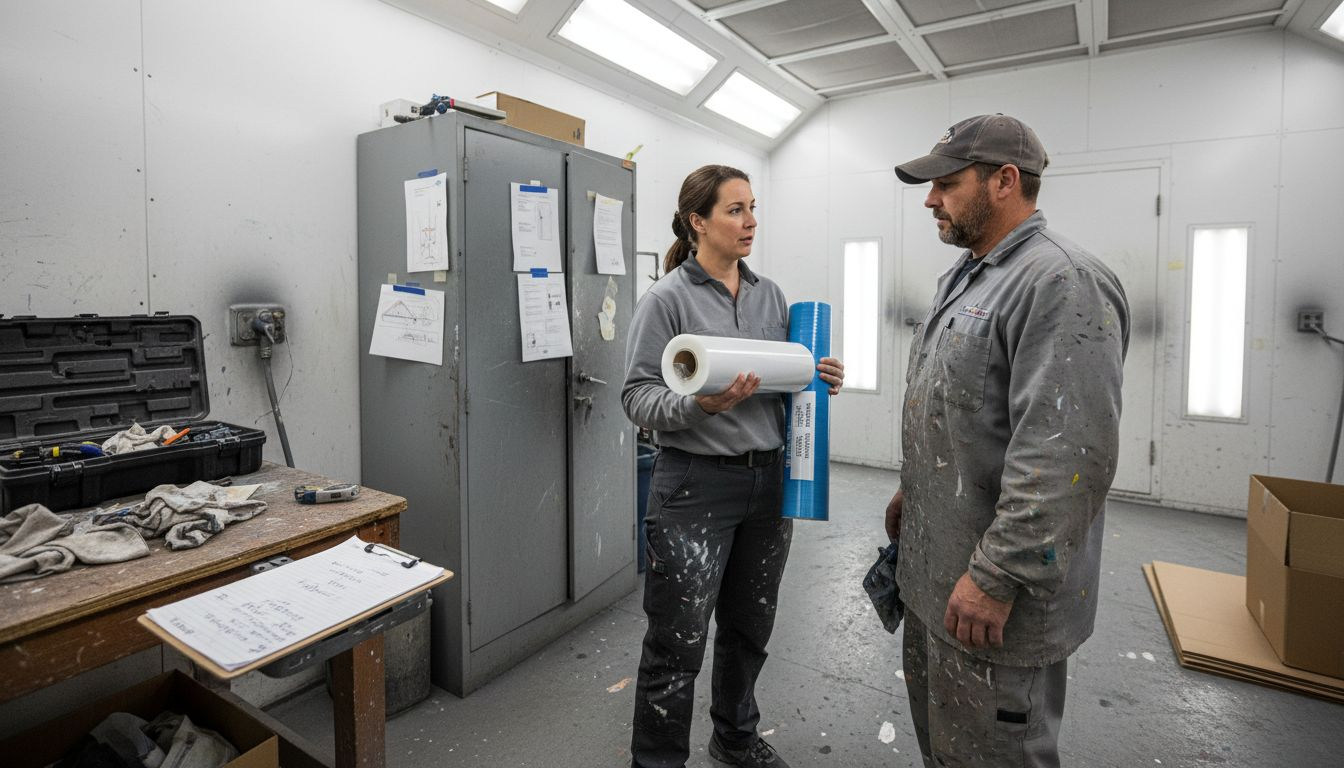
Here is a comparison of the main types of spray booth protective films and their optimal uses:
| Film Type | Best Application Scenario | Strength | Limitation |
|---|---|---|---|
| Peelable Coating | Short-term masking needs | Quick removal | Less durable for long term |
| Adhesive Film | Extended protection required | Reliable adhesion | Harder to remove cleanly |
| Electrostatic Protective | Cleanrooms, fine paint work | Superior dust control | Higher material costs |
Pro tip: Conduct a comprehensive surface assessment before selecting a protective film to ensure maximum compatibility and performance in your specific industrial painting environment.
ISO, CE, and Local Compliance Requirements
Industrial spray booth protective films must adhere to a complex framework of international and regional compliance standards that ensure safety, performance, and environmental responsibility. Regulatory compliance represents a critical consideration for manufacturers and industrial painting facilities seeking to maintain high-quality operational standards.
Key compliance requirements encompass multiple regulatory domains:
- International Standards
- ISO 9001 quality management certification
- ISO 14001 environmental management protocols
- ISO 45001 occupational health and safety regulations
- European Community Standards
- CE marking requirements
- European Chemical Agency (ECHA) regulations
- Reach compliance for chemical compositions
- Regional Specific Requirements
- American OSHA safety standards
- California Air Resources Board (CARB) emissions regulations
- Environmental Protection Agency (EPA) VOC restrictions
Multinational manufacturing operations must navigate a complex landscape of regulatory expectations. Different geographical regions impose unique requirements on protective film compositions, manufacturing processes, and environmental impact. These standards typically address critical aspects such as chemical composition, material safety, emissions control, and workplace protection.
Companies must implement rigorous quality control mechanisms to ensure their protective films meet or exceed international compliance benchmarks. This involves comprehensive testing protocols, detailed documentation, and continuous monitoring of manufacturing processes. Successful compliance demonstrates a commitment to environmental sustainability, worker safety, and superior product performance.
Pro tip: Maintain comprehensive documentation of compliance certifications and conduct annual regulatory audits to ensure ongoing adherence to evolving international standards.
Application Techniques and Maintenance Strategies
Implementing effective protective film application techniques is crucial for achieving superior spray booth performance and longevity. Spray booth maintenance workflows require precision, attention to detail, and systematic approaches to ensure optimal dust-free environments.
Essential application techniques include:
- Surface Preparation
- Thoroughly clean and dry surfaces
- Remove all dust and debris
- Ensure smooth, contaminant-free substrate
- Film Application Methods
- Use specialized dispensers for consistent application
- Apply with minimal tension
- Eliminate air bubbles during installation
- Alignment and Coverage
- Ensure complete surface coverage
- Overlap edges for maximum protection
- Trim excess film precisely
Electrostatic protection technologies play a critical role in modern spray booth film applications. Advanced films incorporate specialized polymers that reduce static charge and minimize particle attraction, creating a more controlled painting environment. Technicians must understand the subtle interactions between film materials, surface chemistry, and environmental conditions to achieve optimal results.
Maintenance strategies require a proactive approach. Regular inspection, timely film replacement, and careful documentation of wear patterns help prevent potential contamination issues. Professional facilities implement structured maintenance protocols that include periodic assessments, systematic cleaning processes, and continuous monitoring of film performance and integrity.
Pro tip: Develop a standardized film inspection checklist and train all technicians on proper application and maintenance techniques to minimize potential quality disruptions.
Risks, Costs, and Avoiding Non-Compliance
Operational non-compliance in spray booth environments carries substantial financial and safety risks that can devastate industrial painting businesses. Spray booth non-compliance consequences extend far beyond simple regulatory penalties, potentially resulting in catastrophic operational shutdowns and legal liabilities.
Key compliance risks include:
- Financial Penalties
- Substantial regulatory fines
- Potential legal litigation costs
- Insurance premium increases
- Operational Disruptions
- Mandatory facility shutdowns
- Production schedule interruptions
- Equipment recertification expenses
- Safety Hazards
- Increased fire risks
- Potential worker injury exposures
- Environmental contamination liabilities
Workplace safety protocols represent a critical defense against potential non-compliance risks. Industrial facilities must implement comprehensive monitoring systems that continuously evaluate ventilation effectiveness, chemical handling procedures, and equipment maintenance standards. Proactive risk management involves regular inspections, documented safety training, and systematic compliance documentation.
Historical incident data demonstrates the severe consequences of neglecting safety standards. Professional facilities invest significantly in compliance infrastructure, recognizing that prevention costs are dramatically lower than potential catastrophic failure expenses. Strategic investments in training, equipment upgrades, and rigorous documentation can mitigate most regulatory and safety risks associated with spray booth operations.
The following table summarizes the impact of non-compliance versus proactive compliance in spray booth operations:
| Approach | Long-Term Costs | Production Uptime | Safety Incident Risk |
|---|---|---|---|
| Proactive Compliance | Lower due to prevention | Maximized | Reduced significantly |
| Reactive/Non-Compliance | High fines, legal expenses | Frequent disruptions | Elevated risk of incidents |
Pro tip: Develop a dedicated compliance management system that tracks regulatory changes, conducts quarterly risk assessments, and maintains comprehensive documentation for immediate regulatory verification.
Achieve Full Compliance and Flawless Finishes with Advanced Spray Booth Films
Ensuring your spray booth meets stringent industry standards while delivering superior paint finishes is no small task. The challenges of maintaining a dust-free environment, adhering to ISO and CE compliance, and minimizing costly production disruptions require reliable and innovative solutions. At Dust Free Film, we understand these critical pain points faced by automotive refinishers and industrial painters who demand heat-resistant, static-free, and multilayer protective films engineered for peak performance.
Our premium dust protection films are designed specifically to tackle overspray contamination and maintain spotless surfaces, helping you meet international safety and environmental regulations effortlessly. Experience the benefits of our patented application systems that allow quick, bubble-free installation, reducing downtime and ensuring long-term durability in high-traffic spray booth environments.
Transform your industrial painting process today by exploring our trusted solutions at Dust Free Film. For proven products that align with your compliance needs and enhance finish quality, visit our landing page now.
Experience the difference of multilayer, electrostatic protection that takes your spray booth compliance and paint finish excellence to the next level.
Ready to safeguard your spray booth operations and guarantee consistent, high-quality finishes? Discover how Dust Free Film can elevate your production line — act now to protect your facility and improve efficiency with products engineered to meet the highest industry standards.
Frequently Asked Questions
What are spray booth films, and why are they important?
Spray booth films are protective layers used in industrial painting environments to shield surfaces from paint overspray and contamination. They are essential for maintaining cleanliness and ensuring high-quality paint finishes.
What are the different types of protective films available for spray booths?
The main types of protective films are peelable coatings, adhesive films, and electrostatic protective films. Each type serves different applications, with varying levels of durability and ease of removal.
How do I choose the right spray booth film for my application?
Selecting the right spray booth film depends on specific environmental conditions, painting processes, and surface materials. Consider factors like heat resistance, static properties, and adhesion strength when making your choice.
What compliance standards should spray booth films meet?
Spray booth films must comply with various standards including ISO certifications, CE marking requirements, and local safety regulations. Adhering to these standards ensures safety, performance, and environmental responsibility.