

Every maintenance manager knows that even a small trace of dust can turn a perfectly applied finish into a costly redo. High-traffic spray booths demand thorough preparation and careful cleaning, since every missed step can mean overspray, poor adhesion, or unexpected downtime. By mastering a systematic spray booth cleaning routine—from pre-inspection to dust film application—you lay the groundwork for outstanding paint results and a safer, more reliable operation in any North American, European, or Asian facility.
Table of Contents
- Step 1: Prepare the Booth and Gather Supplies
- Step 2: Remove Loose Debris and Surface Dust
- Step 3: Apply Specialized Dust Protection Films
- Step 4: Clean Ventilation and Air Filtration Systems
- Step 5: Inspect Surfaces and Test Dust Levels
Quick Summary
| Key Point | Explanation |
|---|---|
| 1. Prepare the booth thoroughly | Conduct pre-cleaning inspections and gather cleaning supplies to set the foundation for effective dust control. |
| 2. Use systematic debris removal techniques | Start from the top and use controlled cleaning methods to ensure all dust is effectively eliminated without spreading contaminants. |
| 3. Apply protective dust films carefully | Clean surfaces before applying films, ensuring a seamless barrier against contaminants that can affect painting results. |
| 4. Maintain ventilation systems regularly | Clean and inspect ventilation to ensure proper air filtration and maintain optimal booth performance over time. |
| 5. Conduct detailed surface inspections | Use proper tools to check for dust levels and maintain booth integrity, ensuring readiness for painting operations. |
Step 1: Prepare the Booth and Gather Supplies
Preparing your spray booth for cleaning requires strategic planning and the right equipment. In this crucial first step, you’ll set the foundation for a thorough and efficient dust control process that ensures superior painting results.
Start by verifying booth operational status and conducting a comprehensive pre-cleaning inspection. Look for any signs of damage, wear, or potential contamination zones. Your preparation checklist should include:
- Check booth ventilation system functionality
- Inspect walls and floor for existing debris
- Verify electrical systems and exhaust fan performance
- Remove any previous paint overspray residue
Next, gather all necessary cleaning supplies to streamline your process. Essential items include:
- Soft-bristled brushes for gentle surface cleaning
- Industry-approved cleaning solvents
- Lint-free microfiber cloths
- Personal protective equipment (safety glasses, gloves, respirator)
- Disposable cleaning wipes
- Static-dissipating cleaning tools
Safety is paramount: Always use appropriate protective gear and ensure proper ventilation before beginning any cleaning procedure.
Pay special attention to selecting cleaning agents compatible with your specific booth surface and paint system. Different materials require different cleaning approaches to prevent potential damage.
Pro tip: Keep a dedicated cleaning kit organized and easily accessible near your spray booth to reduce setup time and maintain consistent cleaning standards.
Step 2: Remove Loose Debris and Surface Dust
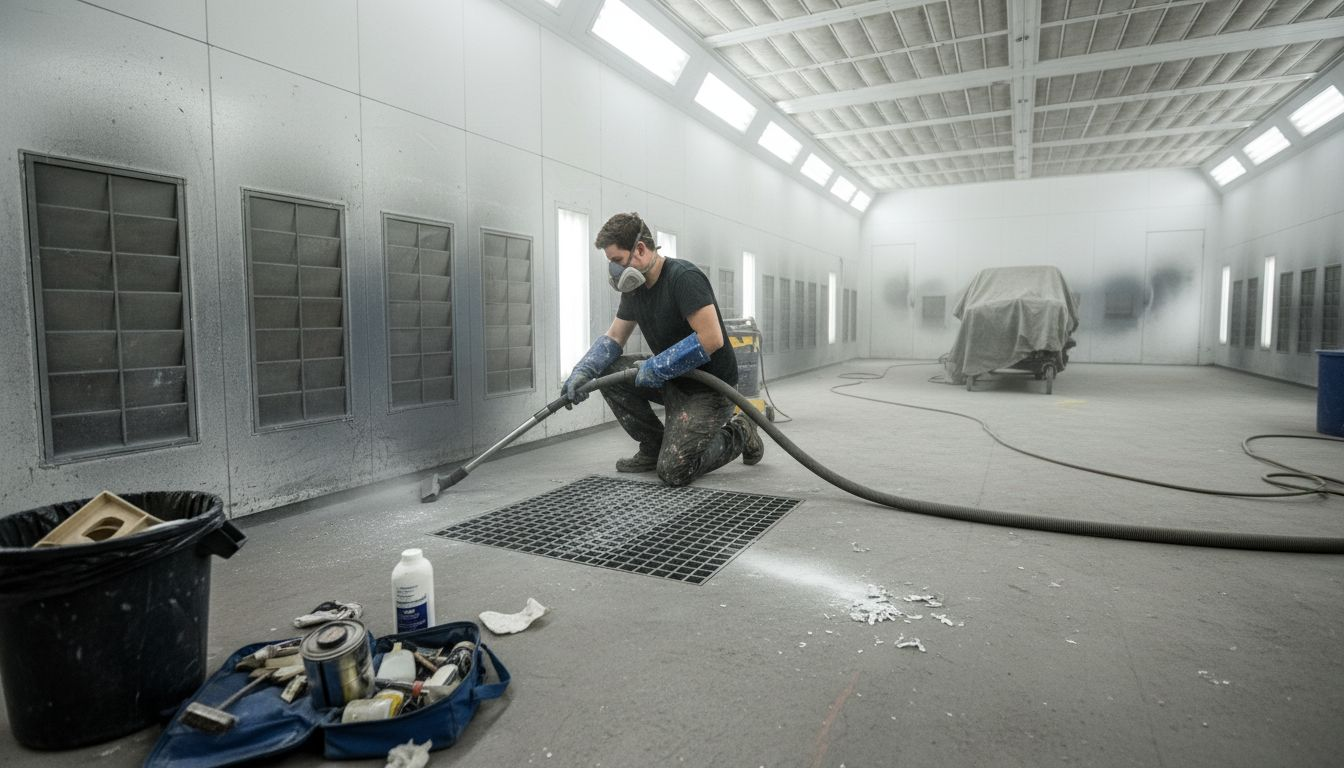
Removing loose debris and surface dust is a critical step in maintaining a clean and high-performing spray booth environment. This process helps prevent contamination, ensures paint quality, and reduces potential safety hazards during painting operations.
Proper dust removal techniques are essential for protecting worker health and maintaining superior painting conditions. Begin by gathering the right equipment:
- HEPA-filtered vacuum cleaner
- Microfiber cloths
- Soft-bristled brushes
- Disposable cleaning wipes
- Protective gloves and safety glasses
Follow these systematic steps for thorough debris removal:
- Start at the top of the booth and work downward
- Use gentle, sweeping motions to avoid dispersing dust
- Vacuum horizontal surfaces first
- Wipe surfaces with microfiber cloths after vacuuming
Systematic top-to-bottom cleaning prevents cross-contamination and ensures comprehensive dust removal.
Avoid common mistakes like using compressed air, which can spread contaminants, or dry sweeping that creates dust clouds. Instead, focus on controlled, methodical cleaning techniques that trap and remove particles effectively.
Pro tip: Invest in a high-quality HEPA vacuum with multiple attachments to reach every corner and surface in your spray booth, ensuring maximum dust control.
Step 3: Apply Specialized Dust Protection Films
Applying specialized dust protection films is a crucial step in creating a pristine spray booth environment that minimizes contamination and ensures superior painting results. These protective films act as a critical barrier against dust, overspray, and potential surface imperfections.
Paint protection films provide an advanced solution for maintaining clean booth surfaces during painting operations. Before application, prepare the following materials:
- High-quality protective films
- Clean microfiber cloths
- Isopropyl alcohol for surface preparation
- Squeegee or application tool
- Precision cutting tools
- Protective gloves
Follow these systematic application steps:
- Thoroughly clean and dry all surfaces
- Remove any existing residue with isopropyl alcohol
- Measure and cut films to exact booth surface dimensions
- Apply films carefully, starting from one edge
- Use squeegee to eliminate air bubbles
- Trim excess film for precise fitment
Proper film application creates a seamless protective barrier that simplifies future cleaning and maintains booth integrity.
Avoid common mistakes like rushing the application process, failing to clean surfaces thoroughly, or using low-quality films that tear easily. Precision and patience are key to achieving optimal dust protection.
Pro tip: Select multi-layer protective films designed specifically for industrial spray booths, ensuring maximum durability and dust resistance.
Step 4: Clean Ventilation and Air Filtration Systems
Maintaining clean ventilation and air filtration systems is crucial for ensuring optimal spray booth performance and protecting both equipment and worker health. This step involves comprehensive cleaning and inspection to prevent dust accumulation and maintain air quality.
Ventilation system maintenance requires a systematic approach to reduce airborne contaminants and ensure efficient operation. Begin by gathering these essential cleaning supplies:
- HEPA-rated vacuum cleaner
- Microfiber cleaning cloths
- Compressed air (for controlled cleaning)
- Protective respirator
- Safety glasses
- Degreasing solution
- Soft-bristled brushes
Follow these detailed cleaning steps:
- Shut down and disconnect all electrical systems
- Remove and inspect external filter housings
- Vacuum internal ductwork and fan components
- Clean filter surfaces with appropriate solutions
- Check for any signs of wear or damage
- Replace filters showing significant contamination
Thorough ventilation system cleaning prevents performance degradation and extends equipment lifespan.
Avoid critical mistakes like using inappropriate cleaning agents, neglecting hard-to-reach areas, or failing to document system condition during maintenance. Systematic and careful cleaning ensures optimal air filtration performance.
Pro tip: Maintain a detailed maintenance log to track filter replacements and system cleaning intervals, helping you predict and prevent potential performance issues.
Step 5: Inspect Surfaces and Test Dust Levels
Conducting a comprehensive surface inspection and dust level assessment is critical for maintaining paint booth quality and safety. This meticulous process helps identify potential contamination risks and ensures your booth meets professional performance standards.
Surface inspection techniques require careful and systematic evaluation of multiple environmental factors. Prepare these essential diagnostic tools before beginning your inspection:
- Dust particle counter
- High-intensity LED inspection light
- White microfiber cloths
- Magnifying glass
- Clean white paper
- Protective gloves
- Sampling collection kit
Follow these detailed inspection steps:
- Turn off all booth ventilation systems
- Conduct visual surface examination
- Use LED light to reveal hidden dust deposits
- Collect surface and airborne dust samples
- Measure particulate concentrations
- Document and analyze findings
Comprehensive surface inspections prevent contamination and maintain paint booth integrity.
Avoid critical errors like rushing the inspection, using inadequate lighting, or failing to document detailed findings. Systematic and thorough evaluation is key to maintaining optimal booth performance.
Pro tip: Develop a standardized inspection checklist to ensure consistent and comprehensive dust level assessments across all your spray booth operations.
This table summarizes common mistakes and the advantages of best practices in spray booth cleaning:
| Mistake Category | Typical Pitfall | Best Practice Benefit |
|---|---|---|
| Equipment Use | Using compressed air spreads dust | HEPA vacuums trap particles efficiently |
| Cleaning Agents | Harsh solvents damage surfaces | Compatible cleaners prevent corrosion |
| Application | Rushing film placement causes tears | Precise application ensures durability |
| Inspection | Inadequate lighting misses dust | LED lights reveal fine contaminants |
Here’s how cleaning and dust control steps relate to booth performance:
| Step | Core Purpose | Impact on Painting Quality | Safety Benefits |
|---|---|---|---|
| Preparation | Organize supplies, inspect booth | Reduces contamination risk | Ensures safe procedure setup |
| Debris Removal | Eliminate dust and particles | Minimizes paint defects | Lowers exposure to airborne dust |
| Protection Films | Shield surfaces from dust | Sustains clean environment | Prevents future contamination |
| Ventilation Cleaning | Maintain airflow systems | Enhances air purity for painting | Prevents hazardous buildup |
| Surface Inspection | Validate cleanliness, test dust | Confirms booth is ready for use | Identifies hidden risks early |
Elevate Your Spray Booth Cleaning with Advanced Dust Protection Solutions
Keeping your spray booth free from dust and contaminants is essential for achieving flawless paint finishes and maintaining a safe working environment. As the article highlights, challenges such as effective debris removal, precise protective film application, and thorough ventilation cleaning demand reliable, high-quality materials designed specifically for industrial painting needs. By addressing these critical points, operators ensure smooth painting processes with minimal rework and downtime.
At Dust Free Film, we understand the importance of combining effective dust control methods with premium products. Our multi-layer electrostatic dust protection films provide a durable, static-free barrier that safeguards booth walls and floors against overspray and dust accumulation. Manufactured to European standards, these films simplify the film application step described in the article, delivering quick installation with our patented dispenser system that guarantees bubble-free results.
Discover how you can transform your booth maintenance routine and protect your investment. Visit Dust Free Film to explore our innovative solutions and read more about the benefits of specialty films that align with the article’s expert recommendations on booth cleaning, surface protection, and ventilation system upkeep.
Looking for proven products that enhance each stage of your spray booth cleaning process including preparation, debris removal, and surface inspection? Learn more about our trusted dust protection films here and take the first step toward superior dust control today.
Frequently Asked Questions
What cleaning supplies are essential for paint booth cleaning?
To effectively clean a paint booth, gather supplies like soft-bristled brushes, industry-approved cleaning solvents, lint-free microfiber cloths, and personal protective equipment. Organize these items in a dedicated cleaning kit to ensure you have everything at hand for efficient cleaning.
How should I remove surface dust and debris from the paint booth?
Start at the top of the booth and work downward using a HEPA-filtered vacuum and microfiber cloths. This systematic approach prevents dust from settling on already cleaned surfaces, ensuring a thorough and effective clean.
What steps are involved in applying dust protection films in the paint booth?
Clean and dry the surfaces thoroughly before measuring and cutting the protective films. Apply the films starting from one edge, using a squeegee to eliminate air bubbles, and trim any excess for a precise fit.
How do I maintain air filtration systems in my spray booth?
Perform regular cleaning of ventilation and air filtration systems by vacuuming internal ductwork and checking filters for contamination. Replace filters as needed to ensure optimal air quality and efficient spray booth performance.
How can I accurately assess dust levels in my paint booth?
Conduct a surface inspection using tools like a dust particle counter and LED inspection light. Collect and analyze surface and airborne dust samples to verify cleanliness and ensure the booth meets professional standards.
What are some common mistakes to avoid when cleaning a paint booth?
Avoid using compressed air for cleaning, as it can spread dust and contaminants. Instead, focus on using controlled cleaning techniques and compatible cleaning agents to maintain the integrity of surfaces and ensure effective dust control.