

Every supervisor in a busy automotive paint shop knows the frustration when dust finds its way onto carefully prepped surfaces. Keeping dust at bay is critical, since even small particles can ruin the perfect finish and disrupt workflows. With advances in protective films, industrial facilities can keep contaminants away, maintain superior paint quality, and reduce costly rework. This guide examines the latest protective film technologies and shows how targeted solutions can transform paint shop performance.
Table of Contents
- Protective Films In Painting Defined
- Types Of Protective Films For Spray Booths
- How Protective Films Prevent Contamination
- Installation, Maintenance, And Cost Factors
- Common Pitfalls And Best Practice Solutions
Key Takeaways
| Point | Details |
|---|---|
| Protective Films Safeguard Surfaces | Protective films are designed to protect painted surfaces from contaminants and damage during industrial painting processes. They create a barrier against dust and debris, ensuring high-quality finishes. |
| Types of Protective Films | There are various protective film types, including wall, floor, and temporary masking films, each tailored for specific applications in spray booths. Choosing the right type optimizes protection and cleanliness. |
| Contamination Prevention Mechanisms | Protective films employ advanced techniques like electrostatic particle trapping and surface barrier technologies to prevent contamination, thus ensuring consistent finish quality. |
| Installation and Maintenance Impact Costs | Proper installation and maintenance of protective films can significantly reduce overall costs in industrial painting environments, highlighting the importance of strategic selection and professional application. |
Protective Films in Painting Defined
Protective films represent specialized surface coverings designed to safeguard painted surfaces from environmental contaminants, dust, and potential damage during industrial painting processes. Originating from military applications, these advanced materials have transformed how professionals approach surface protection in automotive, aerospace, and manufacturing environments.
At their core, these films are engineered from advanced materials like thermoplastic urethane polymers that create an impenetrable barrier against potential surface disruptions. Their primary function involves preventing dust, debris, and microscopic particulates from compromising the painting process, ensuring consistently high-quality finishes across diverse industrial settings.
The key characteristics of protective films include:
- Multi-layer construction for enhanced durability
- Electrostatic dust repellent properties
- Heat-resistant material composition
- Bubble-free application capabilities
- Compatibility with various surface types
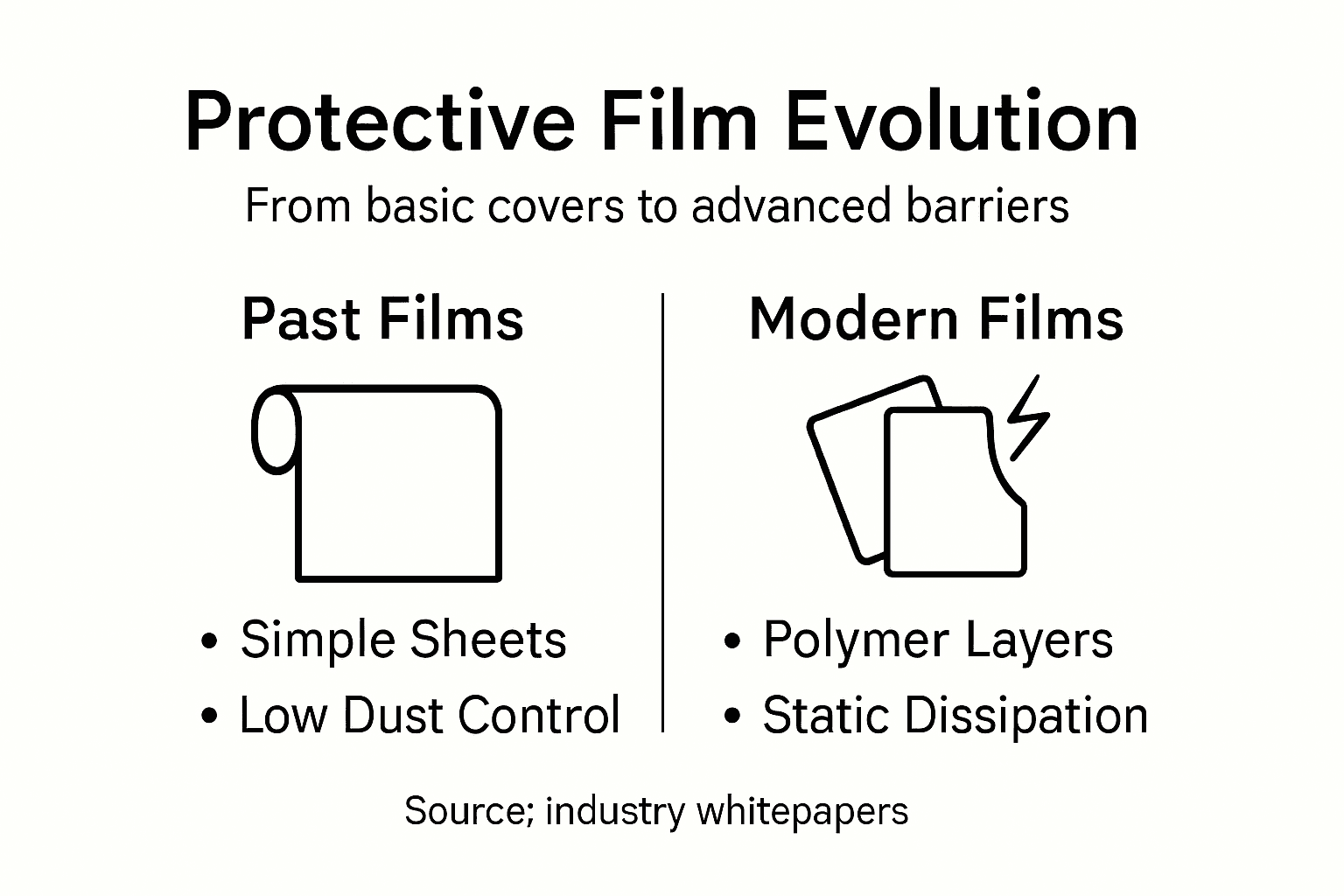
Modern protective coating technologies have dramatically evolved from simple surface treatments to sophisticated protective barrier systems that actively shield surfaces during complex painting operations. These advanced films not only prevent contamination but also contribute to more efficient, higher-quality industrial painting processes.
Pro tip: Always inspect protective films for uniform coverage and potential micro-tears before beginning your painting project to guarantee optimal surface protection.
Types of Protective Films for Spray Booths
Spray booth protective films represent specialized solutions designed to address various industrial painting challenges, with multiple protective film configurations tailored to specific operational requirements. These advanced materials serve as critical barriers against dust, debris, and potential surface contamination during painting processes.
The primary categories of protective films for spray booths include:
- Wall Protection Films
- Multi-layered electrostatic barrier materials
- Designed for vertical surface coverage
- Engineered to prevent dust migration
- Floor Protection Films
- High-durability adhesive-backed materials
- Resistant to paint overspray and chemical exposure
- Prevents substrate contamination
- Temporary Masking Films
- Precision-cut protective coverings
- Quick application and removal capabilities
- Ideal for targeted surface protection
Specialized spray booth films are engineered with complex material science principles, incorporating advanced polymer technologies that provide superior dust and contamination resistance. These films are not merely passive barriers but active protection systems designed to maintain pristine painting environments.
Here is a summary of protective film types and their ideal uses:
| Film Type | Ideal Application | Unique Advantage |
|---|---|---|
| Wall Protection | Vertical booth surfaces | Reduces dust migration |
| Floor Protection | Booth floors | Shields from overspray, chemicals |
| Temporary Masking | Specific surface areas | Fast install and removal |
Professional spray booth management requires strategic film selection matched to specific industrial painting requirements and environmental conditions.
Pro tip: Select protective films with matching static dissipation properties to your specific spray booth environment to maximize dust prevention and finish quality.
How Protective Films Prevent Contamination
Protective films function as sophisticated contamination barriers, utilizing advanced material science principles to create comprehensive particle prevention systems. These specialized materials are engineered to intercept and neutralize potential contaminants before they can compromise painting surfaces, ensuring consistently high-quality industrial finishes.
The contamination prevention mechanisms of protective films involve multiple strategic approaches:
- Electrostatic Particle Trapping
- Captures microscopic dust particles
- Prevents airborne contaminant migration
- Maintains uniform surface cleanliness
- Surface Barrier Technologies
- Creates impenetrable protective layers
- Blocks chemical and physical contamination
- Reduces potential paint finish defects
- Static Dissipation Properties
- Neutralizes electrical charge buildup
- Minimizes dust attraction to surfaces
- Supports consistent painting environments
These advanced films operate through complex antimicrobial thin film technologies, which not only prevent physical contamination but also inhibit potential microbial growth that could compromise painting processes. By creating multi-layered protective barriers, these films effectively trap and neutralize potential contaminants before they can interact with sensitive painting surfaces.
Advanced contamination prevention requires strategic film selection matched to specific environmental and operational challenges.
Pro tip: Conduct regular static electricity and dust particle assessments to ensure your protective films maintain optimal contamination prevention capabilities.
Installation, Maintenance, and Cost Factors
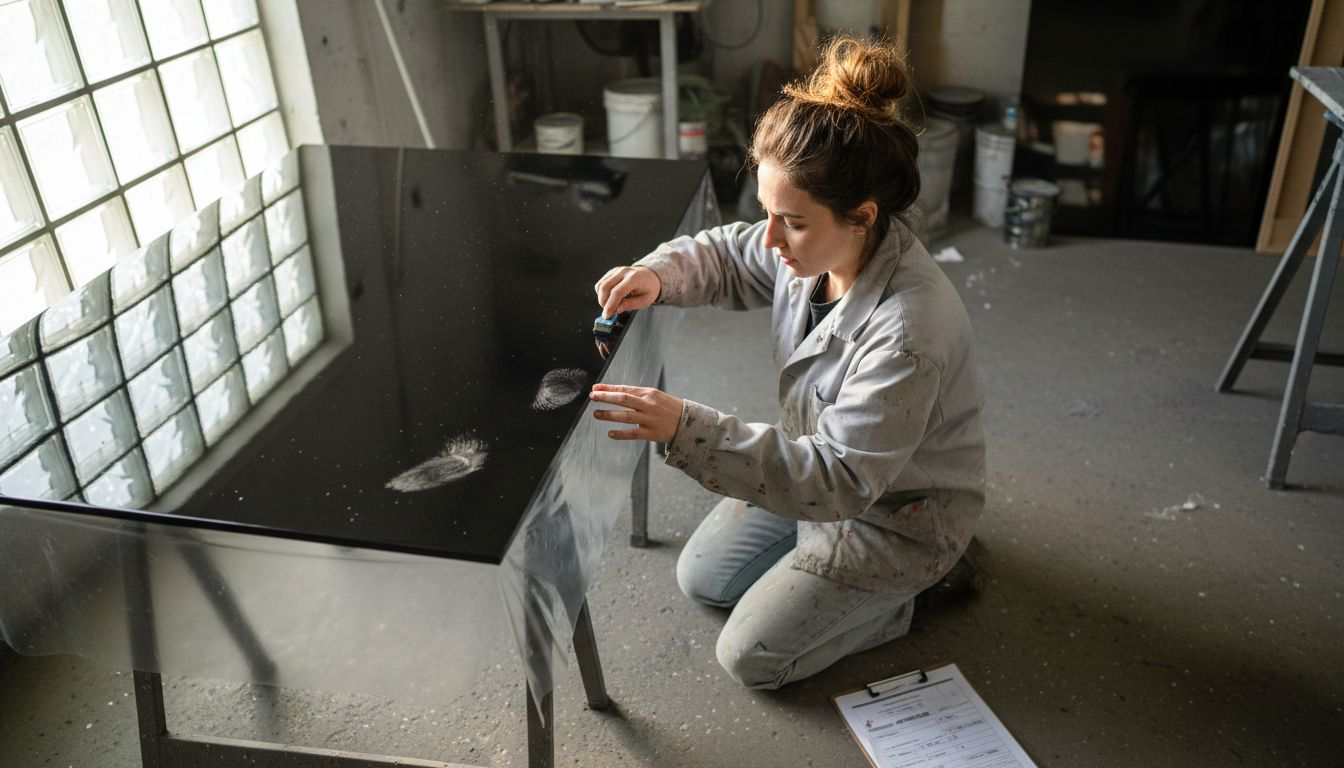
Installing protective films requires strategic planning and precision, with comprehensive installation procedures that significantly impact long-term performance and cost-effectiveness. Industrial paint shop managers must consider multiple factors to ensure optimal film application and maintenance across spray booth environments.
Key installation considerations include:
- Surface Preparation
- Thorough cleaning and decontamination
- Removing all surface oils and particulates
- Ensuring smooth, uniform substrate conditions
- Application Techniques
- Using specialized squeegee tools
- Implementing precise alignment methods
- Minimizing air bubble formations
- Professional Installation Requirements
- Trained technician expertise
- Advanced application tools
- Quality control verification
The life-cycle cost analysis of protective films reveals that initial investment is just one component of overall economic considerations. Maintenance frequency, durability, and potential replacement intervals play crucial roles in determining true long-term value for industrial painting operations.
This table highlights key cost factors to consider for protective film usage:
| Factor | Impact on Costs | Practical Tip |
|---|---|---|
| Initial Investment | Higher upfront expense | Prioritize proven durability |
| Maintenance | Ongoing replacement fees | Schedule regular inspections |
| Film Longevity | Extends replacement cycles | Select premium, certified films |
Strategic film selection and professional installation can reduce overall maintenance costs by up to 40% in industrial painting environments.
Pro tip: Schedule quarterly professional inspections of your protective films to identify potential wear points and ensure maximum contamination prevention.
Common Pitfalls and Best Practice Solutions
Protective film applications in industrial painting environments are fraught with potential challenges that can compromise finish quality and operational efficiency. Common installation mistakes represent critical points where paint shop managers must exercise extreme caution and implement strategic preventive measures.
Key pitfalls and corresponding best practice solutions include:
- Surface Preparation Errors
- Pitfall: Inadequate surface cleaning
- Solution: Comprehensive decontamination protocols
- Recommended steps:
- Use specialized cleaning solutions
- Remove all surface contaminants
- Verify surface uniformity
- Material Quality Issues
- Pitfall: Using low-grade protective films
- Solution: Invest in high-performance, industry-certified materials
- Verification techniques:
- Check manufacturer specifications
- Review independent performance testing
- Validate compatibility with specific painting environments
- Application Technique Failures
- Pitfall: Improper film installation
- Solution: Professional training and precision application
Understanding coating film defect mechanisms reveals the intricate challenges that can emerge during protective film applications. Defects like crawling, cratering, and unexpected surface tensions can dramatically impact painting outcomes, making meticulous attention to detail paramount.
Professional-grade protective film applications demand rigorous quality control and continuous skill development.
Pro tip: Develop a comprehensive training program that includes hands-on practice and regular skill recertification for your protective film installation team.
Achieve Truly Dust-Free Finishes with Industry-Leading Protective Films
The challenge of maintaining spotless, contamination-free environments during industrial painting is clear. This article highlights how advanced protective films serve as critical barriers against dust, debris, and static buildup—problems that can ruin paint finishes and increase costly rework. To secure consistently high-quality results, you need durable, multi-layer electrostatic protection designed for fast, bubble-free installation and heat resistance.
Dust Free Film offers premium dust protection films specifically engineered to meet these exact challenges in spray booths. Since 2012, we have helped auto body shops and industrial painting facilities prevent dust migration and overspray contamination with our patented application systems. Our products combine static-free technologies, European manufacturing quality, and custom options to fit your workflow. Explore how our protective wall and floor films deliver reliable contamination barriers that boost paint quality and operational efficiency. Don’t risk costly defects and downtime when superior protection is just a click away.
Take the next step toward flawless paint finishes and safeguard your industrial painting environment now by visiting Dust Free Film’s main site. Trust proven solutions designed for professionals who demand the highest standards.
Frequently Asked Questions
What are protective films in painting?
Protective films are specialized surface coverings designed to safeguard painted surfaces from dust, debris, and potential damage during industrial painting processes. They are made from advanced materials like thermoplastic urethane polymers and create a barrier to ensure high-quality finishes.
How do protective films prevent contamination during painting?
Protective films work by utilizing electrostatic particle trapping, surface barrier technologies, and static dissipation properties. These mechanisms intercept and neutralize potential contaminants, maintaining a clean painting environment and reducing surface defects.
What types of protective films are available for spray booths?
The primary types of protective films include wall protection films for vertical surfaces, floor protection films for booth floors, and temporary masking films for targeted surface areas. Each type is tailored to prevent contamination in specific areas of the spray booth.
What should I consider when installing protective films?
Key considerations for installing protective films include thorough surface preparation, proper application techniques to avoid bubble formations, and the potential need for professional installation. Maintaining clean and uniform surfaces increases the effectiveness of the films significantly.