

Constant dust and overspray are a daily headache for facility managers running paint shops from Canada to Japan. Protecting each spray booth’s floor is not just about cleanliness, it is vital for achieving consistently high-quality finishes and cutting down time lost to rework. Adopting protective floor films creates a stable, slip-resistant surface that blocks contamination, supporting controlled painting environments while simplifying routine maintenance and improving worker safety.
Table of Contents
- Protective Floor Films Explained and Defined
- Key Types and Application Methods
- Essential Features for Industrial Settings
- How Floor Films Improve Paint Quality
- Comparing Alternatives and Cost Implications
Key Takeaways
| Point | Details |
|---|---|
| Protective Floor Films Ensure Clean Environments | They effectively create a barrier against dust and debris, enhancing paint quality and preventing contamination. |
| Regular Inspection and Replacement is Crucial | Frequent checks and timely replacement of films help maintain optimal conditions and extend the lifespan of the protective solutions. |
| Choosing the Right Film Type is Essential | Selecting films based on specific industrial needs, such as chemical resistance and heat tolerance, maximizes performance and safety. |
| Cost-Effectiveness of Disposable Films | Investing in disposable protective films offers lower long-term costs and higher paint quality compared to traditional methods. |
Protective Floor Films Explained and Defined
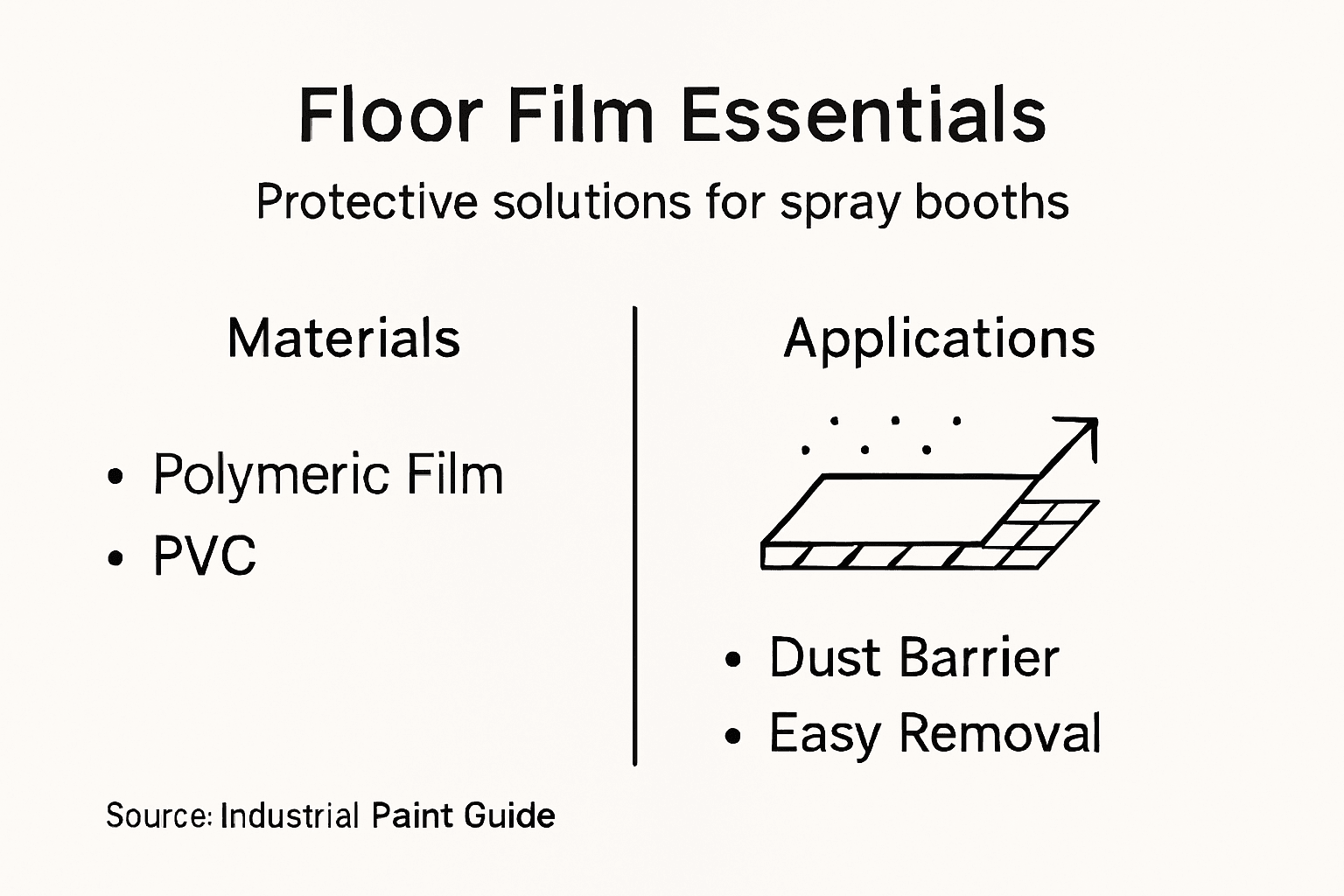
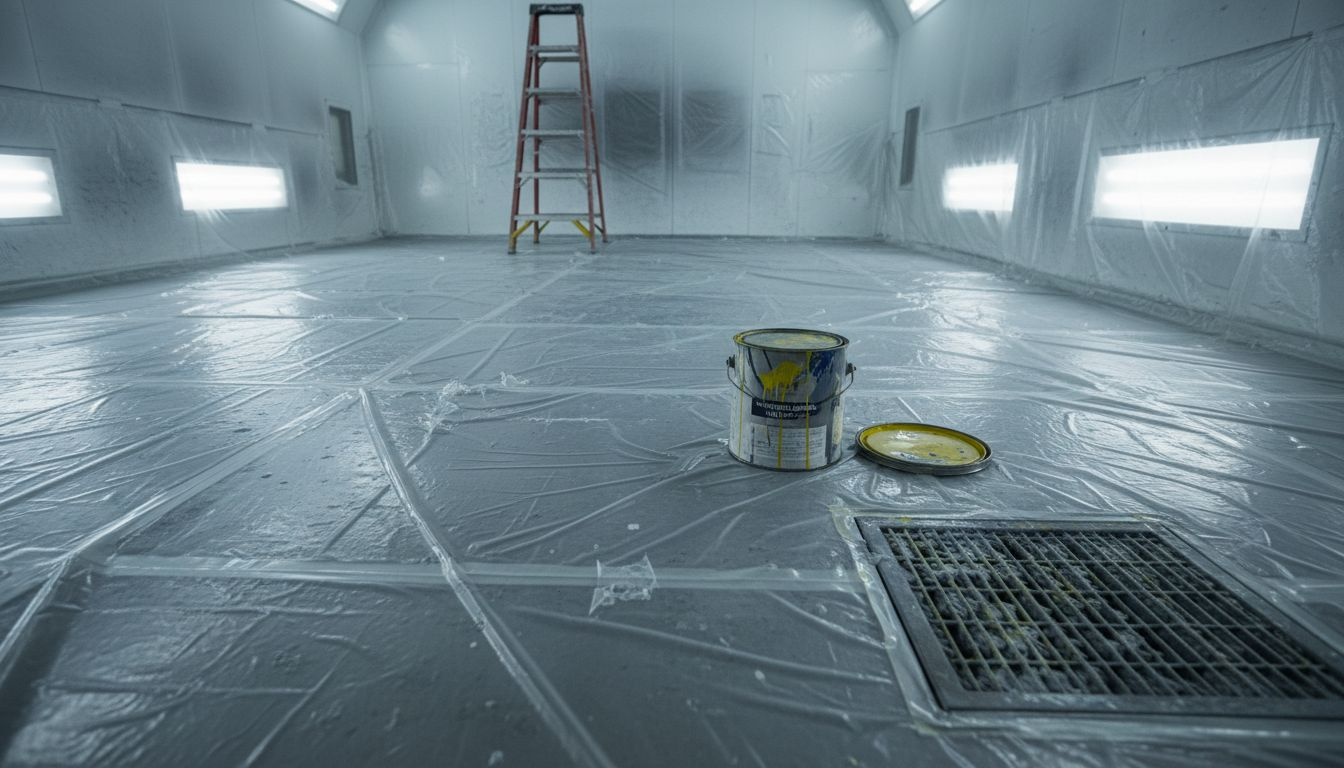
Protective floor films represent a critical technological solution in industrial spray booth environments, designed to maintain pristine painting conditions and prevent contamination. These specialized films create a protective barrier between the booth floor and potential sources of dust, debris, and paint overspray, ensuring a clean working surface that supports high-quality paint finishes.
At their core, protective floor films serve multiple essential functions in spray booth settings:
- Create a smooth, clean surface for painting operations
- Prevent floor contamination from dust and debris
- Provide a uniform, static-free environment
- Reduce potential rework caused by surface imperfections
- Enable quick floor cleanup between painting projects
The fundamental purpose of these films aligns with foundational surface protection requirements, which emphasize the need for stable, firm surfaces that resist deformation and movement. In spray booth environments, this translates to maintaining a consistently clean and controlled workspace that minimizes potential paint defects.
Manufacturers typically construct these films using multi-layered polymeric materials engineered to withstand the harsh conditions of industrial painting processes. The films are designed to be heat-resistant, static-dissipative, and capable of withstanding temperatures and chemical exposures common in spray booth operations.
Pro tip: Always inspect and replace protective floor films regularly to maintain optimal painting conditions and prevent potential contamination issues.
Key Types and Application Methods
Protective floor films in spray booths come in multiple specialized types, each designed to address specific industrial painting challenges. Thermal spray booth design guidelines emphasize the importance of selecting films that provide comprehensive surface protection while maintaining compatibility with ventilation systems.
The primary types of protective floor films include:
- Adhesive-backed PVC films: Quick installation, easy replacement
- Polyethylene roll coverings: Lightweight and economical
- Liquid-applied protective coatings: Durable, seamless protection
- Specialty chemical-resistant films: Enhanced protection for aggressive paint environments
Application methods vary depending on the specific film type and spray booth requirements. OSHA regulations provide guidance on acceptable protective film installations, highlighting the need for proper surface preparation and consistent application techniques.
Manufacturers must consider critical factors when selecting and applying protective floor films, including:
- Chemical resistance of the film material
- Temperature tolerance
- Ease of installation and removal
- Compatibility with specific painting processes
- Durability under high-traffic conditions
Surface preparation plays a crucial role in ensuring effective film application. Technicians must thoroughly clean and dry the floor surface, removing any contaminants that could compromise film adhesion or performance.
Pro tip: Always conduct a small test application to verify film compatibility and adhesion before full-scale installation in your spray booth.
Essential Features for Industrial Settings
Industrial spray booth protective floor films must meet rigorous performance standards to ensure workplace safety and operational efficiency. OSHA safety requirements mandate specific characteristics that protect both workers and painting environments, emphasizing the critical nature of film selection in industrial settings.
The most essential features of industrial protective floor films include:
- Chemical Resistance: Ability to withstand aggressive paint solvents and chemicals
- Durability: High abrasion resistance for high-traffic industrial areas
- Slip Resistance: Ensuring worker safety during painting operations
- Temperature Tolerance: Maintaining performance under extreme heat conditions
- Easy Replacement: Quick and efficient film removal and installation
Surface performance becomes paramount in industrial environments where multiple factors can compromise paint quality. California industrial regulations underscore the importance of selecting films that maintain consistent performance under challenging conditions.
Manufacturers and facility managers must prioritize protective floor films with advanced technical specifications:
- Minimum 0.004-inch thickness for robust protection
- Static-dissipative properties to prevent dust attraction
- Compatibility with various paint system chemistries
- Proven adhesion characteristics
- Resistance to puncturing and tearing
Technical considerations extend beyond basic material properties. Advanced floor films must integrate seamlessly with ventilation systems, maintain consistent surface integrity, and provide reliable protection throughout extended painting processes.
Pro tip: Conduct quarterly performance assessments of your protective floor films to ensure continuous optimal protection and early detection of potential material degradation.
The table below summarizes how protective floor films support spray booth performance:
| Key Feature | Role in Operations | Business Value |
|---|---|---|
| Chemical Resistance | Withstands harsh solvents | Minimizes premature failures |
| Slip Resistance | Enhances worker safety | Reduces accident risk |
| Static Dissipation | Prevents dust attraction | Cuts down on paint defects |
| Easy Replacement | Enables fast turnover | Boosts productivity |
| Heat Tolerance | Maintains integrity under heat | Ensures long service life |
How Floor Films Improve Paint Quality
Protective floor films play a critical role in maintaining exceptional paint finish quality by creating a controlled environment that minimizes contamination. Spray booth air quality management depends significantly on these films’ ability to prevent dust and overspray particles from compromising paint surfaces.
The key mechanisms by which floor films enhance paint quality include:
- Dust Containment: Preventing particulate movement during painting
- Static Reduction: Minimizing dust attraction to painted surfaces
- Overspray Capture: Trapping potentially damaging paint particles
- Surface Stabilization: Creating a clean, uniform painting environment
- Contamination Prevention: Blocking external debris from entering paint zones
Particle management becomes crucial in achieving flawless paint finishes. OSHA spray operation guidelines emphasize the importance of maintaining a controlled environment that reduces potential paint defects through strategic surface protection.
Advanced floor films provide multiple layers of paint quality protection:
- Creating a smooth, non-reactive surface substrate
- Reducing airborne contaminant interactions
- Preventing floor surface debris from migrating
- Enabling easier post-painting cleanup
- Maintaining consistent environmental conditions
By systematically controlling particulate movement and surface interactions, protective floor films transform spray booth environments from potential contamination zones into precision painting platforms. The result is a significant reduction in paint rework, improved finish consistency, and enhanced overall coating quality.
Pro tip: Replace protective floor films at the first sign of wear or contamination to maintain optimal paint quality and prevent potential surface defects.
Comparing Alternatives and Cost Implications
Protective floor films represent a strategic investment for spray booth operations, offering significant economic advantages over traditional surface protection methods. OSHA safety standards highlight the importance of selecting cost-effective solutions that minimize operational risks and maintain high-quality painting environments.
A comprehensive cost comparison reveals multiple alternative approaches:
Here’s a comparison of common spray booth floor protection solutions and their business benefits:
| Protection Method | Upfront Cost | Maintenance Effort | Paint Quality Impact |
|---|---|---|---|
| Bare Concrete | Very Low | High | High risk of defects |
| Epoxy Coating | Moderate | Moderate | Some improvement |
| Rubber Mats | Moderate | Frequent cleaning | Inconsistent protection |
| Disposable Floor Films | Low | Quick replacement | Consistently high finish |
| Permanent Sealed Surfaces | Very High | Minimal upkeep | Stable, reliable finish |
- Bare Concrete Floors: Lowest upfront cost, highest long-term expense
- Epoxy Coatings: Moderate initial investment, limited protection
- Rubber Floor Mats: Intermediate cost, inconsistent contamination control
- Disposable Protective Films: Lowest recurring expense, maximum contamination prevention
- Permanent Sealed Surfaces: Highest upfront cost, minimal ongoing maintenance
The primary economic considerations for selecting protective floor solutions include:
- Initial installation expenses
- Frequency of replacement
- Downtime during floor preparation
- Potential rework costs from contamination
- Long-term maintenance requirements
Cost effectiveness extends beyond simple price comparisons. Massachusetts spray booth guidelines emphasize that protective measures like floor films can generate substantial savings by reducing waste, improving paint quality, and extending equipment lifespan.
Manufacturers typically find that protective floor films generate significant returns through reduced paint defects, minimized rework, and improved overall operational efficiency. The seemingly small investment in high-quality floor protection translates into substantial long-term economic benefits.
Pro tip: Calculate your total cost of ownership by comparing not just film prices, but the potential savings from reduced paint defects and improved operational efficiency.
Elevate Your Spray Booth Protection with Premium Floor Films
Protecting your spray booth floor is crucial for achieving flawless paint finishes and maintaining a contamination-free environment. As discussed in the article, challenges such as chemical exposure, dust attraction, and surface wear can severely impact paint quality and worker safety. Durable, heat-resistant, and static-dissipative floor films are essential for creating a stable, clean surface that prevents costly rework and reduces downtime.
At Dust Free Film, we specialize in delivering innovative protective films designed specifically for spray booths in industrial and automotive refinishing settings. Our multi-layer electrostatic floor protectors come with patented dispenser systems that ensure quick, bubble-free installation — providing consistent coverage and exceptional durability. Trusted by auto body shops and manufacturing plants across multiple countries, our products help you maintain optimal paint quality while complying with stringent safety standards.
Discover how you can transform your spray booth into a dust-free, efficient workspace with our high-performance floor films. Don’t let surface contamination compromise your coatings quality or productivity. Visit Dust Free Film now to explore our range of advanced protective solutions and request a custom quote. Take control of your paint environment and experience superior results starting today.
Frequently Asked Questions
What are the primary functions of protective floor films in spray booths?
Protective floor films serve multiple functions, including creating a smooth surface for painting, preventing contamination from dust and debris, providing a static-free environment, reducing rework caused by surface imperfections, and enabling quick floor cleanup between painting projects.
How do protective floor films enhance paint quality?
These films minimize contamination by preventing dust movement, reducing static attraction to painted surfaces, capturing overspray particles, and stabilizing the painting environment, resulting in fewer paint defects and improved finish consistency.
What types of protective floor films are available for use in spray booths?
Key types include adhesive-backed PVC films, polyethylene roll coverings, liquid-applied protective coatings, and specialty chemical-resistant films, each designed to address specific industrial painting challenges.
What should I consider when selecting a protective floor film for a spray booth?
Consider factors like chemical resistance, temperature tolerance, durability, ease of installation and removal, and compatibility with the specific painting processes to ensure optimal performance in your spray booth.