

Finding reliable dust protection in your spray booth can be challenging when every detail affects paint quality and workplace safety. Facility managers and safety officers know the risks of chemical exposure and contamination, especially in high-traffic environments. This guide provides actionable steps for creating a clean, compliant spray booth, highlighting dust protection films, multi-layer surfaces, and regular maintenance as the backbone of professional results and safety compliance.
Table of Contents
- Step 1: Assess Spray Booth Safety Hazards
- Step 2: Prepare Booth With Dust Protection Films
- Step 3: Install Multi-Layer Wall and Floor Protectors
- Step 4: Verify Bubble-Free Installation and Coverage
- Step 5: Test Paint Booth Air Quality and Compliance
- Step 6: Maintain and Replace Protector Films Regularly
Quick Summary
| Key Point | Explanation |
|---|---|
| 1. Conduct Regular Safety Assessments | Systematically evaluate spray booth hazards to protect your team and prevent accidents. Regular assessments ensure safety protocols are in place and effective. |
| 2. Implement High-Quality Dust Protection | Utilize multi-layer protective films for surfaces to shield against dust and contamination, enhancing paint quality and reducing cleaning efforts. |
| 3. Verify Installation Integrity of Films | Perform thorough inspections of protective films to ensure they are bubble-free and properly adhered, preventing contamination and ensuring long-lasting effectiveness. |
| 4. Schedule Air Quality Tests | Regularly test paint booth air quality to meet safety standards, confirming that ventilation and filtration systems function properly to protect worker health. |
| 5. Maintain and Replace Films Regularly | Create a maintenance schedule for inspecting and replacing protective films, ensuring they remain effective and compliant with safety regulations. |
Step 1: Assess spray booth safety hazards
Accurately identifying potential safety risks in your spray booth is the first critical step toward creating a secure working environment. By systematically evaluating potential hazards, you can proactively prevent accidents and protect your team from chemical exposure and workplace incidents.
To effectively assess spray booth safety hazards, follow these comprehensive steps:
- Inspect ventilation systems for proper airflow and filtration
- Check personal protective equipment (PPE) availability and condition
- Review electrical systems for potential ignition sources
- Examine chemical storage and handling procedures
- Verify fire suppression equipment is functional
Careful evaluation of these areas requires understanding complex interactions between equipment, materials, and human factors. Spray booth safety procedures emphasize the importance of identifying potential chemical exposure risks and maintaining rigorous safety protocols.
Key areas to scrutinize include chemical compatibility, potential static electricity buildup, and ensuring proper respiratory protection. Workers must systematically examine equipment condition, checking for damaged ventilation components, compromised protective barriers, and any signs of wear that could compromise safety.
Safety assessment is not a one-time event but a continuous process of vigilance and proactive management.
Pro tip: Create a standardized safety assessment checklist and conduct monthly comprehensive reviews to ensure ongoing workplace protection.
Step 2: Prepare booth with dust protection films
Preparing your spray booth with effective dust protection films is a crucial step in ensuring high-quality paint finishes and maintaining a clean, professional workspace. This process involves strategic film application to shield critical surfaces from contamination and overspray.
To effectively prepare your spray booth, follow these comprehensive steps:
- Clean all booth surfaces thoroughly before film application
- Select multi-layer protective films appropriate for your specific booth
- Ensure surfaces are completely dry and free from debris
- Carefully measure and cut films to match booth dimensions
- Apply films using smooth, bubble-free techniques
Spray booth protection methods emphasize the importance of creating a robust barrier against dust and overspray that can compromise paint quality. Professional-grade protective films offer a durable shield that reduces cleaning time and prevents contamination during painting processes.
When applying dust protection films, pay special attention to key areas such as walls, floors, light fixtures, and equipment edges. Proper application requires patience and precision, ensuring complete surface coverage without wrinkles or gaps that could introduce contaminants.
Effective dust protection is not just about coverage, but creating a seamless, contaminant-free environment for superior paint finishes.
Pro tip: Invest in high-quality, static-free protective films and practice consistent application techniques to maximize booth protection and paint quality.
Step 3: Install multi-layer wall and floor protectors
Installing multi-layer wall and floor protectors is a critical step in creating a comprehensive dust protection strategy for your spray booth. These advanced protective films provide a robust defense against overspray, contamination, and surface degradation during painting processes.
To successfully install multi-layer protective films, follow these systematic steps:
- Thoroughly clean and dry all surfaces before film application
- Choose high-performance multi-layer protection films
- Inspect surfaces for any imperfections or damage
- Measure and cut films precisely to match booth dimensions
- Apply films systematically, eliminating air bubbles and wrinkles
Five-layer floor protection systems offer comprehensive coverage against high-traffic wear, overspray, and potential contamination. These advanced films not only protect surfaces but also significantly reduce maintenance time and enhance overall workspace cleanliness.
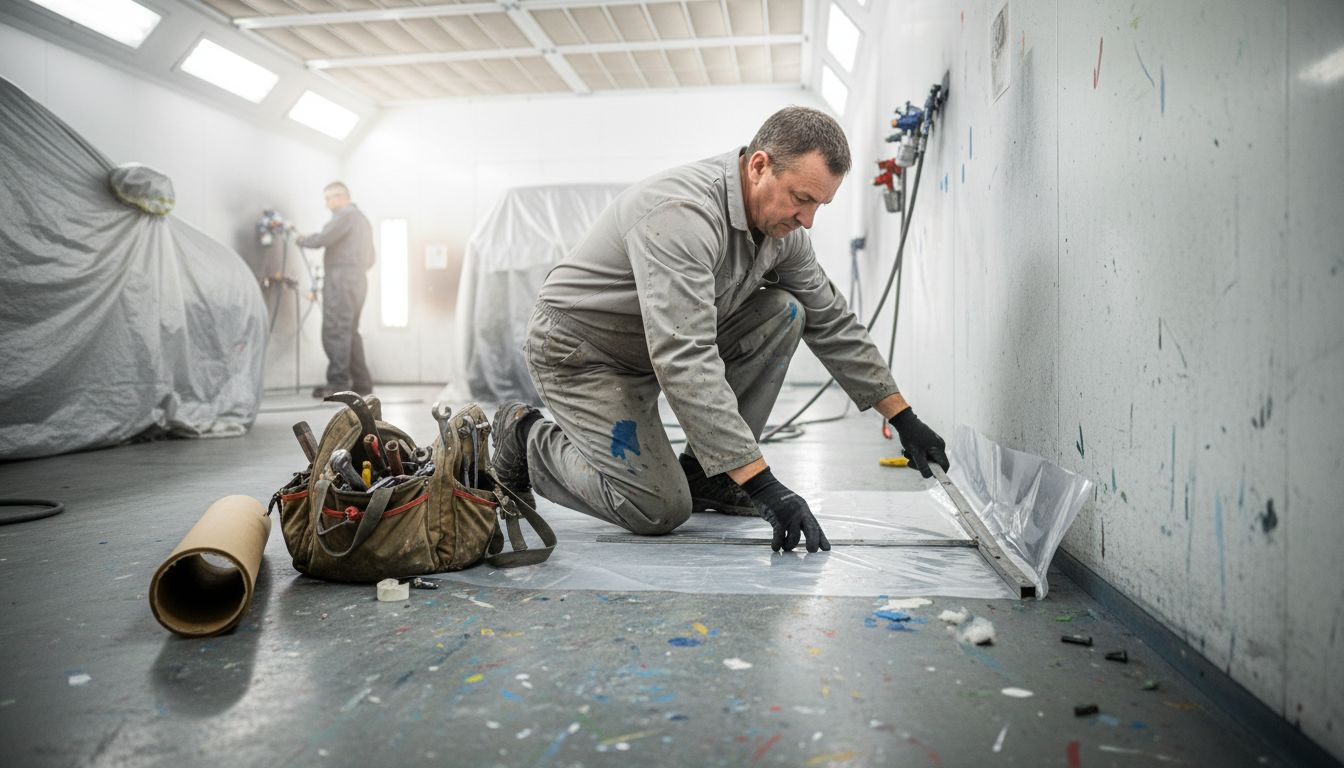
When installing wall and floor protectors, pay meticulous attention to edge alignment and complete surface coverage. Proper installation requires patience and precision, ensuring a seamless protective barrier that prevents dust and overspray from compromising your painting environment.
Here’s a quick reference comparing protective film types for spray booth environments:
| Film Type | Durability | Coverage Efficiency | Maintenance Frequency |
|---|---|---|---|
| Single-layer | Low | Moderate | Frequent replacement |
| Multi-layer | High | Excellent | Less frequent |
| Static-free | Medium | Good | Standard schedule |
| Professional-grade | Very high | Superior | Extended lifespan |
Effective multi-layer protection is about creating an impenetrable shield that maintains the integrity of your spray booth surfaces.
Pro tip: Invest in professional-grade installation tools and practice consistent application techniques to maximize the effectiveness of your protective film coverage.
Step 4: Verify bubble-free installation and coverage
Verifying a bubble-free installation is the final critical step in ensuring your spray booth protection film provides maximum performance and durability. A meticulous inspection process will help you identify and eliminate any potential imperfections that could compromise your protective barrier.
To thoroughly verify your film installation, follow these comprehensive inspection steps:
- Conduct a systematic visual inspection of entire surface
- Check for subtle air pocket indicators
- Use professional-grade squeegee for final smoothing
- Inspect edges and corner sections carefully
- Test film adhesion in multiple locations
Vinyl film application techniques emphasize the importance of environmental conditions and precise application methods in achieving a flawless protective film installation. Proper verification requires patience, good lighting, and a methodical approach to identifying potential issues.
Pay special attention to areas prone to air bubble formation, such as tight corners, uneven surfaces, and transition zones between walls and floors. A careful, systematic inspection will help you detect and resolve any minor imperfections before they become significant problems that could affect your spray booth’s protective capabilities.
Perfect installation is not about speed, but about precision and attention to the smallest details.
Pro tip: Use a bright light source at an angle to reveal subtle bubbles or imperfections that might be invisible under normal lighting conditions.
Step 5: Test paint booth air quality and compliance
Ensuring your paint booth meets rigorous air quality standards is a critical safety measure that protects both workers and production quality. This comprehensive testing process involves systematically evaluating multiple environmental and regulatory parameters to confirm your workspace meets professional safety requirements.
To effectively test paint booth air quality and compliance, implement these key assessment strategies:
- Measure particulate filtration efficiency
- Check ventilation airflow rates
- Verify emission control system performance
- Test for volatile organic compound (VOC) levels
- Conduct comprehensive regulatory compliance documentation
Paint booth code requirements emphasize the importance of validated filtration systems and precise measurement protocols. These tests help confirm adherence to critical occupational health and safety standards set by OSHA, EPA, and NFPA.
Careful testing involves using calibrated instruments to assess air quality, focusing on detecting potential hazardous particulates and ensuring proper ventilation performance. This methodical approach helps identify any potential risks before they become significant workplace safety issues.
Comprehensive air quality testing is not just a regulatory requirement, but a fundamental commitment to workplace safety and environmental protection.
Pro tip: Maintain a detailed log of all air quality test results and schedule regular professional assessments to stay ahead of potential compliance issues.
Step 6: Maintain and replace protector films regularly
Maintaining and replacing protective films is a critical ongoing process that ensures your spray booth remains clean, efficient, and compliant with professional safety standards. Regular maintenance prevents performance degradation and protects your workspace from potential contamination risks.
To effectively maintain your protective films, follow these systematic steps:
- Establish a consistent inspection schedule
- Track film wear and degradation patterns
- Monitor film adhesion and surface integrity
- Remove and replace films before they become compromised
- Document replacement dates and film performance
Industrial spray booth maintenance highlights the importance of scheduled inspections and timely film replacements to sustain equipment performance and paint quality. Proactive maintenance reduces potential downtime and prevents costly contamination issues.
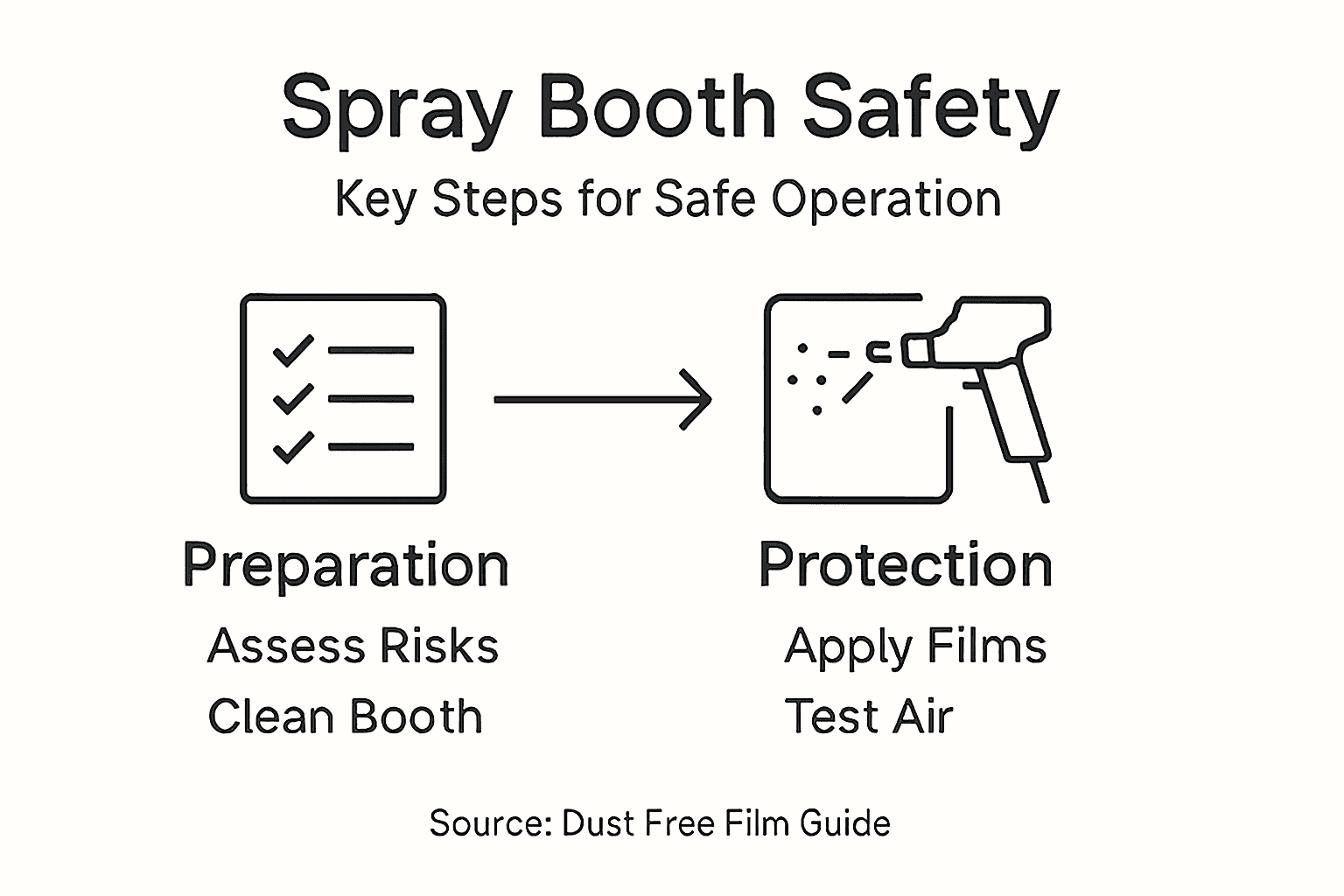
Careful film maintenance involves assessing surface conditions, checking for signs of wear, and understanding the unique demands of your specific painting environment. Professional-grade protective films require strategic monitoring to ensure they continue providing optimal dust and overspray protection.
To help visualize ongoing film care, here’s a summary of common maintenance actions and their impact:
| Action | Impact on Performance | Suggested Interval | Benefit to Safety |
|---|---|---|---|
| Visual inspection | Detects wear early | Weekly | Prevents contaminants |
| Adhesion check | Ensures secure fit | Monthly | Stops film failures |
| Replacement cycle | Maintains surface integrity | Quarterly | Sustains protection |
| Documentation log | Tracks maintenance history | Continuous | Ensures compliance |
Regular maintenance is not an expense, but an investment in your facility’s long-term productivity and quality.
Pro tip: Create a digital maintenance log to track film replacement cycles and identify patterns that can help optimize your protective film strategy.
Elevate Your Spray Booth Safety with Proven Dust Protection Solutions
Addressing the critical challenges outlined in the Step-by-Step Guide to Spray Booth Safety Solutions requires reliable, high-performance protective films that ensure a bubble-free installation, multi-layer defense, and superior dust control. Key pain points like preventing contamination, maintaining film adhesion, and sustaining air quality demand a trusted partner with cutting-edge products designed specifically for industrial painting environments.
At Dust Free Film, we specialize in multi-layer electrostatic wall and floor protectors that deliver exceptional durability and ease of application. Our patented dispenser systems guarantee quick, bubble-free installations while our heat-resistant, static-free films reduce maintenance frequency and protect your spray booth surfaces from overspray and dust infiltration. Designed to meet European manufacturing standards, our products empower auto body shops and industrial painting facilities to consistently achieve flawless paint finishes with less downtime.
Ready to transform your spray booth safety? Explore our comprehensive line of dust protection films and discover how effortless maintaining a contaminant-free painting environment can be. Visit Dust Free Film to learn more or see how our innovative products align perfectly with essential spray booth protection methods. Stay ahead of contamination by integrating industry-leading solutions tailored to your operational needs.
Dust Free Film means reliable protection that safeguards your team and elevates your finishing quality.
Take the next step toward safer, cleaner spray booths today.
First, see how professionals apply flawless film coverage by visiting our landing page Dust Free Film.
Frequently Asked Questions
How do I assess safety hazards in my spray booth?
To assess safety hazards in your spray booth, systematically inspect areas like ventilation systems, PPE availability, electrical systems, chemical storage, and fire suppression equipment. Use a standardized checklist and conduct assessments monthly to maintain a safe working environment.
What steps should I take to prepare my spray booth with dust protection films?
To prepare your spray booth with dust protection films, start by thoroughly cleaning all surfaces, then select appropriate multi-layer protective films. Measure and cut the films to fit specific dimensions and apply them smoothly, ensuring there are no bubbles or gaps.
How often should I replace protective films in my spray booth?
You should inspect and replace protective films in your spray booth regularly, ideally before signs of wear become apparent. Establish a routine replacement cycle, such as every quarter, to maintain optimal surface protection and prevent contamination.
What should I check for when verifying bubble-free installation of protective films?
When verifying bubble-free installation, conduct a visual inspection for air pockets and ensure edges are secure. Utilize a professional-grade squeegee to smooth any remaining imperfections and ensure the film adheres well, especially in corners and transitions.
How do I test the air quality in my paint booth to ensure compliance?
To test air quality in your paint booth, measure particulate filtration efficiency, verify ventilation airflow rates, and assess volatile organic compound (VOC) levels. Conduct these tests regularly and document the results to confirm compliance with safety standards and maintain a healthy work environment.