

Every facility manager knows the challenge of keeping spray booths safe while meeting ever-tighter standards in places like Germany, Japan, and the United States. New regulations and smart technologies are raising expectations for dust control and operational efficiency. This article spotlights the latest advances in predictive analytics and real-time monitoring, showcasing how intelligent systems and updated protocols are transforming spray booth safety for global automotive and industrial operators.
Table of Contents
- Spray Booth Safety Trends Defined For 2026
- Smart Automation And Real-Time Monitoring Advances
- New Safety Standards And Regulatory Updates
- Cutting-Edge Dust Control Technologies
- Fire Prevention, Air Quality, And PPE Innovations
- Avoiding Compliance Pitfalls And Common Safety Mistakes
Key Takeaways
| Point | Details |
|---|---|
| Technological Integration | Embrace advanced digital solutions for real-time monitoring and compliance management to enhance workplace safety. |
| Proactive Safety Culture | Shift focus from reactive compliance to proactive safety strategies that anticipate risks and foster continuous improvement. |
| Enhanced PPE and Environmental Control | Invest in smart personal protective equipment and automated dust control technologies to improve worker safety and operational efficiency. |
| Continuous Training and Compliance | Implement ongoing training programs and dedicated compliance teams to stay updated on evolving safety regulations and technologies. |
Spray Booth Safety Trends Defined for 2026
Spray booth safety has undergone significant transformations as we enter 2026, driven by technological advancements and increasingly stringent industrial regulations. Manufacturers and facility managers are now prioritizing comprehensive safety protocols that go beyond traditional protective measures. Trends in Spray Booth Protection: 2026 Innovations reveal a complex landscape of emerging safety technologies and practices.
The core safety trends for spray booth environments in 2026 center around several critical developments:
- Enhanced personal protective equipment (PPE) with integrated sensor technologies
- Advanced ventilation systems with real-time air quality monitoring
- Automated environmental control mechanisms
- Electrostatic discharge prevention systems
- Digital tracking and compliance management platforms
These emerging trends reflect a holistic approach to workplace safety that combines technological innovation with comprehensive risk management strategies. Modern spray booth safety is no longer about simple protective gear, but about creating intelligent, responsive work environments that proactively mitigate potential hazards.
Digital integration has become paramount, with smart monitoring systems enabling unprecedented levels of environmental control and worker protection. Predictive analytics now allow facility managers to anticipate potential safety risks before they manifest, transforming reactive safety protocols into proactive prevention strategies.
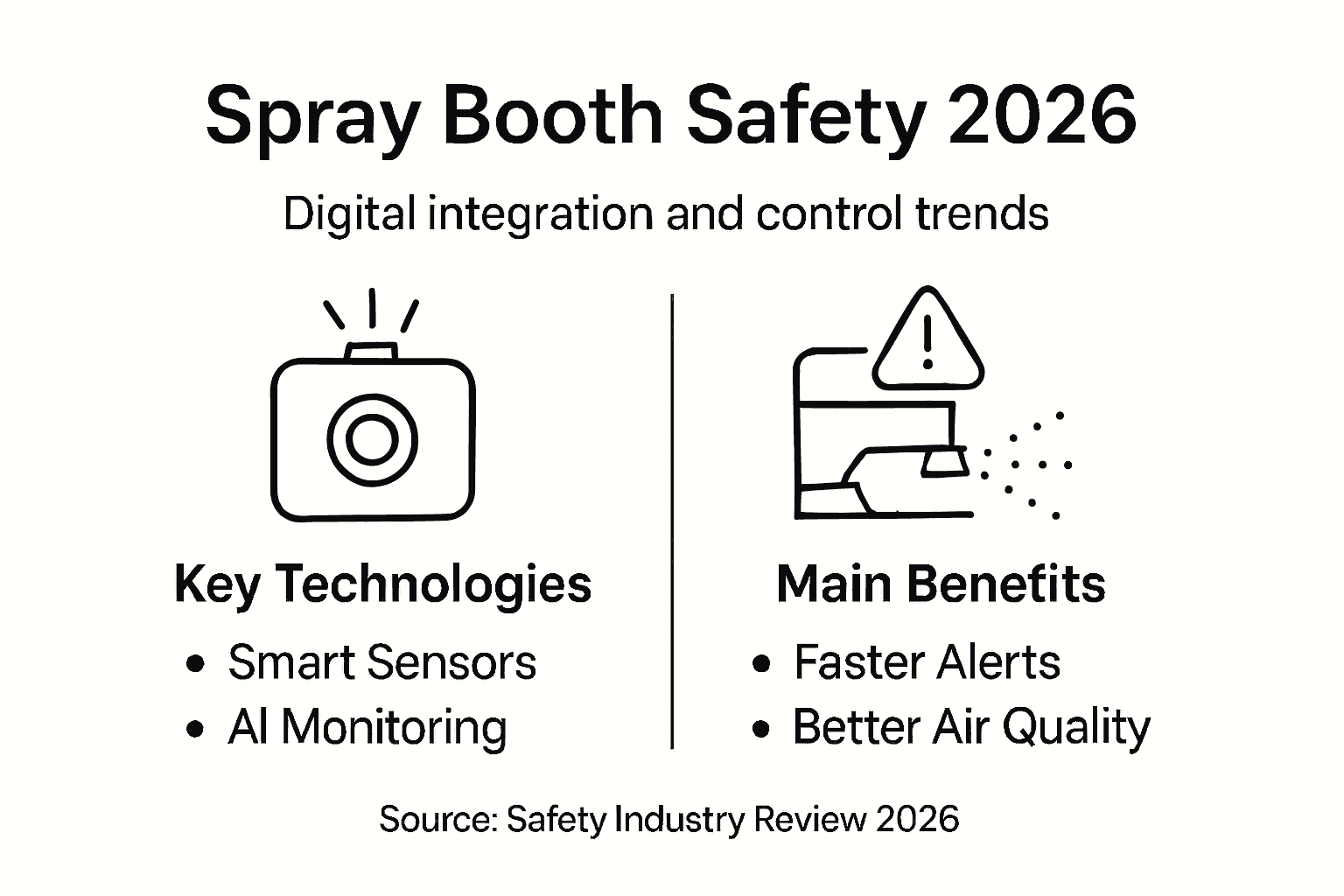
Pro tip: Invest in continuous training programs that keep your team updated on the latest spray booth safety technologies and best practices.
Here is a summary of how different 2026 spray booth safety technologies impact workplace outcomes:
| Technology Type | Key Benefit | Impact on Operations |
|---|---|---|
| Smart PPE | Real-time exposure alerts | Reduces injury and response time |
| AI Environmental Monitoring | Predicts hazardous conditions | Minimizes downtime, boosts safety |
| Automated Dust Control | Active particulate removal | Increases air quality and product quality |
| Digital Compliance Systems | Instant safety audit trails | Simplifies inspections and regulatory checks |
Smart Automation and Real-Time Monitoring Advances
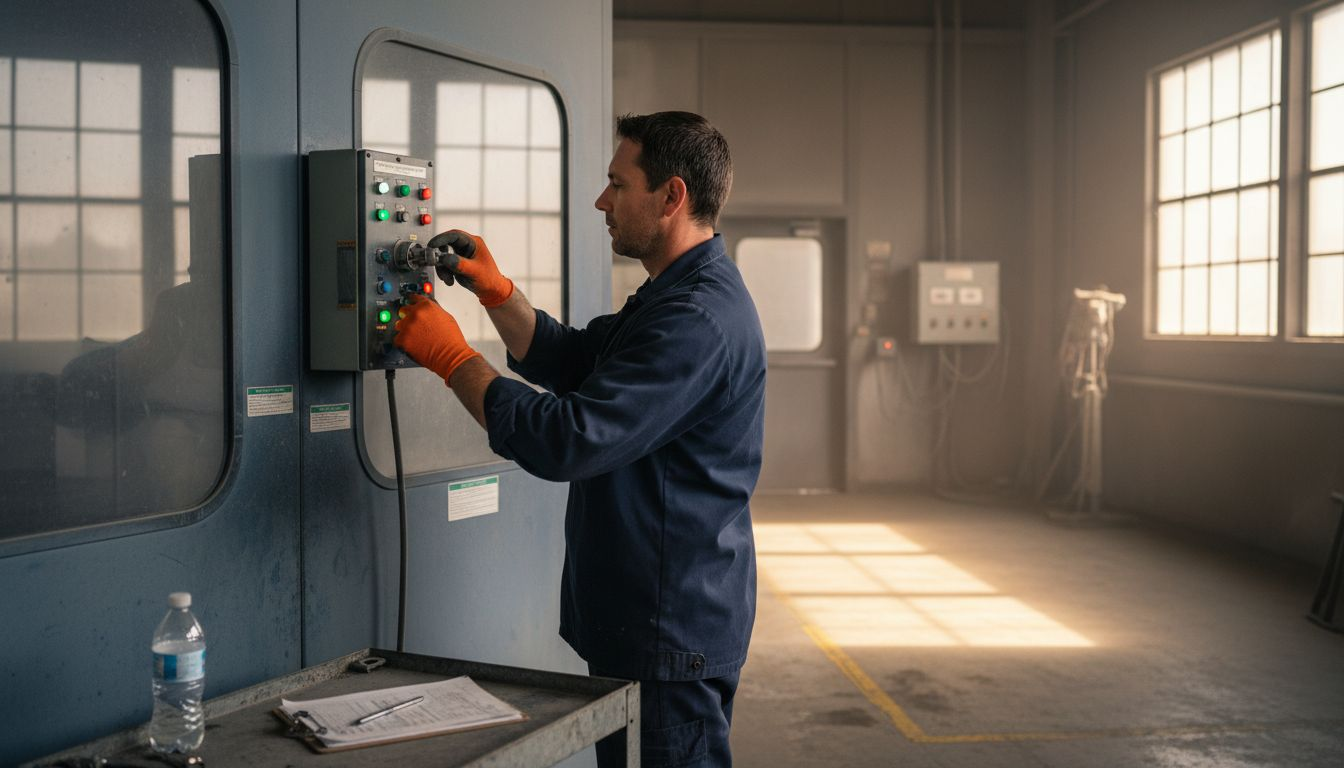
The landscape of spray booth safety is being revolutionized by sophisticated smart automation technologies that fundamentally transform environmental monitoring and risk management. Top 5 Spray Booth Safety Products List for 2026 highlights the critical role of advanced monitoring systems in creating safer industrial environments.
Key technological advancements in real-time monitoring include:
- Integrated sensor networks with continuous data collection
- AI-powered predictive maintenance algorithms
- Advanced particulate and chemical composition tracking
- Wireless connectivity for instant performance reporting
- Remote diagnostic and intervention capabilities
These intelligent systems represent a quantum leap in workplace safety, moving beyond traditional reactive approaches to proactive, data-driven environmental management. Machine learning algorithms can now analyze complex environmental data streams in milliseconds, identifying potential safety risks before they become critical incidents.
Digital transformation has enabled unprecedented levels of precision in spray booth monitoring. Sophisticated sensors now track environmental conditions with microscopic accuracy, providing facility managers with granular insights into workplace safety parameters. These technologies not only protect workers but also optimize operational efficiency by minimizing downtime and reducing potential hazardous exposure.
Real-time monitoring transforms spray booth safety from a compliance requirement to a strategic operational advantage.
Pro tip: Invest in modular automation systems that can be incrementally upgraded to maintain cutting-edge safety capabilities.
New Safety Standards and Regulatory Updates
The regulatory landscape for spray booth safety is experiencing unprecedented transformation in 2026, with government agencies and industry bodies introducing more comprehensive and technology-driven safety protocols. 7 Essential Examples of Spray Booth Safety Measures Explained highlights the critical evolution of safety standards across industrial environments.
Key regulatory developments include:
- Mandatory implementation of real-time environmental monitoring systems
- Stricter personal protective equipment (PPE) performance requirements
- Enhanced documentation and digital tracking of safety compliance
- More rigorous chemical exposure limit standards
- Increased penalties for non-compliance with safety regulations
These new regulatory frameworks reflect a fundamental shift towards proactive safety management. Regulators are now demanding not just compliance, but demonstrable evidence of comprehensive risk mitigation strategies. This approach transforms safety from a checkbox exercise to a strategic operational priority that directly impacts worker protection and organizational liability.
Industrial facilities must now integrate advanced technological solutions to meet these evolving standards. Digital compliance platforms enable organizations to track, report, and validate safety metrics with unprecedented precision. These systems provide real-time insights, allowing facility managers to identify and address potential risks before they escalate into serious incidents.
Regulatory compliance is no longer about meeting minimum requirements, but about creating a culture of continuous safety improvement.
Pro tip: Develop a dedicated compliance team that stays current with emerging safety regulations and can quickly adapt your facility’s protocols.
Cutting-Edge Dust Control Technologies
Dust control technologies have undergone a remarkable transformation in 2026, emerging as a critical component of spray booth safety and operational efficiency. Trends in Spray Booth Protection: 2026 Innovations reveals the sophisticated approaches revolutionizing industrial dust management strategies.
Cutting-edge dust control technologies now incorporate multiple advanced features:
- Electrostatic precipitation systems with nano-filtration capabilities
- Intelligent air purification networks with real-time particulate tracking
- Advanced microfiber filtration membranes
- Automated dust suppression mechanisms
- Adaptive environmental control algorithms
These innovative technologies represent a paradigm shift in dust management, moving beyond traditional passive filtration methods. Modern systems now actively analyze, predict, and mitigate dust generation through sophisticated sensor networks and machine learning algorithms. The integration of artificial intelligence enables predictive dust control, allowing facilities to address potential contamination risks before they materialize.
Advanced molecular filtration techniques have dramatically improved particulate capture rates, with some emerging technologies achieving near-perfect dust elimination. Sophisticated multilayered filtration systems can now trap microscopic particles as small as 0.1 microns, providing unprecedented protection for sensitive industrial environments. These technologies not only enhance worker safety but also significantly improve overall product quality and operational efficiency.
Dust control is no longer about containment, but about intelligent, proactive environmental management.
Pro tip: Invest in modular dust control systems that can be incrementally upgraded to incorporate the latest filtration technologies.
Fire Prevention, Air Quality, and PPE Innovations
The intersection of fire prevention, air quality management, and personal protective equipment (PPE) has become increasingly sophisticated in 2026. Top 5 Spray Booth Safety Products List for 2026 illuminates the comprehensive approach to worker safety in high-risk industrial environments.
Key innovations in safety equipment and environmental protection include:
- Smart flame-retardant protective clothing with integrated sensor networks
- Advanced respiratory protection systems with real-time chemical exposure monitoring
- Hybrid air filtration technologies with predictive contamination detection
- Thermal imaging-enabled fire prevention mechanisms
- Self-diagnostic PPE with immediate performance feedback
These technological advancements represent a quantum leap in workplace safety, transforming traditional protective measures into intelligent, responsive systems. Modern PPE now functions as an active safety partner, continuously analyzing environmental conditions and potential risks. The integration of artificial intelligence and advanced sensor technologies enables unprecedented levels of worker protection and proactive risk management.
Breakthrough air quality technologies have revolutionized contamination control, with multi-layered filtration systems capable of detecting and neutralizing microscopic hazardous particles. These innovations go beyond simple protection, providing real-time environmental analysis that allows facilities to create dynamically safe working conditions. The result is a holistic approach to safety that combines cutting-edge technology with comprehensive risk mitigation strategies.
Safety is no longer about protection, but about creating an intelligent, responsive work environment.
Pro tip: Implement a comprehensive PPE rotation and maintenance program that ensures continuous monitoring and immediate replacement of safety equipment.
Avoiding Compliance Pitfalls and Common Safety Mistakes
Navigating the complex landscape of spray booth safety requires a strategic approach to avoiding compliance pitfalls and potential operational risks. 7 Essential Examples of Spray Booth Safety Measures Explained highlights the critical areas where facilities frequently encounter challenges.
Common compliance mistakes that facilities must proactively address include:
- Inadequate documentation of safety protocols
- Inconsistent personal protective equipment (PPE) maintenance
- Failure to update safety training programs regularly
- Overlooking equipment calibration and performance verification
- Neglecting comprehensive environmental monitoring systems
These compliance vulnerabilities can expose organizations to significant legal and operational risks. Many facilities mistakenly view safety compliance as a static checklist, rather than a dynamic, continuously evolving process. The most successful organizations treat safety as a strategic priority, implementing robust systems that go beyond minimum regulatory requirements and actively anticipate potential risks.
Regulatory compliance demands more than surface-level adherence to guidelines. Facilities must develop a comprehensive approach that integrates ongoing training, technological innovation, and proactive risk management. This means creating a culture of safety that empowers workers to identify and address potential hazards, rather than simply following prescriptive rules. Sophisticated digital tracking systems and comprehensive documentation are now essential components of an effective safety strategy.
Compliance is not about avoiding penalties, but about creating a fundamentally safe work environment.
Pro tip: Conduct quarterly comprehensive safety audits that examine both technological systems and human performance to identify potential improvement areas.
The table below contrasts proactive and reactive approaches to spray booth compliance:
| Approach | Main Focus | Typical Outcome | Adaptability to New Threats |
|---|---|---|---|
| Reactive | Address incidents post-occurrence | Higher risk, slower correction | Poor; delayed responses |
| Proactive | Anticipate and prevent risks | Fewer incidents, improved safety | High; continuous adaptation |
Enhance Your Spray Booth Safety with Proven Dust Control Solutions
The spray booth safety trends of 2026 emphasize real-time environmental monitoring, advanced dust control technologies, and proactive compliance strategies to protect workers and optimize operations. If you are facing challenges like minimizing particulate contamination, meeting stricter regulatory requirements, or implementing advanced dust suppression systems, Dust Free Film offers premium protective solutions engineered to address these critical pain points. Our multi-layer electrostatic films ensure a durable, dust-free environment that complements smart automation and air quality improvements discussed in the article.
Discover how our patented application systems and heat-resistant, static-free films can help you stay ahead of evolving safety standards while enhancing paint quality and operational efficiency. Take the next important step in spray booth safety by exploring our offerings at Dust Free Film. For specialized dust protection solutions tailored to spray booths used in automotive refinishing or industrial painting, visit our homepage to learn more. Integrate state-of-the-art dust control into your safety strategy today and transform your workplace into a cleaner, safer, and more compliant environment.
Frequently Asked Questions
What are the latest technologies in spray booth safety for 2026?
The latest technologies include enhanced personal protective equipment (PPE) with sensor technologies, advanced ventilation systems with air quality monitoring, automated environmental controls, and digital compliance management platforms.
How do smart PPE and AI environmental monitoring improve worker safety?
Smart PPE provides real-time exposure alerts to workers, while AI environmental monitoring predicts hazardous conditions and minimizes downtime, ultimately creating a safer working environment.
What recent regulatory changes affect spray booth safety compliance?
Key regulatory changes require mandatory real-time environmental monitoring systems, stricter PPE performance requirements, enhanced documentation practices, and increased penalties for non-compliance, reflecting a shift toward proactive risk management.
What common compliance mistakes do facilities make in spray booth safety?
Common mistakes include inadequate documentation, inconsistent PPE maintenance, failing to update safety training regularly, neglecting equipment calibration, and underestimating the importance of comprehensive environmental monitoring systems.