

Unplanned spray booth downtime costs automotive refinishing shops thousands of dollars every week, often traced back to skipped maintenance routines. For facility managers juggling tight production schedules, systematic booth upkeep protects finish quality, worker safety, and operational continuity. This guide walks you through daily, weekly, monthly, and annual maintenance protocols proven to prevent failures and optimize spray booth performance throughout 2026.
Table of Contents
- Prerequisites: Tools, Safety Gear, And Preparation
- Core Step 1: Daily Basic Cleaning And Inspection
- Core Step 2: Weekly Deep Cleaning
- Core Step 3: Filter Maintenance And Replacement
- Core Step 4: Monthly Mechanical And Safety Checks
- Core Step 5: Annual Professional Inspection And Documentation
- Troubleshooting And Common Mistakes
- Expected Results And Maintenance Outcomes
- Spray Booth Protection Solutions From Dust Free Film
- FAQ
Key takeaways
| Point | Details |
|---|---|
| Daily cleaning prevents overspray buildup and catches early warning signs before costly failures occur. | |
| Filter replacement every 3 weeks maintains proper airflow and ensures consistent paint finishes without contamination. | |
| Monthly mechanical checks verify exhaust fans, motors, and safety systems operate reliably under demanding conditions. | |
| Annual professional inspections by certified technicians identify hidden wear patterns and ensure regulatory compliance. | |
| Structured maintenance programs reduce downtime by 35% while extending equipment lifespan significantly. |
Prerequisites: Tools, safety gear, and preparation
Before starting any spray booth maintenance, assemble the right equipment and create a safe environment. Using incorrect tools or skipping safety protocols risks equipment damage and worker injuries.
Essential tools and equipment:
- Non-sparking brooms and dustpans for fire-safe cleaning
- Plastic or brass scrapers for removing overspray without scratching surfaces
- Solvent-based cleaners compatible with booth coatings
- Manometers for measuring filter pressure differentials
- Inspection flashlights and mirrors for hard-to-reach areas
- Replacement filters matching manufacturer specifications
Required safety gear:
| Item | Purpose |
|---|---|
| Chemical-resistant gloves | Protect hands from solvents and paint residues |
| Respirator masks with organic vapor cartridges | Prevent inhalation of fumes during cleaning |
| Safety goggles | Shield eyes from splashes and airborne particles |
| Flame-retardant coveralls | Reduce fire risk in explosive vapor environments |
Pre-maintenance preparation steps:
- Shut down all electrical power to the booth at the main breaker
- Allow booth to cool completely if recently used for painting
- Verify adequate ventilation before opening cleaning solvents
- Review manufacturer maintenance manuals for model-specific requirements
- Check the spray booth maintenance checklist for task-specific guidance
Pro Tip: Keep a dedicated maintenance cart stocked with all tools and safety gear so your team never skips steps due to missing equipment. Label each item with last inspection dates to catch worn protective gear before it fails.
Core step 1: Daily basic cleaning and inspection
Daily routines catch problems when they’re still minor and inexpensive to fix. Skipping these quick checks allows small issues to compound into major failures.
-
Sweep booth floors thoroughly using non-sparking brooms to remove overspray, dust, and debris that settled overnight. Pay special attention to corners and under grates where buildup hides.
-
Inspect intake and exhaust filters visually for visible saturation, tears, or excessive loading. Daily filter checks prevent airflow blockage that degrades finish quality and increases energy costs.
-
Listen for unusual mechanical sounds from exhaust fans, motors, or ductwork during operation. Grinding, squealing, or rattling noises signal bearing wear or loose components requiring immediate attention.
-
Check door seals and gaskets by running your hand along edges while the booth operates. Any air leaks compromise pressure balance and allow contaminants inside.
-
Note unusual chemical odors that might indicate solvent leaks, exhaust system failures, or incomplete curing from the previous day’s work.
These tasks take 15-20 minutes but prevent the majority of unexpected booth failures. The automotive spray booth maintenance guide provides detailed checklists for tracking daily observations.
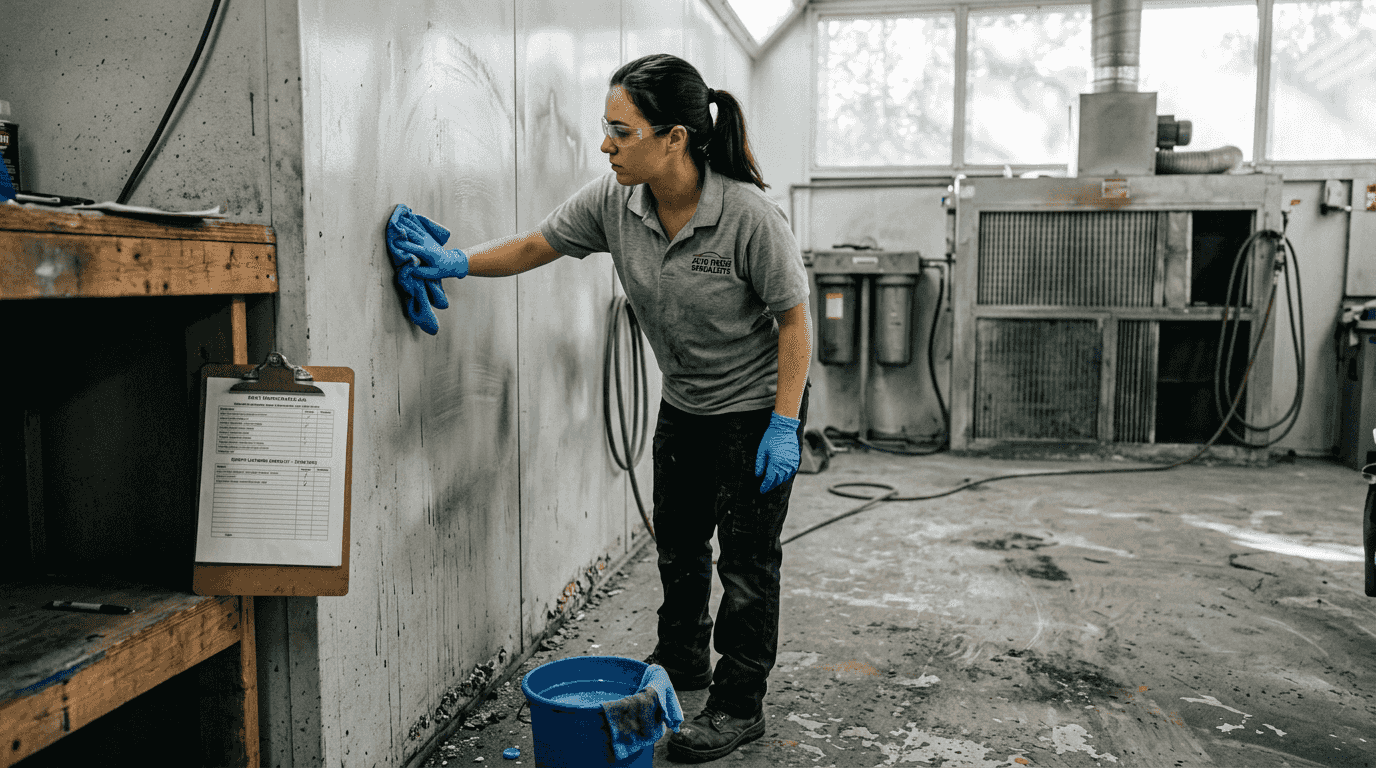
Pro Tip: Create a simple daily log sheet mounted inside the booth entrance. Require operators to initial each task so accountability stays clear and patterns emerge over time.
Core step 2: Weekly deep cleaning
Weekly deep cleaning removes stubborn overspray accumulation that daily sweeping can’t handle. This prevents contamination from flaking off walls and landing on fresh paint jobs.
-
Scrape booth walls systematically using plastic scrapers to remove thick overspray buildup. Work top to bottom in overlapping sections, catching debris with drop cloths to prevent it from contaminating the floor.
-
Mop floors with approved solvent cleaners after removing all loose debris. Use figure-eight patterns to ensure complete coverage, and change mop heads when they become saturated with paint residues.
-
Clean light fixtures and lenses to maintain proper illumination levels for quality control. Dirty lights cause color matching errors and hide surface defects until after curing.
-
Wipe down door frames, handles, and control panels where operators touch frequently. These high-contact surfaces transfer contaminants onto gloves and then onto painted surfaces.
-
Dispose of paint-contaminated materials properly according to local environmental regulations. Never mix different solvent types or exceed waste container capacity limits.
Weekly cleaning typically requires 2-3 hours depending on booth size and production volume. Facilities following the spray booth maintenance workflow report 40% less finish rework due to contamination.
Core step 3: Filter maintenance and replacement
Filters are your booth’s first line of defense against contamination and airflow problems. Neglecting filter care causes finish defects, higher energy bills, and premature equipment wear.
Filter replacement timing and monitoring:
Changing filters every 3 weeks for daily use significantly enhances airflow and prevents contamination that causes finish defects. High-volume shops may need more frequent changes, while lighter use extends intervals.
| Filter Type | Typical Lifespan | Pressure Drop Limit |
|---|---|---|
| Intake filters | 3-4 weeks | 0.5 inches water column |
| Exhaust filters | 2-3 weeks | 0.8 inches water column |
| HEPA filters (if equipped) | 6-12 months | Per manufacturer specs |
Using manometers for precise timing:
Install permanent manometers on both intake and exhaust filter banks. Record baseline pressure readings with fresh filters, then monitor weekly. Replace filters when pressure drop exceeds manufacturer limits by 20%.
Consequences of delayed filter replacement:
- Restricted airflow creates turbulence that carries dust onto wet paint
- Increased energy consumption as fans work harder against resistance
- Uneven spray patterns from pressure imbalances
- Premature motor failure from excessive load
Establish strict replacement schedules tied to production counts, not just calendar dates. Review the spray booth maintenance checklist for filter-specific guidance.
Pro Tip: Buy filters in bulk and store them in sealed plastic near the booth. This eliminates the temptation to delay changes when you run out of stock.
Core step 4: Monthly mechanical and safety checks
Monthly inspections verify that mechanical components and safety systems operate within specifications. These checks catch wear before it causes failures during production.
Critical monthly inspection points:
-
Exhaust fans and motors: Check for bearing noise, excessive vibration, or unusual heat buildup. Inspect fan blades for paint accumulation that throws them out of balance.
-
Drive belts and pulleys: Look for cracks, glazing, or fraying on belts. Verify proper tension using the manufacturer’s deflection specifications. Replace belts in matched sets to prevent uneven loads.
-
Ductwork integrity: Inspect joints, seams, and transitions for air leaks using smoke pencils or tissue paper. Even small leaks waste energy and compromise booth pressure.
-
Door seals and interlocks: Test door closure mechanisms and verify that safety interlocks prevent operation with open doors. Replace worn gaskets immediately.
-
Electrical connections: Look for loose terminals, damaged insulation, or signs of overheating. Tighten connections and replace any questionable wiring.
-
Fire suppression systems: Verify that sprinkler heads are unobstructed and pressure gauges read within normal ranges. Test manual pull stations monthly.
Document all findings in your maintenance log, noting measurements and observations. The automotive spray booth maintenance guide includes detailed inspection checklists.
Monthly mechanical reviews typically take 90 minutes and prevent 80% of unexpected equipment failures.
Core step 5: Annual professional inspection and documentation
Yearly professional inspections by certified technicians catch hidden problems that routine maintenance misses. These comprehensive reviews also satisfy insurance and regulatory requirements.
What annual inspections cover:
- Complete electrical system testing including ground fault protection
- Airflow velocity measurements at multiple booth locations
- Structural integrity assessment of booth framework and panels
- Exhaust stack inspection for corrosion or blockages
- Control system calibration and safety interlock verification
- Compliance verification with NFPA, OSHA, and local fire codes
Annual inspections by qualified technicians identify early malfunction signs and prevent costly downtime or safety incidents. High-volume facilities using booths more than 40 hours weekly should consider semi-annual professional reviews.
Documentation requirements:
Maintain detailed records of all maintenance activities, including dates, technician names, parts replaced, and test measurements. These records prove due diligence during insurance claims and regulatory audits.
“Comprehensive maintenance documentation protects your facility legally and financially. When accidents occur, thorough records demonstrate that you took reasonable precautions to prevent them.” – Industrial Safety Council
Scheduling considerations:
Book annual inspections during planned production slowdowns to minimize disruption. Many facilities schedule them alongside other yearly shutdowns for efficiency.
Troubleshooting and common mistakes
Even experienced maintenance teams make mistakes that compromise booth performance and safety. Recognizing these errors helps you avoid costly consequences.
Frequent maintenance errors and their fixes:
-
Delaying filter changes to save money: This false economy increases energy costs, degrades finish quality, and shortens equipment life. The cost of premature motor replacement far exceeds filter expenses.
-
Ignoring strange noises or smells: Unusual sounds signal mechanical problems requiring immediate attention. Waiting until components fail completely causes production shutdowns and emergency repair costs.
-
Skipping power shutdown before maintenance: Working on energized equipment risks electrocution and equipment damage. Always verify power off with a multimeter before touching any electrical components.
-
Using wrong cleaning solvents: Incompatible cleaners damage booth coatings and create fire hazards. Always verify solvent compatibility with booth manufacturer specifications.
-
Inadequate maintenance documentation: Missing records complicate troubleshooting and violate regulatory requirements. Digital maintenance logs with photo documentation provide the best protection.
-
Reusing disposable filters to extend life: Damaged filter media allows contaminants through while still restricting airflow. Never attempt to clean or reuse disposable filters.
Review the automotive spray booth maintenance guide for detailed troubleshooting flowcharts.
Pro Tip: Create a “lessons learned” board where technicians document mistakes and solutions. This collective knowledge prevents repeat errors across shifts.
Expected results and maintenance outcomes
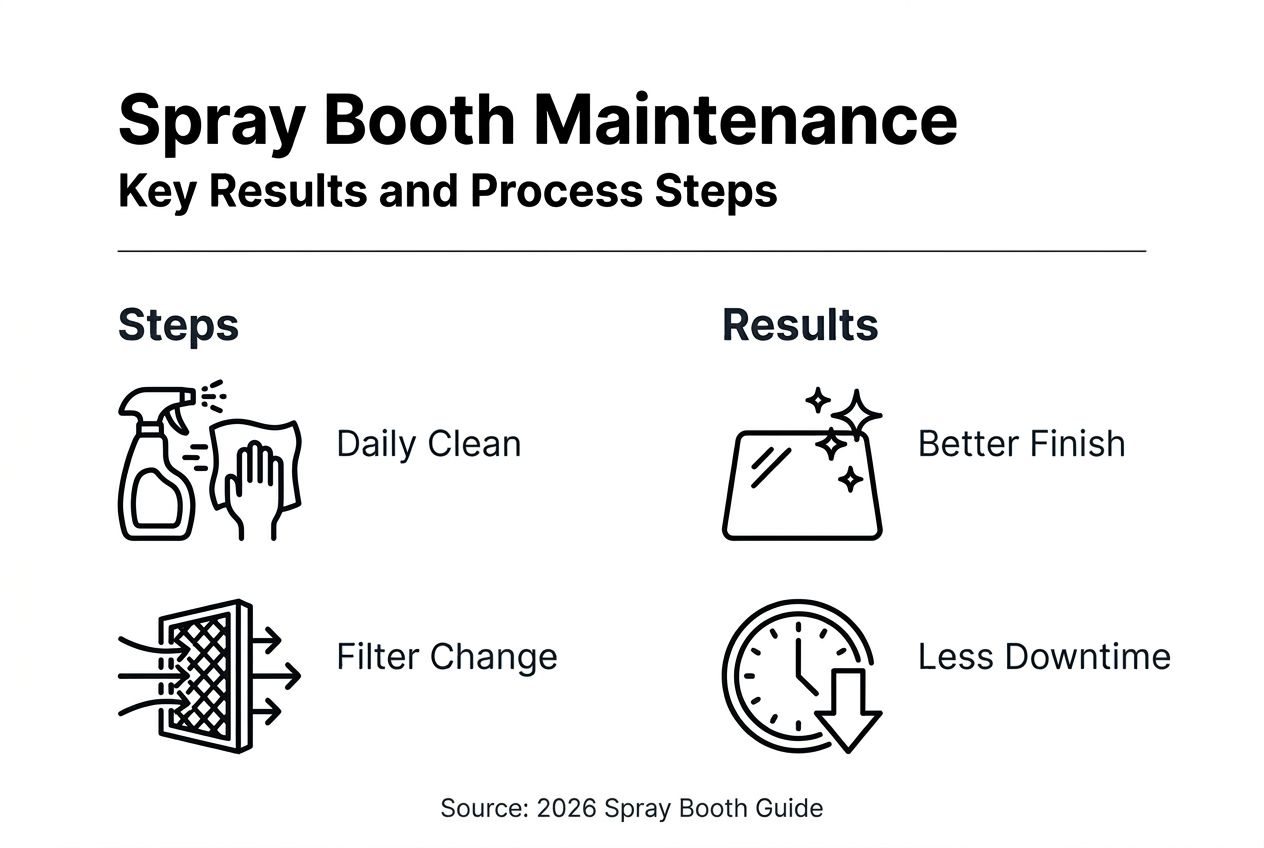
Systematic spray booth maintenance delivers measurable improvements in multiple areas. Understanding realistic outcomes helps justify the time and resource investment.
Time investment by maintenance tier:
| Maintenance Level | Weekly Time | Annual Hours |
|---|---|---|
| Daily cleaning and checks | 1.5 hours | 78 hours |
| Weekly deep cleaning | 2.5 hours | 130 hours |
| Monthly mechanical inspection | 1.5 hours | 18 hours |
| Annual professional service | 4 hours | 4 hours |
| Total maintenance time | ~6 hours | ~230 hours |
Quantifiable performance improvements:
Facilities implementing structured maintenance programs report up to 35% reduction in unexpected breakdowns and finish defects. This translates directly to fewer rejected jobs and lower rework costs.
Additional benefits:
- Paint finish consistency improves as contamination sources are eliminated
- Equipment lifespan extends 40-60% beyond neglected booth averages
- Energy consumption decreases 15-25% with clean filters and optimized airflow
- Insurance premiums may decrease with documented safety compliance
- Worker satisfaction improves in clean, safe, well-maintained environments
These outcomes compound over time, making systematic maintenance one of the highest-return investments in spray finishing operations.
Spray booth protection solutions from Dust Free Film
While systematic cleaning maintains booth performance, protective films dramatically reduce the time and effort required. Peelable dust protection films from Dust Free Film cut manual cleaning labor by up to 50% compared to traditional scraping and mopping.

Our multi-layer electrostatic films provide static-free, heat-resistant protection for booth walls and floors in high-volume automotive and industrial facilities. The patented dispenser system enables quick, bubble-free installation without production delays. When overspray accumulates, simply peel away the contaminated layer to reveal a fresh surface underneath.
These films work for operations of all sizes, from small auto body shops to large manufacturing plants requiring custom configurations. Ready to simplify your spray booth maintenance? Request a quote to discover how protective films integrate with your existing maintenance program.
FAQ
How often should spray booth filters be replaced?
Replace filters every 3 weeks if the booth operates daily to maintain optimal airflow and finish quality. Monitor pressure drop with manometers for precise timing based on actual loading rather than calendar schedules.
What safety precautions are necessary during spray booth maintenance?
Always shut down electrical power at the main breaker before starting any maintenance work. Wear chemical-resistant gloves, flame-retardant clothing, respirator masks, and safety goggles throughout all cleaning and inspection tasks. Ensure adequate ventilation when using solvent-based cleaners.
How long does a complete weekly maintenance routine take?
Weekly deep cleaning typically requires 2-3 hours depending on booth size and production volume. Facilities using protective films report 40-50% reduction in cleaning time since peelable layers eliminate most scraping and solvent work.
How do peelable dust protection films compare to manual cleaning methods?
Films significantly cut cleaning labor and downtime compared to manual scraping and mopping of booth surfaces. They reduce operator exposure to harsh solvents and overspray contamination while improving paint finish consistency. Learn more about the benefits of protective films for dust control.
What documentation should be maintained for spray booth inspections?
Keep detailed records of all maintenance activities including dates, technician names, parts replaced, pressure measurements, and visual observations. Digital logs with photos provide the strongest evidence of compliance during insurance claims and regulatory audits.