

Up to 90% of paint finish defects stem from dust contamination in spray booths, costing facilities thousands in rework and delays. Dust particles from booth surfaces and airborne sources settle on wet paint, creating craters, fisheyes, and blemishes that undermine quality. This guide reveals how understanding dust sources and implementing proven dust-free solutions transforms paint operations, slashing defects while boosting efficiency and profitability for European automotive and industrial facilities.
Table of Contents
- Introduction To Dust Contamination In Spray Painting
- Why Dust-Free Environments Are Critical For Paint Quality
- Technologies And Materials For Achieving Dust-Free Booths
- Common Misconceptions About Dust Control In Spray Booths
- Operational And Economic Benefits Of Dust-Free Booths
- Practical Steps For Maintaining Dust-Free Spray Booths
- Case Studies And Real-World Success Stories
- Conclusion And Next Steps For Facility Managers
- Discover Advanced Dust Protection Solutions For Your Spray Booths
- Frequently Asked Questions
Key Takeaways
| Point | Details |
|---|---|
| Dust causes 90% of paint defects | Most particles come from settled booth surface dust, not just airborne contaminants. |
| Electrostatic films reduce dust by 85% | Physical barriers outperform air filtration alone for comprehensive surface protection. |
| Combined approaches cut rework costs 20-30% | Integrated dust control reduces labor hours by up to 50% while ensuring compliance. |
| Regular maintenance sustains performance | Routine cleaning every 2-3 days and film replacement maintain dust-free conditions. |
| Air filtration misconceptions persist | Filtration alone cannot prevent settled dust; physical barriers are essential. |
Introduction to Dust Contamination in Spray Painting
Dust contamination is the leading cause of paint defects, accounting for up to 90% of surface imperfections in automotive and industrial spray booths. These microscopic particles originate from multiple sources within painting environments. Understanding where dust comes from helps facility managers tackle contamination at its root.
Common dust sources include:
- Booth wall and floor surfaces that shed particles over time
- Workers’ clothing and equipment that carry external contaminants
- Incoming air that bypasses filtration systems
- Overspray residue that settles and becomes airborne again
- Equipment movement that stirs settled particles
Busy European spray facilities face constant challenges maintaining dust-free conditions due to high activity levels and continuous airflow dynamics. Particles settle on freshly painted surfaces before coatings cure, causing visible defects that require expensive rework. Standard air filtration addresses airborne dust but cannot prevent contamination from surfaces workers touch or equipment disturbs.
The air quality impact on paint finish extends beyond what filters capture. Settled dust on booth walls, floors, and fixtures poses the greatest threat because it becomes airborne during normal operations. Recognizing this distinction between airborne and settled dust is fundamental to developing effective contamination control strategies.
Pro Tip: Walk through your booth before each paint session and visually inspect surfaces for dust accumulation, paying special attention to corners, ledges, and high-traffic areas where particles concentrate.
Why Dust-Free Environments are Critical for Paint Quality
Dust particles in the micron range create devastating surface defects that compromise both aesthetics and durability. When these contaminants land on wet paint, they cause craters, fisheyes, orange peel texture, and dirt nibs that customers immediately notice. Dust particles cause visible defects leading to increased rework and customer dissatisfaction, directly impacting your bottom line and reputation.
The operational consequences of contamination extend beyond surface appearance:
- Rejected finishes require complete stripping and repainting
- Rework delays project timelines and reduces throughput
- Labor costs multiply as technicians repeat work
- Material waste increases from stripped coatings
- Customer satisfaction plummets when quality inconsistencies occur
Settled dust presents the most insidious challenge because it contaminates surfaces between painting sessions. Booths may appear clean to the naked eye while harboring microscopic particles ready to ruin the next finish. This invisible threat makes prevention essential rather than reactive cleaning after defects appear.
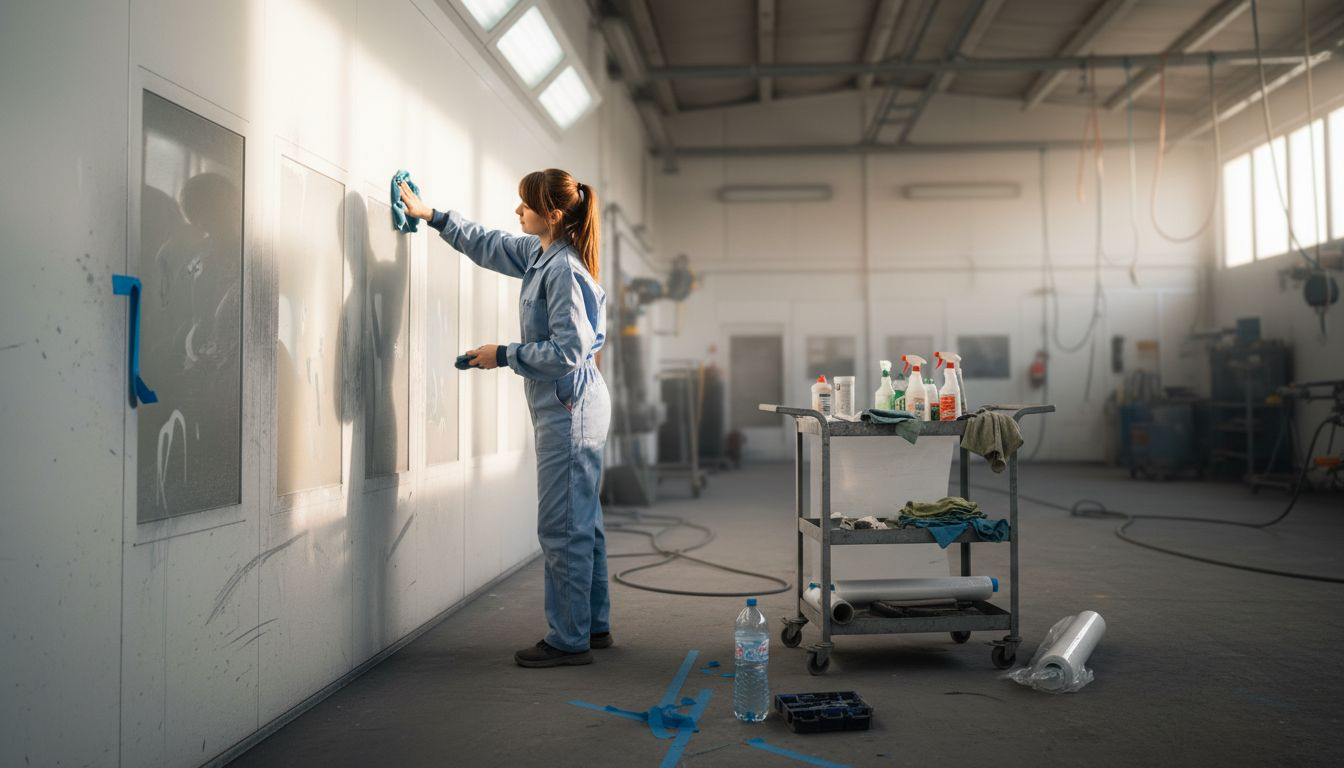
Following spray booth maintenance best practices creates predictable quality outcomes that build customer trust and streamline operations. Facilities that prioritize dust elimination report fewer callbacks, faster project completion, and stronger client relationships. The investment in prevention pays dividends through reduced waste and enhanced competitive positioning.
Pro Tip: Document defect patterns over several weeks to identify which dust sources cause the most frequent problems, then prioritize solutions that address your specific contamination profile.
Technologies and Materials for Achieving Dust-Free Booths
Air filtration systems remove airborne particles but cannot stop dust from settling on booth surfaces between uses. High-efficiency filters capture particles as air circulates, yet surfaces still accumulate contamination from worker activity, equipment, and environmental factors. Comprehensive dust control requires combining filtration with physical surface barriers.
Multi-layer electrostatic films reduce particulates by 85%, ensuring durable dust protection without impacting airflow. These specialized films create smooth, static-free surfaces that repel dust accumulation. Unlike traditional coverings, electrostatic protective films are engineered specifically for spray booth conditions:
- Heat-resistant construction withstands curing temperatures without degrading
- Anti-static properties prevent particle attraction to surfaces
- Multi-layer design provides extended protection before replacement
- Patented dispenser systems enable quick, bubble-free installation
- Compatible formulations maintain proper booth ventilation
The dust protection films advantages become clear when comparing performance metrics:
| Technology | Dust Reduction | Installation Time | Maintenance Frequency |
|---|---|---|---|
| Air Filtration Only | 60-70% | N/A | Filter changes monthly |
| Electrostatic Films | 85%+ | 15-30 minutes | Film replacement weekly |
| Combined Approach | 95%+ | Minimal | Optimized schedule |
Combining filtration with protective films delivers comprehensive dust control that addresses both airborne and settled contamination. High-efficiency air filtration handles particles in circulation while films prevent surface accumulation. This dual approach creates the cleanest possible painting environment.
Pro Tip: Choose films rated for your booth’s specific temperature range and ensure they’re compatible with your ventilation system to maintain proper airflow and curing efficiency throughout operations.
Common Misconceptions About Dust Control in Spray Booths
Many facility managers believe robust air filtration alone suffices for dust control. This misconception costs operations thousands in preventable rework. Surface dust contamination bypasses filtration; physical barriers are required for comprehensive protection. Filters only address particles in airflow, leaving settled dust on walls, floors, and fixtures untouched.
Another frequent misunderstanding involves airflow concerns. Some managers worry that protective films will restrict ventilation or trap heat, compromising curing processes. Properly designed films actually maintain airflow efficiency while eliminating dust sources. Modern electrostatic films are engineered with ventilation compatibility as a core feature.
Key misconceptions corrected:
- Filtration sufficiency: Filters cannot prevent settled surface dust that becomes airborne during operations; physical barriers are essential for complete protection.
- Airflow impact: Quality protective films maintain proper ventilation when correctly installed, with minimal effect on booth performance or curing temperatures.
- Maintenance reliance: Simply changing filters regularly does not address dust accumulation on booth surfaces between filter replacements.
- Cost perception: Initial film investment recovers quickly through reduced rework, fewer rejected finishes, and decreased labor hours.
Understanding the relationship between protective films vs air filtration clarifies why integrated approaches work best. Filtration and physical barriers serve complementary roles rather than competing solutions. Facilities achieve optimal results by deploying both technologies strategically.
Routine surface cleaning and film maintenance remain essential alongside filtration upgrades. Films require replacement on schedule to maintain barrier integrity, while filters need timely changes to sustain airflow efficiency. Neither technology eliminates the need for basic booth hygiene, but together they dramatically reduce contamination risk.
Operational and Economic Benefits of Dust-Free Booths
Dust-free booth solutions deliver measurable cost savings that justify investment within months. Rework costs drop by 20-30% with dust-free solutions; cleaning labor is reduced by up to 50% when facilities implement comprehensive contamination control. These reductions stem from fewer paint rejections, faster project completion, and streamlined maintenance routines.
Key financial and operational advantages include:
- Dramatic reduction in paint rework expenses by eliminating defect-causing contamination
- Labor hour savings through simplified cleaning and maintenance protocols
- Improved throughput as fewer projects require remediation
- Enhanced regulatory compliance with European particulate matter standards compliance requirements
- Stronger competitive positioning through consistent quality delivery
Compliance with stringent European particulate matter safety standards becomes straightforward when effective dust control measures are in place. Facilities avoid penalties and operational disruptions by proactively managing contamination. The dust control economic benefits extend beyond immediate cost savings to include risk mitigation and improved safety profiles.
CRITICAL IMPACT: Facilities implementing dust-free booth solutions report 40% fewer paint rejections, 50% reduction in cleaning labor, and 25% faster project turnaround, translating to substantial annual savings exceeding initial investment costs by 3-5 times.
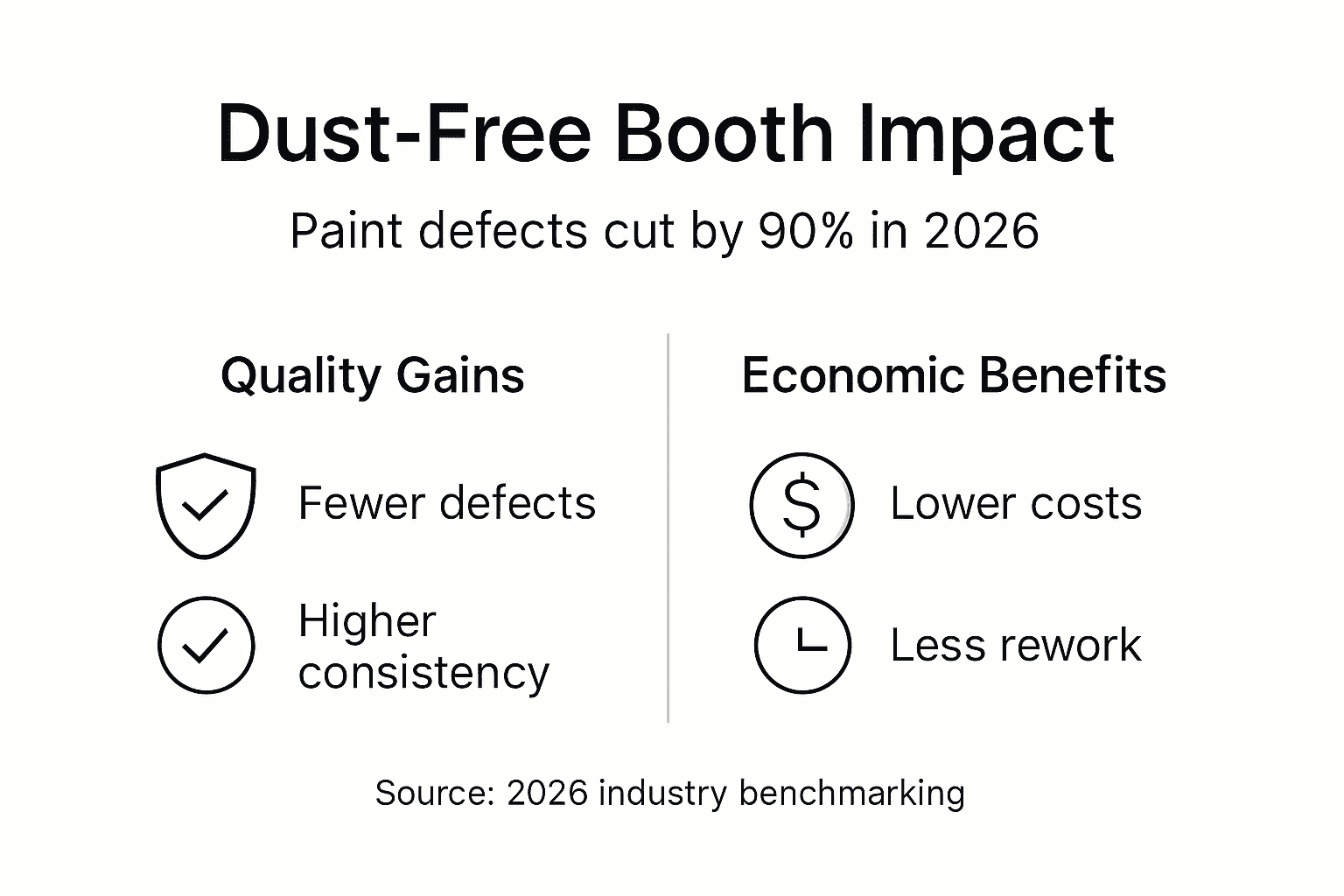
Improved throughput and fewer delays boost overall operational efficiency while freeing technicians to focus on value-added work rather than rework. Customer satisfaction rises as quality becomes predictable and consistent. These combined benefits position dust-free facilities as preferred vendors in competitive European markets.
Practical Steps for Maintaining Dust-Free Spray Booths
Achieving and sustaining dust-free conditions requires systematic implementation of proven maintenance protocols. Facility managers should follow these sequential steps to establish effective contamination control:
-
Assess contamination sources: Conduct thorough booth inspections to identify where dust accumulates most frequently, noting high-risk areas like corners, ventilation grilles, and equipment contact points.
-
Select appropriate films: Choose electrostatic dust protection films rated for your booth’s temperature range and compatible with existing ventilation systems to ensure optimal performance.
-
Deploy quick-install systems: Utilize patented dispenser systems that enable bubble-free film application in 15-30 minutes, minimizing production downtime during installation.
-
Establish cleaning schedule: Routine cleaning every 2-3 days and monitoring film integrity are essential for effective dust control, preventing particle buildup before it impacts paint quality.
-
Monitor and replace proactively: Track film condition and replace protective barriers before integrity deteriorates, maintaining consistent dust protection throughout operations.
Integrating these steps into your existing spray booth maintenance workflow ensures continuity without disrupting production schedules. The maintenance checklist for spray booths provides detailed guidance for daily, weekly, and monthly tasks that preserve dust-free conditions.
Pro Tip: Integrate monitoring protocols into existing facility maintenance routines by assigning specific technicians to track film condition during regular booth walkthroughs, creating accountability and ensuring timely replacements.
Case Studies and Real-World Success Stories
European facilities implementing comprehensive dust control solutions report transformative results. A German automotive refinishing plant experienced a 40% reduction in paint rejection rates within three months of adopting electrostatic dust protection films. This improvement translated directly to profitability through eliminated rework and faster turnaround times.
Operational impacts extended beyond defect reduction:
- Project completion times decreased by 25% as fewer jobs required remediation
- Customer satisfaction scores improved 35% due to consistent high-quality finishes
- Labor costs dropped as technicians spent less time on rework and cleaning
- Competitive positioning strengthened through reliable delivery of premium finishes
The facility’s success stemmed from combining protective films with optimized maintenance protocols and compatible cleaning products for film maintenance. This integrated approach addressed both airborne and settled dust while preserving film effectiveness over extended periods.
Another industrial painting operation in the Netherlands achieved similar results by focusing on industrial painting dust prevention. Their systematic implementation of dust barriers and maintenance protocols reduced defect rates from 15% to under 3% within six months. Client retention improved as quality consistency became their competitive differentiator.
These real-world examples demonstrate that dust-free booth solutions deliver measurable improvements across quality, cost, and customer satisfaction metrics. Facilities that commit to comprehensive contamination control gain sustainable competitive advantages in demanding European markets.
Conclusion and Next Steps for Facility Managers
Dust contamination remains the primary cause of paint defects, but proven solutions exist for facilities committed to quality excellence. Electrostatic dust protection films provide durable surface barriers that complement air filtration, creating comprehensive contamination control. The combined approach reduces rework costs by 20-30% while cutting labor requirements in half.
Successful implementation requires understanding dust sources, selecting appropriate technologies, and maintaining consistent protocols. Facilities that prioritize dust elimination achieve predictable quality outcomes that strengthen customer relationships and competitive positioning. The operational and economic benefits justify investment while delivering rapid payback through eliminated waste and improved efficiency.
Take proactive steps today to implement dust-free solutions and gain competitive advantage in 2026. Assess your current contamination challenges, evaluate protective film options compatible with your booth specifications, and establish maintenance routines that sustain dust-free conditions. The path to superior paint quality and reduced operational costs begins with recognizing that effective dust control requires both technology and disciplined execution.
Discover Advanced Dust Protection Solutions for Your Spray Booths
Ready to eliminate dust contamination and transform your paint quality? Our specialized dust protection films are engineered specifically for automotive and industrial spray booths, delivering proven contamination control that reduces defects by up to 90%.
Benefit from patented dispenser systems that enable quick, bubble-free installation in under 30 minutes, minimizing production downtime. Our multi-layer electrostatic films provide heat-resistant, static-free protection that maintains booth ventilation while creating impenetrable dust barriers. Access expert guidance through our comprehensive protective films for spray booths resources and detailed spray booth maintenance workflow guides. Visit dustfreefilm.com to explore tailored solutions and request quotes designed for your facility’s specific needs.
Frequently Asked Questions
What is the primary cause of dust contamination in spray booths?
Settled dust on booth surfaces causes most contamination, not just airborne particles. Walls, floors, and fixtures accumulate microscopic particles that become airborne during operations, landing on wet paint and creating defects.
How often should dust protection films be replaced?
Replace films weekly or when visible wear appears, whichever comes first. High-traffic booths may require more frequent replacement, while lower-volume facilities can extend intervals slightly based on film condition monitoring.
Do dust protection films affect booth ventilation and airflow?
Properly designed electrostatic films maintain normal airflow and ventilation efficiency. Quality films are engineered specifically for spray booth conditions, ensuring compatibility with existing ventilation systems without restricting air circulation or impacting curing processes.
Can air filtration systems alone keep booths dust-free?
No, filtration only captures airborne particles and cannot prevent dust settling on surfaces. Comprehensive contamination control requires combining air filtration with physical surface barriers like electrostatic protective films to address both airborne and settled dust.
What are the main steps to maintain a dust-free spray painting environment?
Assess contamination sources regularly, install appropriate electrostatic films, establish cleaning routines every 2-3 days, monitor film integrity continuously, and replace protective barriers proactively before deterioration occurs. Integrate these steps into existing maintenance workflows for best results.