

Dust contamination in spray booths drives up rejection rates and forces costly rework on parts you thought were ready. For facility managers juggling tight schedules and quality expectations, controlling dust isn’t optional. This guide walks you through integrated methods combining multi-layer electrostatic films, optimized airflow, and pre-application cleaning to deliver the 20-30% lower rejection rates your operation needs.
Table of Contents
- Introduction To Dust Control In Paint Booths
- Prerequisites: What You Need Before Starting Dust Control
- Step 1: Installing Dust Protection Films Correctly
- Step 2: Optimizing Airflow And Filtration Systems
- Step 3: Pre-Application Cleaning Protocols
- Common Mistakes And How To Troubleshoot Them
- Expected Outcomes And Benchmarks
- Alternative Dust Control Approaches And Tradeoffs
- Safety Considerations And Warnings
- Enhance Your Paint Booth Dust Control With Our Specialized Solutions
- Frequently Asked Questions About Paint Booth Dust Control Methods
Key takeaways
| Point | Details |
|---|---|
| Multi-layer electrostatic films | Cut airborne dust up to 80% and outperform basic disposable options. |
| Optimized airflow and HEPA filters | Reduce contamination by 50-70% when maintained every 3-6 months. |
| Pre-paint cleaning protocols | Static-free wipes and vacuuming minimize surface dust before application. |
| Common installation errors | Improper film placement and skipped cleaning steps increase defects. |
| Expected performance gains | Proper dust control reduces rejection rates 20-30% and rework costs by up to 35%. |
Introduction to dust control in paint booths
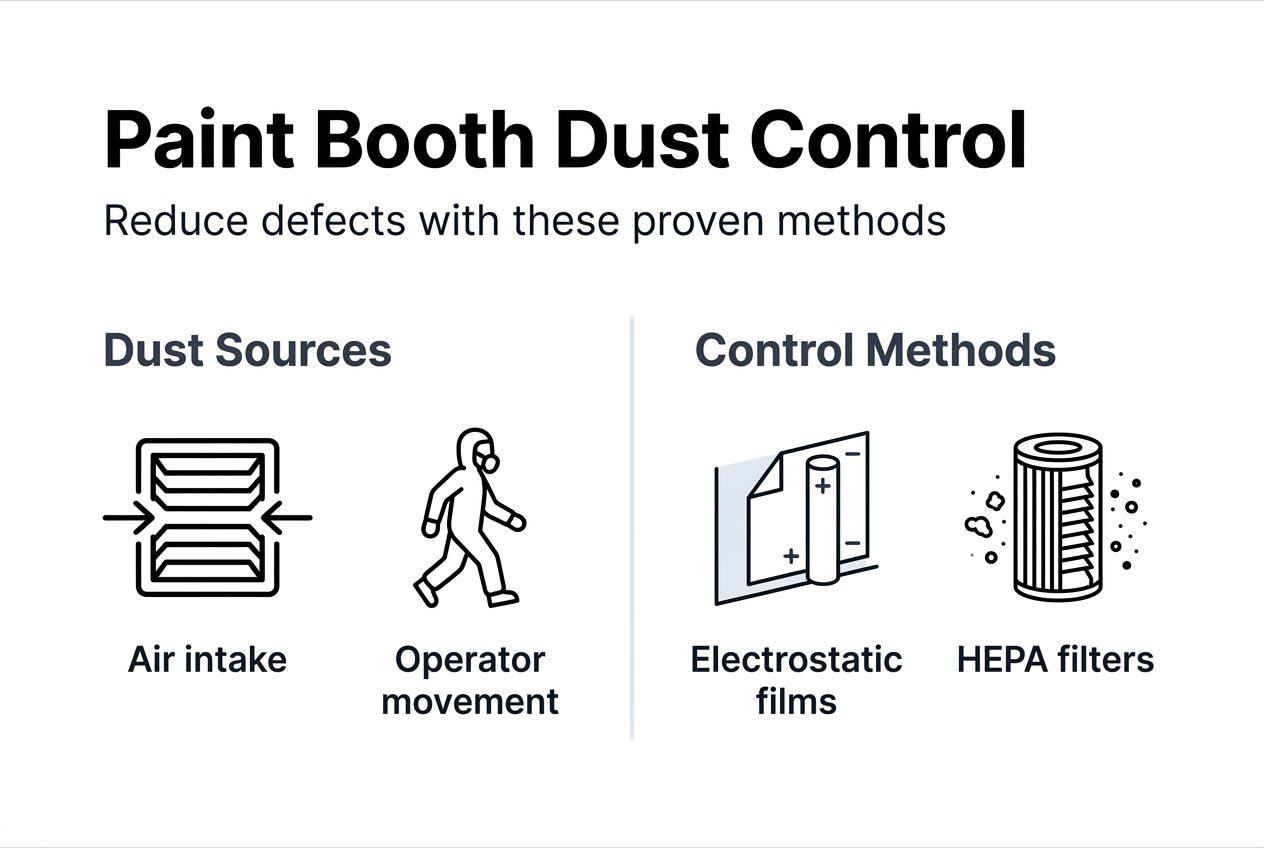
Dust contamination stands as the top culprit behind paint finish defects in automotive and industrial spray booths. Even tiny airborne particles settle onto wet surfaces, creating imperfections that demand expensive rework and delay deliveries. Dust contamination rates cause up to 30% rejection of painted parts, hitting profitability hard.
Dust enters booths from multiple sources. Airborne particles infiltrate through ventilation systems, while surface-borne contaminants accumulate on floors, walls, and equipment. Every opening and movement inside the booth stirs settled dust back into the air, landing on freshly sprayed coatings.
Effective dust control demands a multi-faceted approach combining three core strategies:
- Multi-layer electrostatic protection films that trap and neutralize dust on booth surfaces
- Optimized airflow design with high-efficiency filtration to capture airborne particles
- Rigorous pre-application cleaning protocols using static-free materials
Understanding these dust sources helps you customize solutions to your facility’s specific needs. Booth size, throughput volume, and coating types all influence which combination of methods delivers maximum dust reduction. The investment in proper dust control pays back quickly through fewer rejections and faster turnaround times.
Prerequisites: what you need before starting dust control
Successful dust control starts with assembling the right materials and knowledge before you touch a single surface. Rushing this preparation phase creates gaps that undermine your entire effort.
Select multi-layer, static-free dust protection films engineered for your booth dimensions. Measure wall and floor areas accurately to order sufficient coverage without wasteful excess. Films designed specifically for spray booths resist paint overspray and heat better than general-purpose plastic sheeting.
Understand your booth’s airflow design and current filtration specifications. Review manufacturer documentation on air changes per hour, filter ratings, and recommended replacement intervals. This baseline knowledge guides upgrades and maintenance scheduling.
Gather essential cleaning equipment before you need it:
- Industrial vacuum with HEPA filtration to prevent dust recirculation
- Static-free wipes that reduce surface dust by 90%
- Lint-free cleaning cloths for final surface preparation
- Approved cleaning solvents compatible with your coating systems
Train staff on proper installation techniques for protection films and daily cleaning routines. Inexperienced operators make mistakes that trap dust under films or leave surfaces inadequately prepared. Hands-on practice sessions prevent costly errors during production.
| Preparation Item | Purpose | Typical Cost Range |
|---|---|---|
| Multi-layer electrostatic films | Primary dust barrier on walls and floors | $200-$800 per booth |
| HEPA filters | Airborne particle capture | $150-$400 per filter |
| Static-free cleaning supplies | Surface dust removal | $50-$150 monthly |
| Staff training program | Proper technique execution | $500-$1500 annually |
Consult our paint booth cleaning guide and review types of spray booth films to match products to your specific application requirements.
Step 1: installing dust protection films correctly
Proper film installation sets the foundation for effective dust control. Even the best films fail when applied incorrectly, trapping dust underneath or creating wrinkles that collect overspray.
Follow these steps for bubble-free installation:
- Clean all booth surfaces thoroughly before applying any film to prevent trapping existing dust.
- Use patented dispenser systems designed for spray booth films rather than improvising with hand application.
- Start from the top corner and work systematically across walls, smoothing as you go.
- Overlap seams by 2-3 inches to prevent gaps where dust can penetrate.
- Press edges firmly to activate electrostatic adhesion without leaving air pockets.
- Inspect the entire installation for bubbles or loose areas before resuming production.
Replace films according to manufacturer timelines, typically every 4-6 weeks for high-volume booths. Degraded films lose electrostatic properties and become dust sources themselves. Schedule replacements during planned downtime to minimize production interruptions.
Multi-layer electrostatic films reduce airborne dust by 80% compared to basic options. The electrostatic charge actively attracts and holds particles that would otherwise circulate through the booth air.
| Film Type | Dust Reduction | Durability | Installation Time | Cost per Application |
|---|---|---|---|---|
| Multi-layer electrostatic | Up to 80% | 4-6 weeks | 30-45 minutes | $$$ |
| Basic static-free film | 40-50% | 2-3 weeks | 45-60 minutes | $$ |
| Air ionization system | 30-50% | Continuous | Installation only | $$$$ |
Pro Tip: Apply films when booth temperature stays between 60-75°F for optimal adhesion. Cold surfaces prevent proper sticking, while excessive heat causes films to stretch and wrinkle during application.
Learn more about how to protect spray booths and follow our spray booth floor protection tutorial for specialized floor application techniques. Combine film installation with strategies to optimize spray booth efficiency for comprehensive improvements.
Step 2: optimizing airflow and filtration systems
Airflow design determines how effectively your booth removes airborne dust particles before they settle on wet paint. Poor airflow patterns create turbulence that keeps dust suspended, while laminar flow pushes contaminants straight into filters.
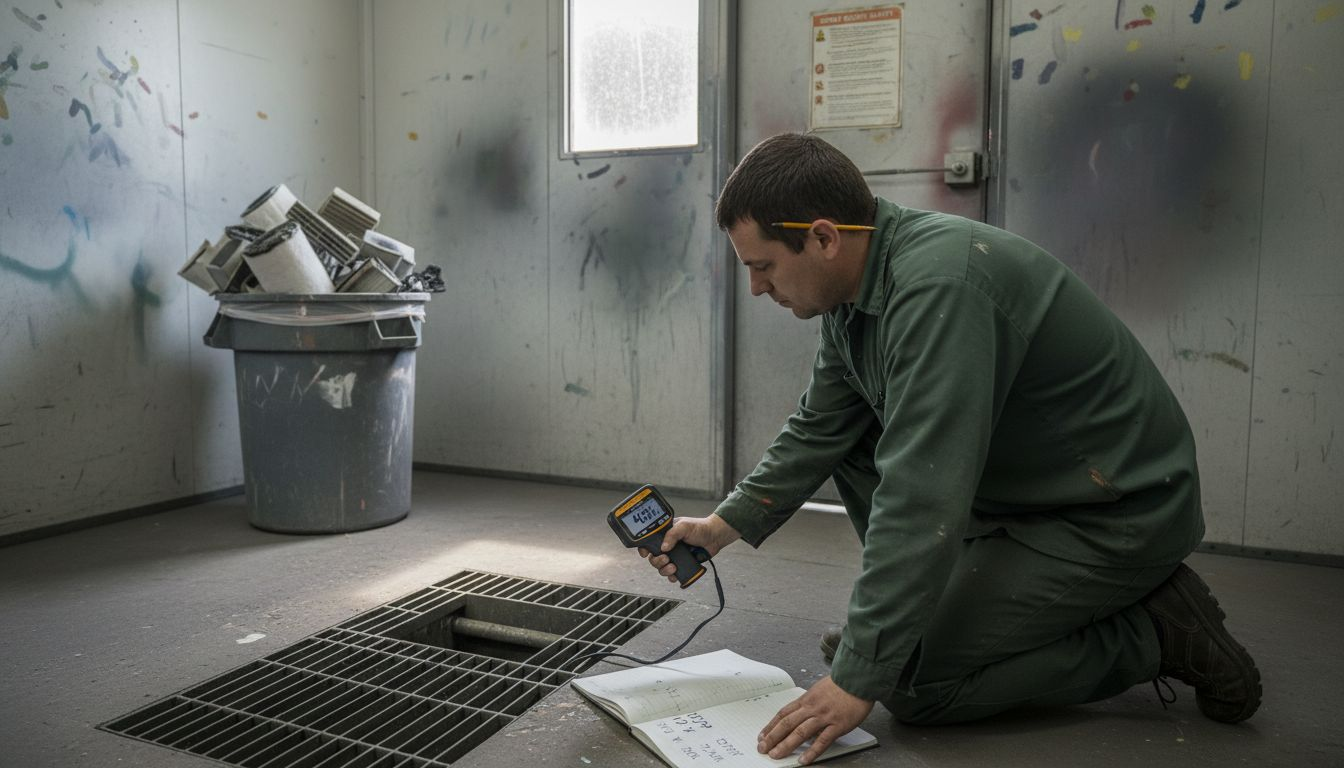
Design laminar airflow by ensuring air enters from ceiling plenums and exits through floor grates in a smooth, vertical path. Eliminate obstacles that disrupt this flow pattern. Position parts and equipment to maintain clear air pathways around all painted surfaces.
Install HEPA filters that decrease dust contamination by 50-70% when properly maintained. Standard filters miss particles small enough to create visible defects on paint finishes. HEPA-rated filtration captures particles down to 0.3 microns, the size range most problematic for coating quality.
Implement this filter maintenance schedule:
- Check pressure differential across filters weekly using installed gauges.
- Replace intake filters every 3 months regardless of gauge readings.
- Replace exhaust filters every 6 months in high-volume booths.
- Document all filter changes with dates and differential pressure readings.
- Inspect filter housings quarterly for gaps or damage that bypass filtration.
Monitor booth performance through regular airflow velocity measurements. Use a handheld anemometer to verify air speed matches design specifications at multiple points inside the booth. Declining velocity indicates filter loading or fan problems requiring attention.
Adjust airflow based on coating types and application methods. High-transfer-efficiency spray equipment generates less overspray, allowing slightly reduced airflow without compromising dust control. Balance air changes per hour against energy costs while maintaining dust-free conditions.
Explore additional spray booth efficiency tips to maximize airflow system performance alongside dust control improvements.
Step 3: pre-application cleaning protocols
Surface cleanliness immediately before painting matters as much as booth environment. Residual dust on parts, fixtures, and nearby surfaces defeats even the best films and filtration.
Clean all surfaces with static-free wipes to prevent static electricity from attracting new dust particles. Standard cloths generate static during wiping, pulling dust back onto surfaces you just cleaned. Routine vacuuming and static-free wipes reduce surface dust by 90%, creating the clean foundation paint needs.
Vacuum booth floors, walls, and equipment daily before production starts:
- Use only HEPA-filtered vacuums to prevent blowing captured dust back into the air
- Pay special attention to corners, seams, and horizontal surfaces where dust settles
- Vacuum ventilation grates and filter housings to remove accumulated debris
- Clean vacuum filters and empty canisters after each use
Never skip pre-paint cleaning even when schedules feel tight. The 10 minutes invested prevents hours of rework on defective finishes. Rushing past this step consistently ranks among the top causes of preventable paint defects.
Follow this pre-paint cleaning checklist:
- Blow off parts with filtered, dry compressed air
- Wipe all surfaces with approved static-free tack cloths
- Inspect lighting and verify no dust visible on surfaces
- Check that booth films show no tears or loose edges
- Confirm floor protection films remain securely attached
Pro Tip: Replace tack cloths after wiping 3-4 parts. Saturated cloths spread dust instead of removing it, contaminating surfaces you’re trying to protect.
Review our complete spray booth preparation steps and integrate cleaning into your spray booth maintenance workflow. Master paint booth contamination prevention through consistent daily practices.
Common mistakes and how to troubleshoot them
Even experienced facility managers make dust control errors that undermine quality. Recognizing these mistakes early prevents accumulating defects and rework costs.
Avoiding static charge buildup requires using only static-free films and cleaning materials throughout your booth. Regular plastic sheeting generates static electricity that actively attracts dust particles, making contamination worse instead of better. Verify all materials carry anti-static certifications before purchasing.
Bubble-free film installation depends on proper technique and tools. Hand application almost always creates air pockets that trap dust and collect overspray. Invest in patented dispenser systems designed specifically for spray booth films. These tools maintain consistent tension and smooth application that eliminates bubbles.
HEPA filter replacement on schedule prevents dust accumulation that overwhelms filtration capacity. Facilities often run filters past recommended intervals to save money, but clogged filters reduce airflow and allow dust bypass. Track filter life carefully and budget replacement costs as regular operational expenses.
Skipping pre-paint cleaning protocols to save time creates surface dust defects that cost far more to fix. Train operators that cleaning steps are non-negotiable production requirements, not optional suggestions. Build cleaning time into job estimates and production schedules.
Regular staff training and periodic audits catch recurring issues before they become embedded bad habits:
- Quarterly refresher training on proper film installation techniques
- Monthly audits of cleaning protocol compliance
- Weekly review of rejection rates and defect root causes
- Daily supervisor spot checks of booth cleanliness before production
Implement our proven dust-free spray booth workflow to systematize best practices and eliminate common errors through standardized procedures.
Expected outcomes and benchmarks
Proper dust control delivers measurable improvements you can track month over month. Establish baseline metrics before implementing changes to quantify your return on investment.
Dust control reduces paint rejection rates by 20-30% in typical automotive and industrial spray booth applications. Track rejected parts weekly and calculate rejection rate as a percentage of total production. Declining rejection rates indicate effective dust control implementation.
Labor time for cleaning decreases up to 40% when systematic dust control prevents contamination buildup. Operators spend less time scraping overspray, wiping surfaces, and preparing booths between jobs. Measure actual labor hours against production volume to verify efficiency gains.
Annual rework costs drop 25-35% as fewer parts require repainting due to dust defects. Calculate rework costs including materials, labor, and lost production time. Compare quarterly rework totals before and after dust control improvements.
Regular HEPA filter maintenance sustains these performance benchmarks over time. Skipping maintenance allows gradual performance degradation that erodes initial gains. Schedule filter changes proactively based on runtime hours, not just visual inspection.
| Performance Metric | Baseline (Before) | Target (After) | Typical Improvement |
|---|---|---|---|
| Paint rejection rate | 25-35% | 5-10% | 20-30% reduction |
| Daily cleaning time | 2-3 hours | 1-1.5 hours | 40% time savings |
| Monthly rework costs | $5000-$8000 | $3000-$4500 | 30-35% cost reduction |
| HEPA filter life | 2-3 months | 5-6 months | Extended replacement interval |
Facilities implementing comprehensive dust control report rejection rates dropping from 30% to under 8% within 90 days of proper film installation, airflow optimization, and cleaning protocol adherence.
Alternative dust control approaches and tradeoffs
Air ionization systems offer an alternative dust control method worth considering alongside protective films. These systems neutralize static charges on airborne particles, causing dust to drop out of the air or stick to grounded surfaces.
Air ionization reduces dust by 30-50%, less effective than the 80% reduction from multi-layer films. Ionization works best as a supplement to films and filtration, not a replacement. The technology addresses airborne dust but does nothing for surface contamination or particles already settled.
Protective films provide greater durability and more consistent results across varying booth conditions. Films physically block dust from contaminating booth surfaces regardless of humidity, temperature, or airflow variations. Ionization effectiveness fluctuates with environmental factors and requires continuous power to maintain performance.
Tradeoffs between methods include upfront costs versus ongoing operational considerations. Films require regular replacement labor and material costs. Ionization demands higher initial equipment investment but lower recurring expenses once installed.
Selecting a dust control method depends on booth size, budget constraints, and production throughput requirements:
| Method | Initial Cost | Ongoing Cost | Effectiveness | Best Application |
|---|---|---|---|---|
| Multi-layer films | $200-$800 | $150-$300/month | 80% reduction | High-volume booths |
| Air ionization | $2000-$5000 | $50-$100/month | 30-50% reduction | Supplemental control |
| HEPA filtration upgrade | $800-$2000 | $200-$400/quarter | 50-70% reduction | All booth types |
| Combined approach | $3000-$7000 | $400-$700/month | Up to 90% reduction | Premium quality needs |
Most facilities achieve optimal results combining films with upgraded filtration rather than choosing one method exclusively. The integrated approach addresses dust at multiple intervention points for comprehensive control.
Safety considerations and warnings
Dust exposure in paint booths creates serious occupational health risks beyond just finish quality problems. OSHA regulations require proper ventilation maintenance and personal protective equipment (PPE) to protect workers from respiratory hazards.
Dust particles small enough to create paint defects also penetrate deep into lungs when inhaled. Prolonged exposure to paint booth dust causes respiratory irritation and potential long-term health effects. Ensure all operators wear appropriate respirators rated for paint booth environments.
Improper dust control increases accident risks beyond health concerns. Accumulated dust on floors creates slip hazards, while dust buildup on equipment can interfere with proper operation. Regular cleaning prevents these safety incidents alongside improving paint quality.
Ventilation system maintenance directly affects both dust control and worker safety. Clogged filters reduce dust removal while also failing to evacuate paint fumes and solvents properly. Never defer filter maintenance to save costs, as the safety implications outweigh any short-term savings.
Safety Warning: Paint booth dust often contains heavy metals, isocyanates, and other hazardous substances from coating materials. Always treat booth dust as hazardous waste requiring proper containment, handling, and disposal according to local environmental regulations. Never use standard shop vacuums that lack HEPA filtration, as they spread contaminated dust throughout your facility.
Regular safety training reinforces proper dust control practices while protecting worker health. Include dust hazards in new hire orientation and annual refresher training. Monitor booth conditions continuously and address any degradation in dust control performance immediately.
Document all safety-related maintenance and training to demonstrate regulatory compliance during inspections. Track filter changes, film replacements, and cleaning protocols as part of your facility’s safety management system.
Enhance your paint booth dust control with our specialized solutions
You’ve learned how integrated dust control methods transform spray booth performance. Now put that knowledge into action with products engineered specifically for automotive and industrial painting environments.
Our multi-layer electrostatic dust protection films deliver the 80% airborne dust reduction you need while complementing your optimized airflow and cleaning protocols. Patented dispenser systems enable fast, bubble-free installation that minimizes production downtime and eliminates the air pockets that trap contaminants.
Explore our complete range of dust free film for spray booths designed for walls, floors, and specialized applications. Every product meets European manufacturing standards for durability, heat resistance, and static-free performance in demanding industrial settings.
Request a dust free film quote customized to your booth dimensions and production volume. Our team helps you select the right film configuration and dispenser system for your specific dust control requirements. Invest in proven solutions that reduce rejection rates while enhancing paint finish quality and operational efficiency.
Frequently asked questions about paint booth dust control methods
What are the best dust protection films for paint booths?
Multi-layer electrostatic films outperform basic options by reducing airborne dust up to 80% through active particle attraction. Look for static-free films with heat resistance to withstand paint booth temperatures and durable construction that lasts 4-6 weeks in high-volume applications. Patented dispenser systems ensure bubble-free installation that prevents dust trapping.
How often should HEPA filters be replaced in spray booths?
Replace intake HEPA filters every 3 months and exhaust filters every 6 months in high-volume spray booths to maintain 50-70% dust reduction effectiveness. Monitor pressure differential weekly using installed gauges. Replace filters immediately when differential exceeds manufacturer specifications, even if scheduled replacement isn’t due yet.
Can air ionization replace dust protection films completely?
Air ionization reduces dust by 30-50%, significantly less than the 80% reduction from multi-layer films. Ionization works best as supplemental control alongside films and filtration, not as a complete replacement. Films physically block surface contamination while ionization only addresses airborne particles, making combined approaches most effective.
What pre-paint cleaning steps effectively reduce dust?
Use static-free wipes and HEPA-filtered vacuums to reduce surface dust by 90% before painting. Clean all booth surfaces, floors, and equipment daily. Blow off parts with filtered compressed air, then wipe with approved tack cloths. Inspect surfaces under proper lighting to verify no visible dust remains before spraying.
What safety precautions should be taken when controlling dust in paint booths?
Always wear respirators rated for paint booth environments, as dust contains hazardous coating materials. Use only HEPA-filtered vacuums to prevent spreading contaminated dust. Treat all booth dust as hazardous waste requiring proper disposal. Maintain ventilation systems on schedule to protect both finish quality and worker respiratory health.
How long does it take to see results from improved dust control?
Most facilities report measurable rejection rate improvements within 2-3 weeks of implementing proper films, filtration, and cleaning protocols. Full benefits including 20-30% lower rejection rates and 25-35% reduced rework costs typically materialize within 90 days as staff master new procedures and initial contamination clears from booth environments.